
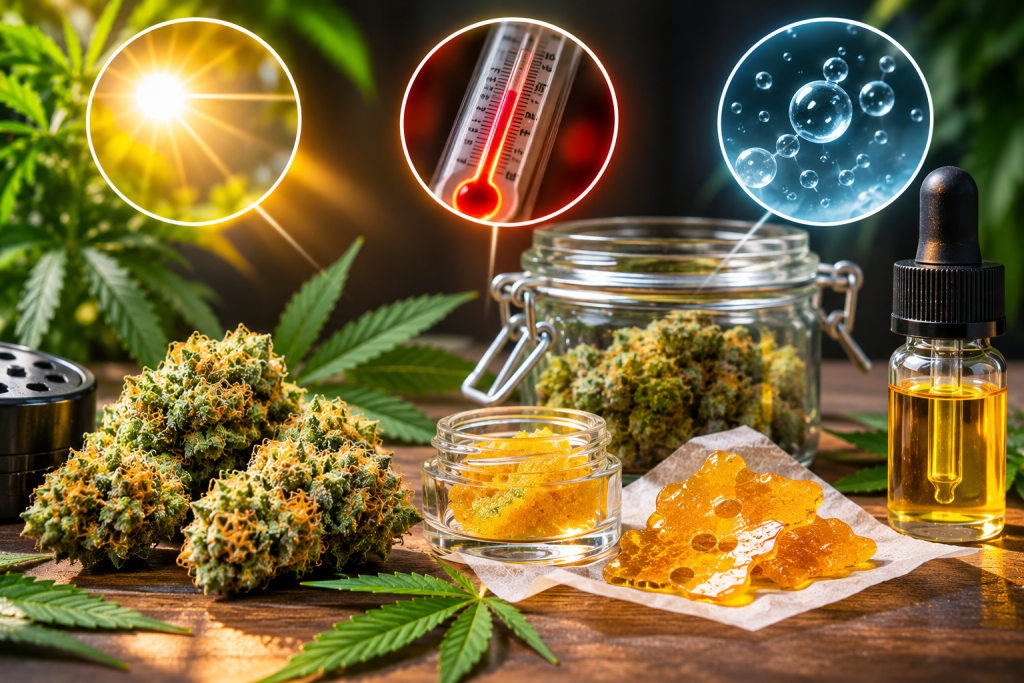
Cannabis is known for its diverse cannabinoids, aromatic terpenes, and unique chemical composition. However, these compounds do not remain unchanged forever. Over time, environmental factors such as heat, light, oxygen, and moisture can influence the chemical stability of cannabis products.
This natural process is known as Cannabinoid Degradation, and understanding it is essential for anyone interested in cannabis freshness, potency, and long-term quality.
Whether cannabis is stored as dried flower, concentrates, oils, or edibles, improper storage conditions can gradually alter its cannabinoid profile. THC may decrease, certain degradation products may increase, and the overall sensory experience can change.
But what exactly causes cannabinoids to degrade, and how can consumers preserve cannabis quality?
This article explores the science behind Cannabinoid Degradation, its effects on THC and CBD, the environmental factors responsible, and the potential benefits of understanding proper cannabis storage.
What Is Cannabinoid Degradation?
Cannabinoid Degradation refers to the chemical changes that occur when cannabinoids break down or transform into other compounds over time.
Cannabinoids are naturally occurring chemical substances found in cannabis plants. Some of the most widely recognized include:
-
THC (Tetrahydrocannabinol): The primary intoxicating cannabinoid associated with cannabis.
-
CBD (Cannabidiol): A non-intoxicating cannabinoid studied for various potential therapeutic applications.
-
CBN (Cannabinol): A cannabinoid that can form through the oxidation of THC.
-
THCA (Tetrahydrocannabinolic Acid): The acidic precursor to THC.
-
CBDA (Cannabidiolic Acid): The acidic precursor to CBD.
These compounds respond differently to environmental conditions.
For example, THCA can convert into THC through decarboxylation when exposed to heat. THC can subsequently undergo oxidation and other chemical changes, potentially contributing to CBN formation.
Cannabinoid Degradation is therefore not a single reaction but a collection of chemical processes that influence cannabis composition.
Why Does Cannabinoid Degradation Matter?
Cannabinoid Degradation matters because cannabis quality depends partly on the stability of its active compounds.
As cannabinoids change, the chemical composition of a cannabis product may gradually shift.
This can influence its measured potency, consistency, and overall characteristics.
For consumers, understanding degradation helps explain why older cannabis may differ from freshly packaged products.
For manufacturers, cannabinoid stability is important for shelf-life evaluation, packaging development, and quality control.
Although degradation does not always make cannabis immediately unusable, substantial chemical changes can reduce product consistency.
Additionally, cannabinoid degradation should not be confused with contamination. Mold, bacteria, and other safety concerns require separate consideration.
How Heat Affects Cannabinoid Degradation
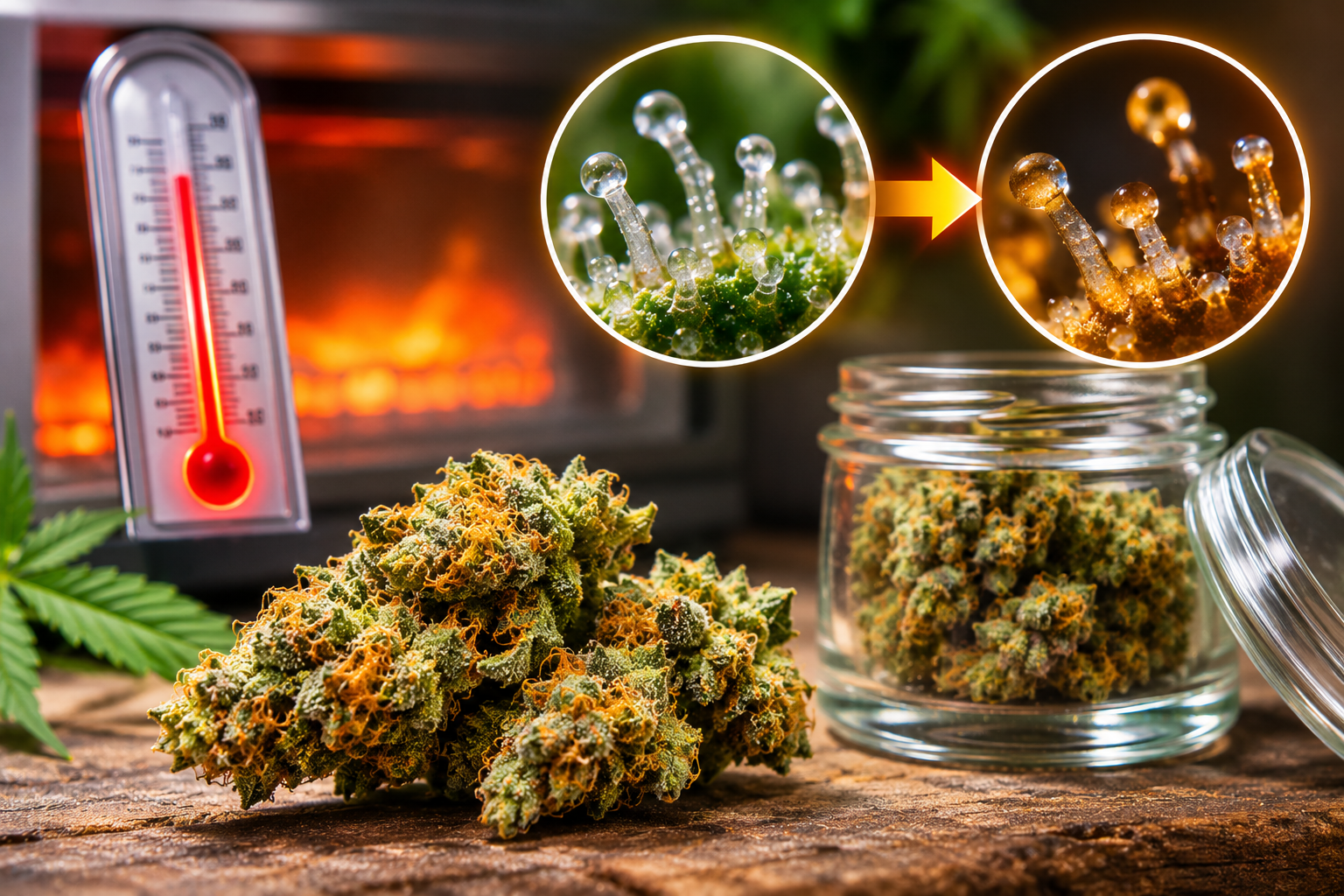
Heat is one of the most significant environmental factors influencing cannabinoid stability.
Cannabinoids can undergo chemical transformations when exposed to elevated temperatures.
One familiar example is decarboxylation, the conversion of acidic cannabinoids such as THCA into their neutral forms.
However, prolonged or excessive heat exposure can also accelerate unwanted chemical changes.
Heat and THC Stability
THC can degrade through several reactions, including oxidation.
Higher temperatures generally increase the rates of many chemical reactions, potentially accelerating potency changes during storage.
For this reason, leaving cannabis products in hot environments may reduce their long-term stability.
Heat and Cannabis Concentrates
Concentrates can also experience changes when exposed to excessive heat.
Depending on their composition, elevated temperatures may affect cannabinoid stability, terpene retention, colour, and texture.
These changes do not necessarily indicate that a concentrate has become unsafe, but they may reduce desirable product characteristics.
Maintaining stable storage temperatures can help preserve product consistency.
How Light Contributes to Cannabinoid Degradation
Light exposure is another important factor affecting cannabis chemistry.
Certain wavelengths, particularly ultraviolet light, can promote photochemical reactions.
These reactions may contribute to cannabinoid degradation when products remain exposed for extended periods.
UV Light and THC
Research has shown that light exposure can influence THC stability under certain storage conditions.
The rate of degradation depends on factors such as light intensity, exposure duration, temperature, and product formulation.
Cannabis stored in transparent containers under direct sunlight may therefore experience greater chemical changes than products stored in suitable light-protective packaging.
Why Dark Packaging Matters
Opaque or amber-coloured packaging can help reduce exposure to light.
This is especially relevant for cannabis oils and concentrates stored over longer periods.
However, packaging must also protect against oxygen, moisture, and contamination to maintain overall product quality.
How Oxygen Affects Cannabis Potency
Oxygen plays an important role in Cannabinoid Degradation because it participates in oxidation reactions.
Oxidation occurs when chemical compounds undergo reactions involving electron transfer, often associated with exposure to oxygen.
In cannabis products, oxidation can contribute to changes in cannabinoid composition.
THC Oxidation and CBN Formation
One frequently discussed example is the transformation of THC into CBN through oxidative degradation pathways.
However, not all degraded THC becomes CBN.
Multiple reactions and degradation products may occur depending on storage conditions.
Consequently, measuring CBN alone does not provide a complete picture of cannabis aging.
Why Airtight Containers Help
Properly sealed containers can reduce repeated exposure to fresh air.
This may help slow certain oxidation-related changes.
However, airtight packaging cannot reverse degradation that has already occurred.
It also cannot guarantee indefinite freshness.
Cannabinoid Degradation: What Happens to THC Over Time?
THC is one of the most closely studied cannabinoids in relation to storage stability.
Over time, THC concentrations may decline as the compound undergoes chemical transformations.
The rate of change varies depending on temperature, light exposure, oxygen availability, and product composition.
Some older cannabis products may contain higher relative amounts of certain degradation products.
However, it is difficult to predict potency loss based on age alone.
Two cannabis products stored for the same length of time may have very different cannabinoid profiles.
Laboratory testing provides a more reliable assessment than appearance or storage duration.
Importantly, old cannabis should not automatically be considered weaker or safer. Its remaining THC content may still be substantial.
Does CBD Experience Cannabinoid Degradation?
Although THC receives considerable attention, CBD can also undergo chemical changes.
CBD stability depends on factors such as temperature, light exposure, oxygen, and formulation.
Certain storage conditions can contribute to CBD oxidation or other degradation reactions.
However, CBD does not follow exactly the same degradation pathways as THC.
Its chemical structure and surrounding ingredients influence how it behaves.
For cannabis oils and CBD-containing products, formulation stability is particularly important.
Manufacturers may evaluate cannabinoid concentrations over time to establish appropriate shelf-life recommendations.
Consumers should follow labeled storage instructions and expiration information when available.
How Humidity Influences Cannabis Freshness
Humidity is another important consideration in cannabis storage.
Although moisture does not affect every cannabinoid degradation pathway directly, it can influence the overall condition of dried cannabis flower.
Excessive humidity may increase the risk of microbial growth.
Extremely dry conditions can make flower brittle and contribute to undesirable handling characteristics.
Stable storage conditions help preserve the physical quality of cannabis.
However, humidity control should not be treated as a substitute for proper sanitation or contamination testing.
Cannabis showing visible mold or other signs of spoilage should not be consumed.
Cannabinoid Degradation in Cannabis Flower vs Concentrates
Different cannabis products may experience degradation differently because their physical structures and chemical compositions vary.
| Cannabis Product | Common Stability Concerns |
|---|---|
| Dried cannabis flower | Light, oxygen, temperature, moisture |
| Live resin | Cannabinoid stability, terpene loss, temperature |
| Rosin | Heat exposure, oxidation, texture changes |
| THC distillate | Oxidation, temperature, formulation stability |
| Cannabis oils | Light, oxygen, carrier oil stability |
| Cannabis edibles | Cannabinoid stability, food spoilage, packaging |
A product’s appearance alone cannot confirm its cannabinoid concentration or safety.
Each product category benefits from appropriate packaging and storage practices.
Potential Benefits of Understanding Cannabinoid Degradation
Learning about Cannabinoid Degradation offers several practical advantages for cannabis consumers and manufacturers.
1. Better Preservation of Cannabis Potency
Understanding how cannabinoids respond to environmental conditions can encourage better storage habits.
Limiting unnecessary exposure to heat, light, and oxygen may help maintain cannabinoid stability.
2. Improved Cannabis Freshness
Cannabis quality involves more than THC concentration.
Appropriate storage can also help preserve texture, aroma, and other sensory characteristics.
3. More Informed Purchasing Decisions
Consumers who understand degradation can evaluate packaging, product dates, and storage recommendations more carefully.
This may help them choose products that better meet their expectations.
4. Greater Awareness of Product Quality
Cannabinoid Degradation highlights the importance of laboratory testing and quality control.
A product’s age, colour, or smell cannot reliably establish its potency.
5. Reduced Product Waste
Proper storage may help prevent avoidable quality deterioration.
This can reduce the likelihood of discarding products because of poor storage conditions.
6. Better Understanding of Cannabis Chemistry
Learning about cannabinoid stability provides insight into how cannabis compounds change naturally.
It also helps distinguish chemical degradation from other processes, such as decarboxylation and microbial spoilage.
How to Store Cannabis to Minimize Cannabinoid Degradation
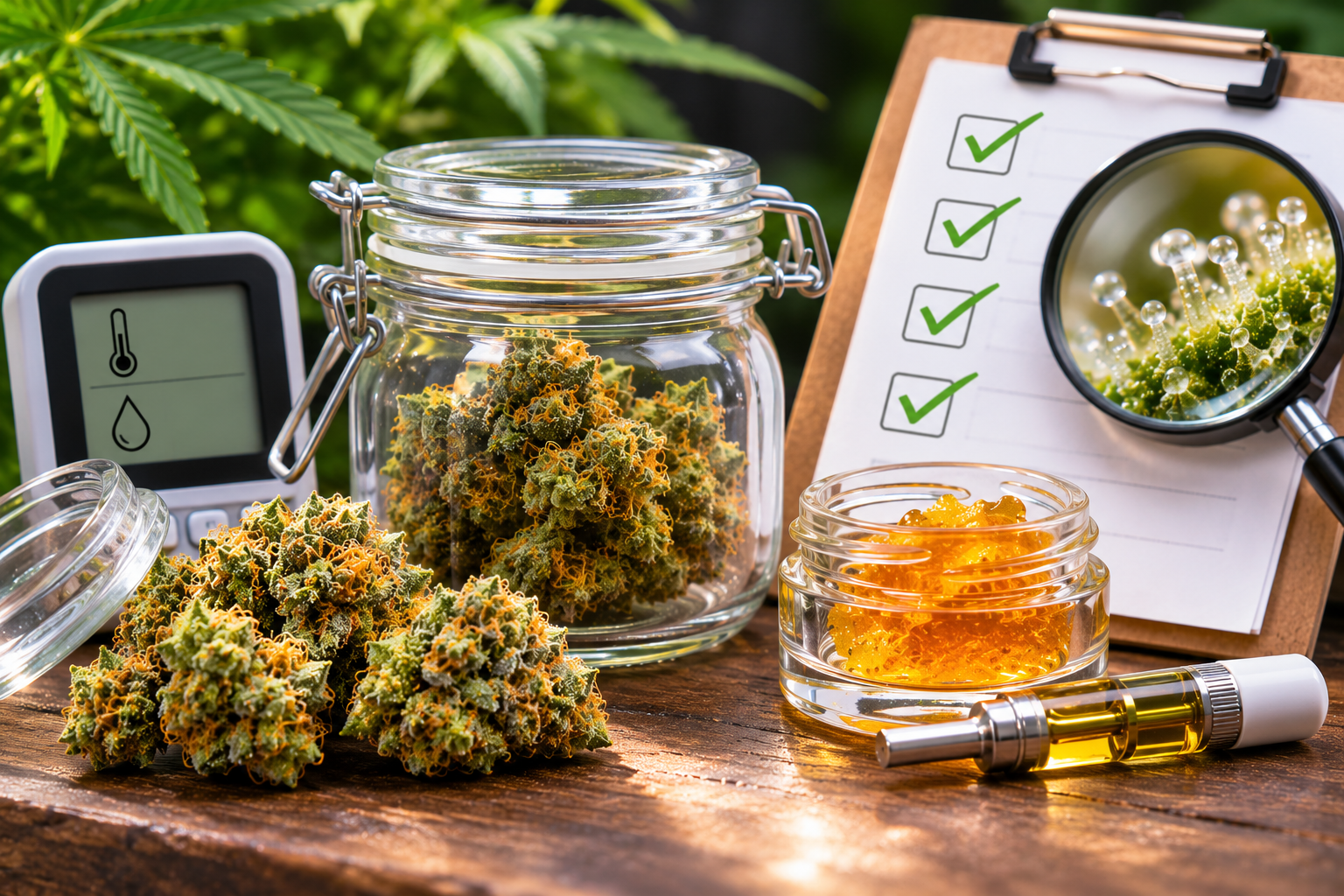
Proper storage can help slow some chemical changes, although it cannot stop them entirely.
For most cannabis products, several general principles are useful.
Keep cannabis away from direct sunlight. Light-protective packaging can reduce unnecessary exposure.
Avoid excessive heat. Store products in a reasonably cool, stable environment according to manufacturer instructions.
Use appropriate containers. Well-sealed, compatible packaging can help limit oxygen exposure.
Control moisture appropriately. Dried flower should be protected from excessive humidity and condensation.
Avoid repeated temperature fluctuations. Rapid environmental changes may affect product stability and create condensation.
Follow product-specific instructions. Oils, concentrates, edibles, and beverages may require different storage conditions.
Cannabis should always be kept securely away from children and pets, preferably in its original child-resistant packaging.
Can You Tell If Cannabinoids Have Degraded?
Some changes may suggest that cannabis has aged or been exposed to unsuitable storage conditions.
These can include changes in colour, aroma, texture, or consistency.
For example, dried flower may become brittle, while certain concentrates may darken or change texture.
However, these observations are not reliable measurements of cannabinoid degradation.
A darker concentrate does not automatically contain less THC.
Similarly, cannabis with a strong aroma is not necessarily more potent.
Only appropriate analytical testing can accurately determine cannabinoid concentrations.
Consumers should avoid assuming that visible changes reveal a product’s exact chemical composition.
Does Cannabinoid Degradation Change Cannabis Effects?
Cannabinoid Degradation can change the relative amounts of cannabinoids present in a product.
In principle, changes in cannabinoid composition may influence the experience.
However, cannabis effects depend on numerous factors, including THC concentration, other cannabinoids, individual sensitivity, and consumption method.
CBN is sometimes marketed as a sleep-promoting cannabinoid, but evidence supporting specific sleep-related benefits remains limited.
Therefore, aged cannabis should not be assumed to produce predictable sedating effects.
Likewise, degradation does not make THC products harmless.
Even products with reduced potency can cause impairment and other adverse effects.
The Role of Packaging in Preventing Cannabinoid Degradation
Packaging plays an important role in preserving cannabis product quality.
Manufacturers may use opaque containers, suitable seals, and materials designed to protect sensitive ingredients.
Packaging selection depends on the type of cannabis product.
For example, cannabis oils may benefit from containers that reduce light exposure, while dried flower requires packaging that helps maintain appropriate moisture conditions.
Concentrates may require materials compatible with their chemical composition.
High-quality packaging can reduce exposure to environmental stressors, but it cannot eliminate all degradation.
Proper storage throughout distribution and retail handling remains important.
The Future of Cannabinoid Stability Research
Research into Cannabinoid Degradation continues to develop as cannabis products become more diverse.
Scientists and manufacturers are studying how different cannabinoids behave under various environmental conditions.
Improved analytical methods may help identify degradation products and better characterize cannabis shelf life.
Research may also support the development of packaging materials that provide improved protection against light and oxygen.
As cannabis beverages, concentrates, and other formulations become more sophisticated, stability testing will remain essential.
A better understanding of cannabinoid degradation can ultimately support more consistent products and clearer consumer information.
Final Thoughts: Why Understanding Cannabinoid Degradation Matters
Cannabinoid Degradation is a natural chemical process that can influence cannabis potency, freshness, and overall product quality.
Environmental factors such as heat, light, oxygen, and moisture can contribute to changes in cannabinoid composition over time.
THC may undergo oxidation and other reactions, while CBD and additional cannabinoids can experience their own chemical transformations.
Although degradation cannot be prevented indefinitely, appropriate packaging and storage conditions can help slow certain changes.
Understanding these processes allows consumers to make more informed decisions about cannabis freshness, product selection, and storage.
For Canadian adults interested in exploring cannabis flower, concentrates, and other cannabis products, Low Price Bud is an online dispensary worth considering. Consumers should independently verify its licensing, product-testing information, and current availability before purchasing. Without independently verified comparisons, it cannot be established as the best online dispensary.
Ultimately, understanding Cannabinoid Degradation helps consumers recognize that cannabis quality depends not only on its original potency but also on how carefully it is packaged, handled, and stored throughout its shelf life.