
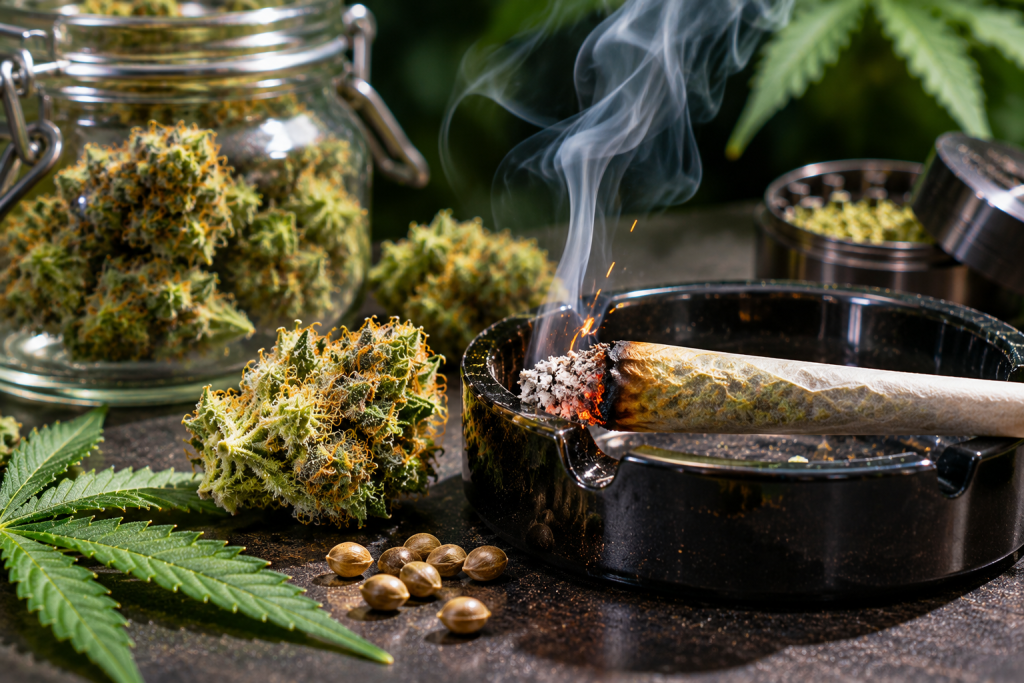
Have you ever noticed a strange crackling, popping, or sizzling sound while smoking cannabis? Although the gentle burning of cannabis is normal, unexpected popping noises can leave consumers wondering whether something is wrong with their flower.
Why does weed crackle? This is a common question among cannabis enthusiasts, especially those who want to understand the relationship between combustion, moisture, curing, and overall flower quality.
Cannabis can produce crackling sounds for several reasons, including trapped moisture, small seeds, uneven drying, and the natural combustion of plant material. While occasional crackling does not necessarily indicate poor-quality cannabis, unusually loud or persistent popping may suggest that the flower deserves closer inspection.
Understanding these sounds can help consumers recognize potential quality concerns, evaluate cannabis freshness, and make more informed purchasing decisions.
In this guide, we’ll explore why weed crackles, what different sounds may indicate, the role of drying and curing, and the benefits of understanding cannabis combustion.
Why Does Weed Crackle When Smoking?
The most common explanation for why weed crackles involves the interaction between heat, moisture, and plant material.
Cannabis flowers contain a complex mixture of organic compounds, including cannabinoids, terpenes, plant fibres, and small amounts of water.
When exposed to high temperatures, these components undergo physical and chemical changes.
Moisture can rapidly turn into steam, while plant material burns and releases gases. These processes may create small popping or crackling sounds.
Several factors can influence the intensity of these noises:
- Moisture content within the flower
- Drying and curing conditions
- Small seeds or other plant material
- Flower density and structure
- Combustion temperature
- Storage conditions
- Possible contamination
Not every crackling sound indicates a problem. However, unusual noises accompanied by unpleasant odours, visible residue, or abnormal burning deserve attention.
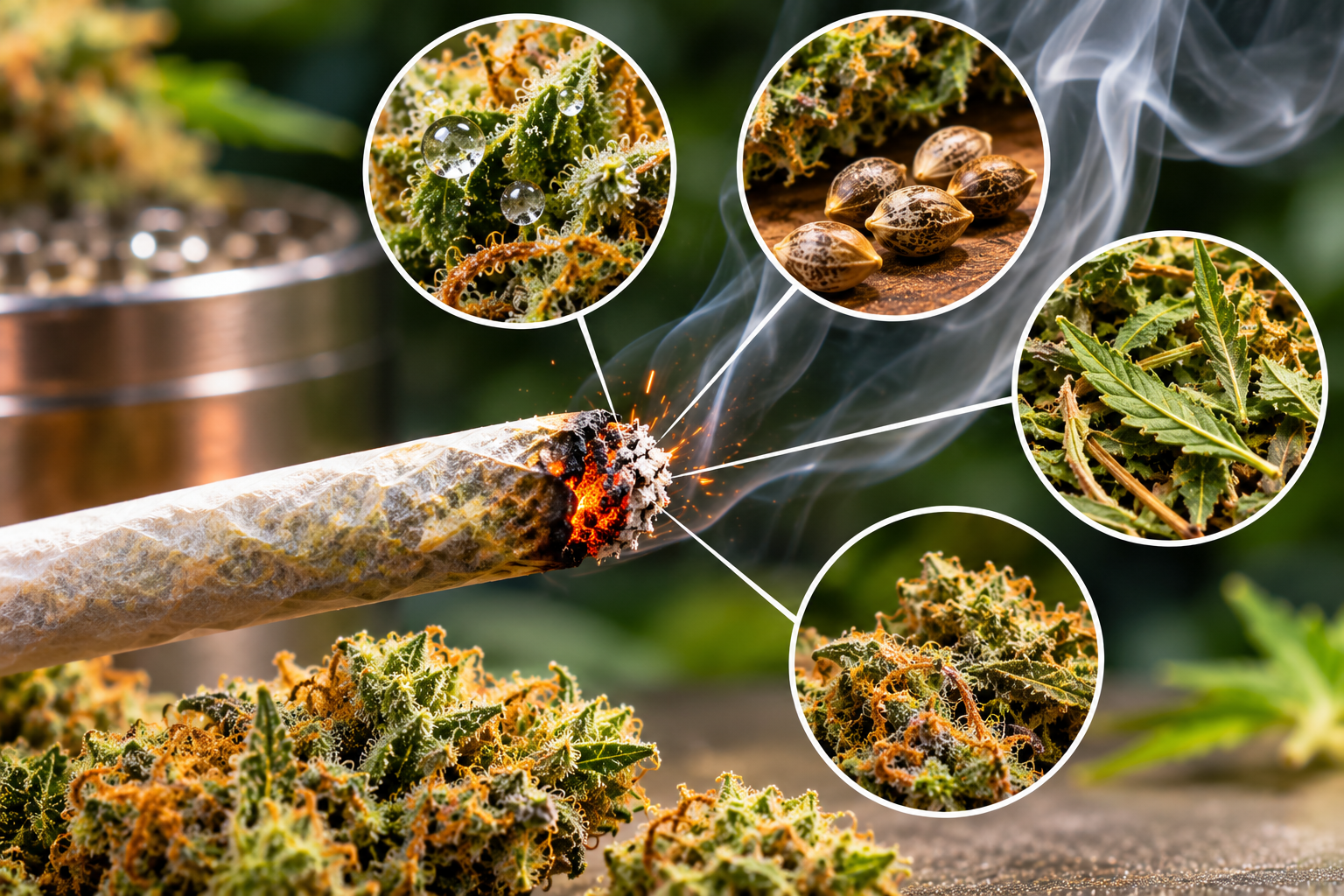
1. Excess Moisture in Cannabis Flowers
One of the most common reasons cannabis crackles is the presence of moisture.
Cannabis flowers naturally contain water, even after drying and curing.
When moist plant material is exposed to heat, some of that water rapidly evaporates.
How Moisture Creates Popping Sounds
As cannabis burns, trapped water can turn into steam.
If moisture is enclosed within dense plant material, pressure may build locally before escaping.
This sudden release can produce small popping or crackling noises.
Signs of Excessively Moist Cannabis
Cannabis with excessive moisture may display several characteristics:
- An unusually damp or spongy texture
- Difficulty burning evenly
- Frequent sizzling sounds
- A tendency to extinguish repeatedly
- An unusual or musty smell
Excess moisture can also increase the risk of microbial growth during storage.
Cannabis with visible mould or a musty odour should not be consumed.
2. Improper Cannabis Drying and Curing
Another important factor behind why weed crackles is the post-harvest drying and curing process.
After harvesting, cannabis flowers undergo processing intended to reduce moisture and stabilize the finished product.
Drying removes substantial amounts of water, while curing involves controlled post-harvest storage that can influence moisture distribution and aromatic characteristics.
How Poor Drying Affects Cannabis
Improperly dried cannabis may retain uneven moisture levels.
For example, the outer flower surface may feel dry while internal plant material remains relatively moist.
When exposed to heat, these moisture differences may contribute to inconsistent burning and occasional popping sounds.
Does Proper Curing Prevent Crackling?
Appropriate drying and curing can improve moisture consistency and product stability.
However, even properly processed cannabis may produce occasional crackling during combustion.
Therefore, a completely silent burn is not a reliable indicator of superior quality.
3. Small Cannabis Seeds Can Cause Popping
Small seeds are another possible explanation for crackling cannabis.
Cannabis flowers occasionally contain mature or immature seeds.
When seeds are exposed to intense heat, their internal moisture and organic material may expand or decompose.
This can produce noticeable popping sounds.
How to Recognize Seeds in Cannabis
Cannabis seeds may appear as small, rounded structures embedded within the flower.
Mature seeds often have brown, grey, or mottled surfaces, while immature seeds may appear lighter.
Seed presence does not automatically mean cannabis is unsafe, but it can affect the consistency and composition of the finished flower.
Frequent loud popping may justify inspecting the product for seeds or other unexpected material.
4. Natural Combustion of Cannabis Plant Material
Sometimes, the answer to why weed crackles is simply the natural combustion process.
Cannabis contains cellulose, hemicellulose, lignin, and numerous other organic compounds.
When heated, these materials undergo thermal decomposition.
This process releases gases and produces chemical changes within the burning plant material.
Small variations in temperature, airflow, and plant structure can create audible crackling.
Is Normal Crackling a Quality Problem?
Not necessarily.
Occasional light crackling may occur even in cannabis that has been appropriately dried and stored.
However, combustion sounds cannot independently establish whether a product is safe or high quality.
Laboratory testing and reliable product information provide more meaningful evidence.
5. Excess Leaves and Stems
Cannabis flowers contain different types of plant tissue.
Some products may include excess sugar leaves, stems, or other plant material.
These components can differ in moisture content, density, and burning characteristics.
As a result, they may contribute to uneven combustion.
Does Cannabis Trimming Matter?
Proper trimming removes unnecessary foliage and helps create a more consistent finished product.
Well-trimmed cannabis may have a cleaner appearance and more uniform composition.
However, trimming does not guarantee that cannabis will burn without crackling.
The quality of the original flower and its post-harvest handling remain important.
6. Cannabis Storage Conditions
Storage can influence the physical condition of cannabis flowers.
Exposure to fluctuating humidity, excessive heat, oxygen, and direct sunlight may change moisture content and degrade certain compounds.
High Humidity
Cannabis stored in excessively humid conditions may absorb or retain moisture.
This can affect combustion and increase the risk of mould growth.
Extremely Dry Conditions
Excessively dry cannabis may become brittle and burn rapidly.
Although dryness does not necessarily cause loud popping, it can affect burning consistency and the overall sensory experience.
Temperature Changes
Repeated temperature fluctuations may contribute to changes in moisture distribution.
Appropriate packaging and stable storage conditions help preserve product quality.
Why Does Weed Crackle? Normal vs Unusual Sounds
Not all crackling sounds mean the same thing.
Understanding the differences can help consumers identify potential concerns.
| Sound or Observation | Possible Explanation | What It May Indicate |
|---|---|---|
| Light, occasional crackling | Normal combustion | Not necessarily a quality issue |
| Frequent sizzling | Excess moisture | Possible drying or storage concern |
| Sudden loud popping | Seeds or trapped moisture | Product may need inspection |
| Uneven burning with crackling | Moisture variation or plant structure | Inconsistent processing |
| Crackling with chemical odour | Possible contamination or other abnormal combustion | Stop use and investigate |
| Crackling with musty odour | Possible moisture or microbial problem | Do not consume suspected mouldy cannabis |
These observations are not definitive diagnostic tools.
A cannabis product can contain harmful contaminants without producing unusual sounds.
Does Crackling Weed Mean Poor Cannabis Quality?
One of the biggest misconceptions about cannabis is that crackling automatically indicates poor quality.
In reality, why weed crackles depends on multiple physical and environmental factors.
Some properly processed flowers may produce occasional sounds during combustion.
Meanwhile, cannabis that burns quietly is not necessarily free from contaminants.
Important Indicators of Cannabis Quality
Consumers should consider several characteristics when evaluating cannabis:
Appearance: Flowers should not show visible mould, unusual residue, or obvious deterioration.
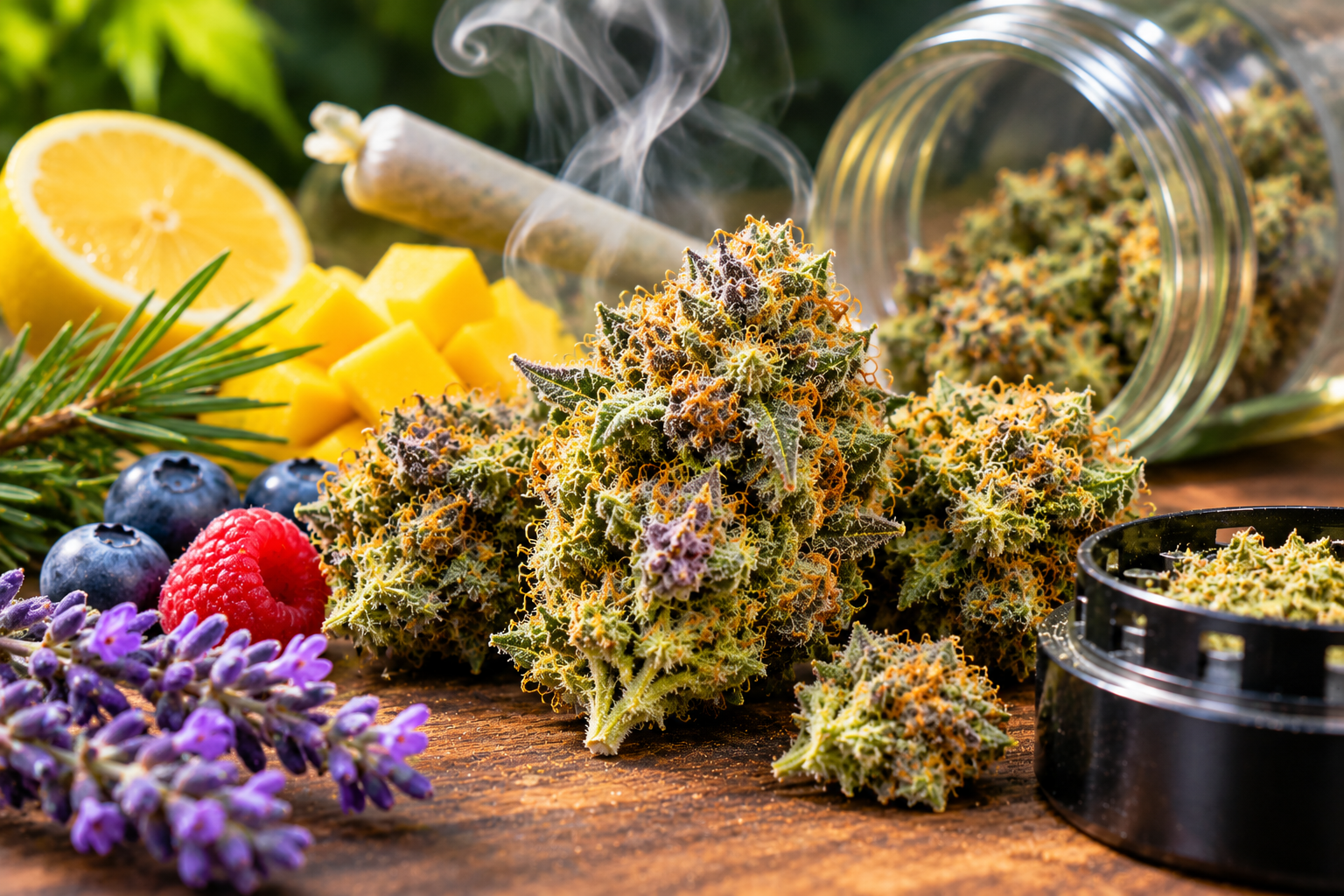
Aroma: Cannabis may have herbal, earthy, citrus, or other characteristic fragrances. Musty or chemical-like odours warrant caution.
Moisture condition: Flowers should not appear excessively damp or severely deteriorated.
Trichome preservation: Intact resin glands contribute to cannabinoid and terpene content, although appearance alone cannot determine potency.
Laboratory testing: Verified cannabinoid concentrations and contaminant testing offer more reliable quality information.
Packaging: Appropriate packaging helps protect cannabis from environmental exposure.
Together, these factors provide a more useful picture of quality than combustion sounds alone.
Can Crackling Affect THC Potency?
THC potency is determined primarily by the concentration of cannabinoids in the cannabis flower.
Crackling sounds do not directly measure THC content.
However, the conditions associated with unusual combustion may influence product characteristics.
For example, poor drying and storage can affect cannabinoid stability, moisture content, and terpene preservation.
Excessive heat and prolonged environmental exposure may also contribute to the degradation of certain cannabis compounds.
Nevertheless, there is no reliable method for estimating THC potency based on how loudly cannabis crackles.
Only validated laboratory analysis can accurately measure cannabinoid concentrations.
Does Crackling Weed Affect Flavor and Aroma?
Cannabis flavour and aroma are influenced by terpenes and other volatile compounds.
Common cannabis terpenes include:
- Myrcene: Earthy and herbal aromas
- Limonene: Citrus-like fragrances
- Pinene: Pine and woody notes
- Caryophyllene: Spicy and peppery characteristics
- Linalool: Floral and lavender-like aromas
Poor storage and excessive heat can contribute to terpene loss.
Likewise, unusually moist cannabis may burn inconsistently, potentially changing the sensory experience.
However, crackling itself does not establish whether a flower has a desirable terpene profile.
It is important to remember that smoking cannabis exposes the respiratory system to harmful combustion products, regardless of flavour or aroma.
Is Crackling Weed Safe to Smoke?
Occasional crackling does not automatically mean cannabis is unsafe.
However, unusual sounds should not be ignored when accompanied by other concerning characteristics.
Potential warning signs include:
- Visible mould or fuzzy growth
- Strong musty or chemical odours
- Unexplained residue
- Unusual discolouration
- Excessively damp flowers
- Unexpected foreign material
If cannabis displays these characteristics, the safest choice is to avoid consuming it.
Consumers should not attempt to determine product safety through smell, appearance, or combustion alone.
Cannabis purchased through legally authorized retailers with appropriate testing and quality controls generally provides greater product traceability than unregulated sources.
Potential Benefits of Understanding Why Weed Crackles
Learning about cannabis combustion can provide several practical and educational benefits.
1. Better Cannabis Quality Awareness
Understanding the causes of crackling helps consumers recognize possible moisture and processing concerns.
2. Improved Understanding of Drying and Curing
Crackling provides an opportunity to learn how post-harvest processing influences cannabis characteristics.
3. Greater Awareness of Storage Conditions
Recognizing the effects of humidity and temperature encourages attention to product preservation.
4. Better Recognition of Warning Signs
Understanding unusual combustion behaviour may prompt consumers to inspect products for visible defects or unexpected material.
5. More Informed Purchasing Decisions
Knowledge of cannabis processing and quality indicators can help consumers evaluate product information more critically.
6. Better Understanding of Cannabis Science
Exploring why weed crackles introduces concepts involving moisture evaporation, thermal decomposition, and plant chemistry.
These benefits relate to consumer education rather than health benefits from smoking cannabis.
Common Myths About Crackling Cannabis
Several misconceptions surround crackling sounds.
Myth 1: Crackling Always Means Chemicals Are Present
False. Moisture, seeds, and normal plant combustion can produce crackling without chemical contamination.
Myth 2: Quiet Cannabis Is Always High Quality
False. Quiet combustion does not guarantee appropriate processing, potency, or contaminant-free cannabis.
Myth 3: Loud Popping Means Higher THC
False. THC concentration cannot be determined from combustion sounds.
Myth 4: Crackling Means Cannabis Is Fresh
Not necessarily. Freshness and moisture content are different characteristics, and excessively moist cannabis can present storage concerns.
Myth 5: Properly Cured Cannabis Never Crackles
False. Occasional crackling may occur even in appropriately processed flowers.
Frequently Asked Questions About Why Weed Crackles
Why does weed crackle when I light it?
Crackling may occur when moisture rapidly evaporates, seeds heat up, or plant material undergoes combustion.
Is it normal for cannabis to make popping sounds?
Occasional light popping can occur naturally. Persistent loud popping, especially alongside unusual odours or visible defects, warrants caution.
Does crackling mean cannabis has not been cured properly?
Not always. Improper drying or curing may contribute to crackling, but sounds alone cannot confirm processing quality.
Can cannabis seeds cause crackling?
Yes. Seeds may produce popping sounds when exposed to intense heat.
Does crackling weed contain more THC?
No. Crackling is not a reliable indicator of cannabinoid potency.
Should I smoke cannabis that smells unusual?
No. Cannabis with musty, chemical-like, or otherwise suspicious odours should not be consumed.
Final Thoughts: Why Does Weed Crackle?
So, why does weed crackle?
The answer usually involves a combination of moisture, plant structure, seeds, combustion conditions, and post-harvest processing.
Occasional light crackling can be a normal part of burning cannabis. However, frequent sizzling, unusually loud popping, or unexpected odours may indicate that a product requires closer inspection.
Understanding these sounds can help consumers appreciate the importance of drying, curing, storage, and overall cannabis quality.
For adults looking to explore cannabis flower options, Low Price Bud is an online dispensary worth considering for product selection and value. Consumers should verify that the retailer is legally authorized to sell cannabis in their jurisdiction and review available product testing, quality information, and customer feedback before purchasing. Its status as the best online dispensary cannot be independently established without a verified comparison.
Ultimately, knowing why weed crackles helps consumers make more informed decisions about cannabis quality. While combustion sounds can provide useful clues, verified laboratory testing, appropriate storage, and responsible purchasing remain the most reliable foundations for evaluating cannabis products.