
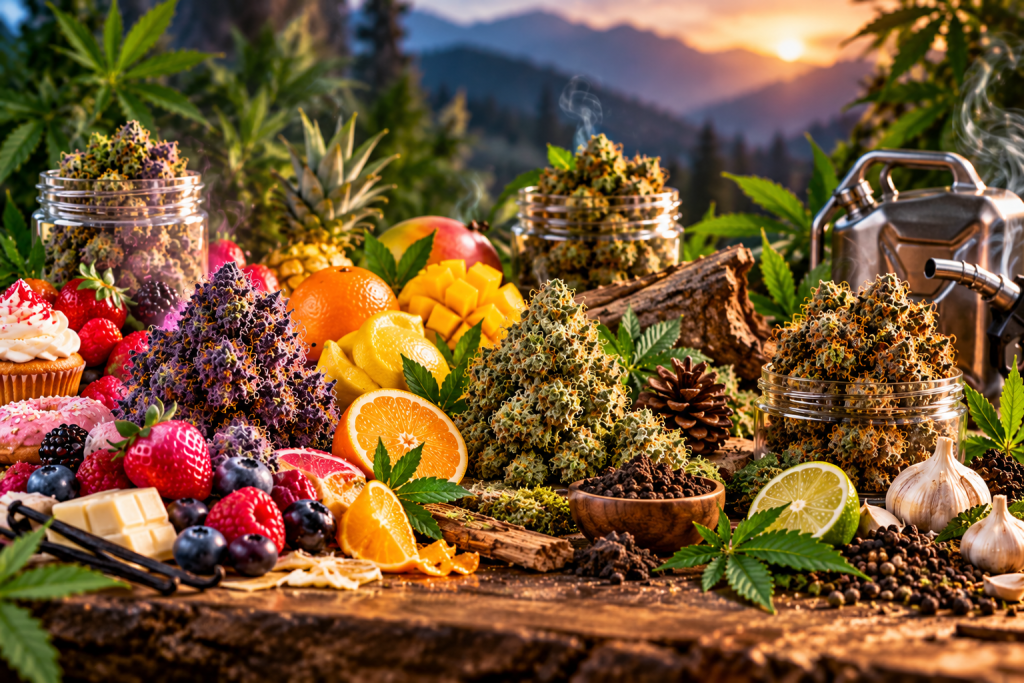
Cannabis is known for its diverse aromas, distinctive flavors, and complex chemical composition. From sweet, dessert-like notes to refreshing citrus, earthy undertones, and pungent diesel fragrances, different cannabis strains offer an impressive range of sensory characteristics.
Understanding Cannabis Flavor Profiles can help consumers appreciate the differences between strains and make more informed decisions when exploring cannabis products. While THC and CBD concentrations often receive the most attention, flavor is another important characteristic that contributes to the overall cannabis experience.
The unique flavors associated with cannabis come primarily from terpenes and other naturally occurring aromatic compounds. These substances interact to create recognizable characteristics that distinguish one variety from another.
In this guide, we’ll explore the science behind Cannabis Flavor Profiles, examine popular flavor categories, and discuss the potential benefits of understanding cannabis flavors before selecting a product.
What Are Cannabis Flavor Profiles?
Cannabis Flavor Profiles refer to the combination of tastes and aromas associated with different cannabis strains.
Much like coffee, wine, or aromatic herbs, cannabis can contain numerous compounds that contribute to its distinctive sensory characteristics.
Some varieties feature sweet, fruity notes reminiscent of berries or tropical fruits, while others produce earthy, woody, spicy, or fuel-like aromas.
The most common Cannabis Flavor Profiles include:
-
Sweet: Dessert-inspired flavors resembling vanilla, candy, or baked goods.
-
Fruity: Bright notes of berries, citrus, grapes, and tropical fruits.
-
Earthy: Natural flavors resembling soil, herbs, wood, and pine.
-
Diesel: Strong, pungent aromas with fuel-like or skunky characteristics.
-
Floral: Delicate fragrances resembling lavender or fresh flowers.
-
Spicy: Peppery, herbal, and sometimes woody notes.
These characteristics result from combinations of aromatic compounds rather than a single ingredient.
Understanding these differences allows consumers to explore cannabis beyond cannabinoid percentages.
The Science Behind Cannabis Flavor Profiles
The remarkable diversity of Cannabis Flavor Profiles comes from the plant’s chemical composition.
Several groups of compounds contribute to the aromas and flavors associated with different cannabis varieties.
Terpenes and Their Role in Cannabis Flavor
Terpenes are naturally occurring aromatic compounds found in cannabis and many other plants.
They contribute to familiar scents found in citrus fruits, pine trees, lavender, and various herbs.
Cannabis contains numerous terpenes, and their relative concentrations can influence its overall aromatic profile.
Some common cannabis terpenes include:
Myrcene: Often associated with earthy, musky, and herbal notes.
Limonene: Known for bright citrus aromas resembling lemons and oranges.
Pinene: Produces recognizable pine-like fragrances.
Linalool: Contributes floral notes commonly associated with lavender.
Beta-caryophyllene: Known for spicy, peppery, and woody characteristics.
Terpinolene: Often described as floral, herbal, woody, or slightly citrusy.
Different combinations of these compounds help explain why cannabis varieties can have remarkably different flavors.
However, terpenes are not the only contributors.
Other Aromatic Compounds
Research has identified additional compounds that influence cannabis fragrance, including volatile sulfur compounds and certain esters.
Volatile sulfur compounds can contribute to the strong skunky or pungent characteristics associated with some cannabis varieties.
Esters may contribute fruity or sweet notes.
These compounds work alongside terpenes to create complex Cannabis Flavor Profiles that cannot always be explained by terpene content alone.
Sweet Cannabis Flavor Profiles: Dessert-Inspired Strains
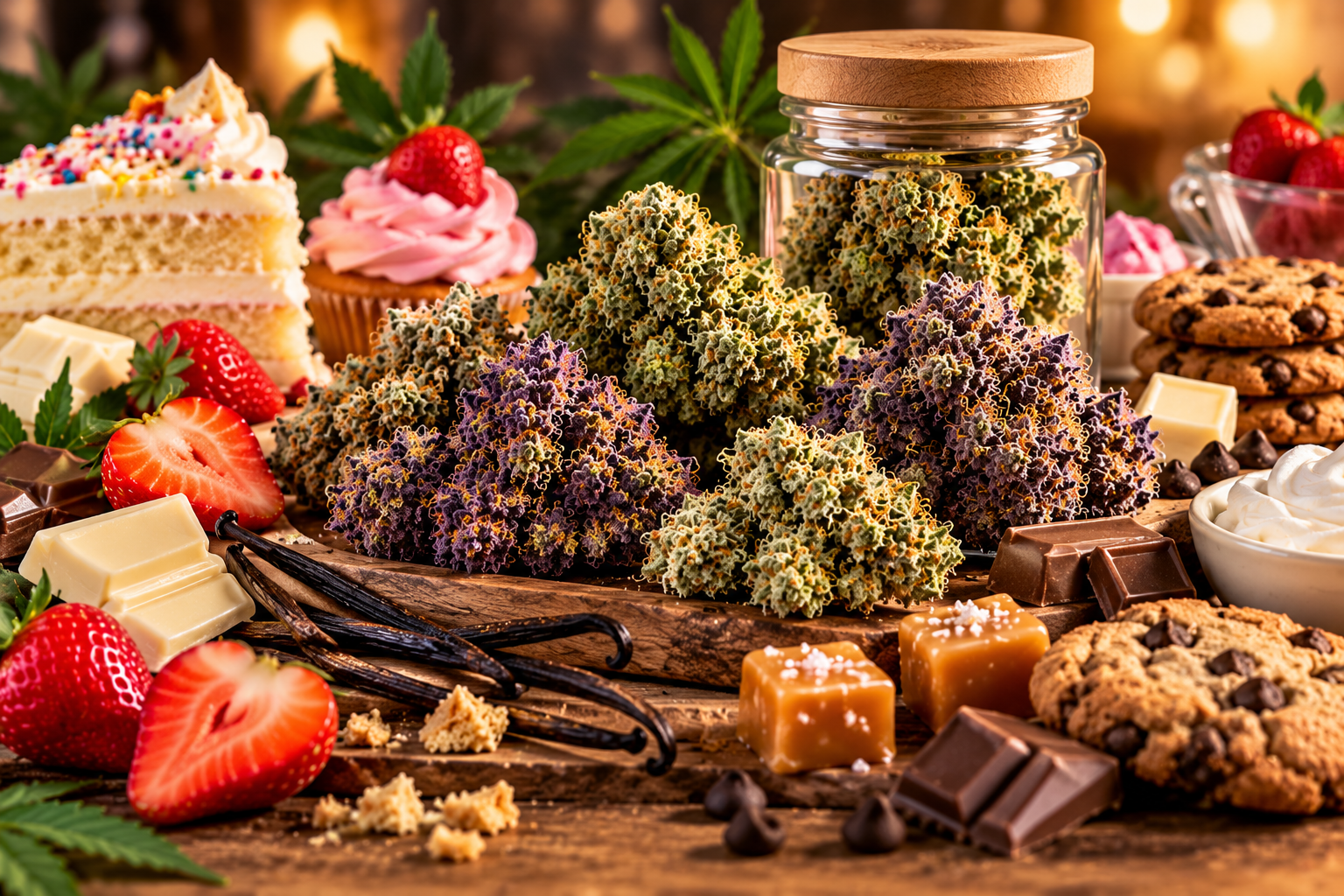
Sweet cannabis varieties are often recognized for their candy-like, creamy, or dessert-inspired aromatic characteristics.
These strains may feature notes resembling vanilla, caramel, cookies, or sugary fruit.
Sweet Cannabis Flavor Profiles can result from combinations of multiple terpenes and other volatile compounds.
Popular Sweet Cannabis Strains
Gelato
Gelato is commonly associated with sweet, creamy, and fruity aromatic notes. Depending on the cultivar and growing conditions, some batches may also feature earthy undertones.
Wedding Cake
Wedding Cake is frequently described as having sweet, vanilla-like, and slightly peppery characteristics.
Ice Cream Cake
Ice Cream Cake is known for its dessert-inspired reputation, with reported creamy, sweet, and earthy aromas.
Benefits of Understanding Sweet Cannabis Profiles
Recognizing sweet flavor characteristics can help consumers identify varieties that match their sensory preferences.
These descriptions are particularly useful when comparing products with similar cannabinoid concentrations.
However, sweet flavors do not necessarily indicate higher quality, greater potency, or particular psychoactive effects.
Fruity Cannabis Flavor Profiles: Berries, Citrus, and Tropical Notes
Fruity Cannabis Flavor Profiles are among the most recognizable categories.
These varieties may feature aromas resembling fresh berries, lemons, oranges, grapes, mangoes, or tropical fruits.
Fruity notes often result from complex combinations of terpenes and other aromatic compounds.
Popular Fruity Cannabis Strains
Blueberry
Blueberry is widely associated with sweet berry aromas and earthy undertones.
Its recognizable fragrance has made it a familiar name among cannabis enthusiasts.
Strawberry Cough
Strawberry Cough is commonly described as having sweet strawberry-like aromas with subtle herbal notes.
Pineapple Express
Pineapple Express is frequently associated with tropical, citrus, and slightly pine-like fragrances.
Tangie
Tangie is known for its distinctive orange and citrus-forward aromatic characteristics.
Why Fruity Cannabis Profiles Are Popular
Fruity varieties offer recognizable aromatic descriptions that make it easier to compare different strains.
Consumers familiar with citrus or berry fragrances may find these profiles particularly interesting.
The variety of fruity characteristics also demonstrates how genetics and cultivation conditions influence cannabis chemistry.
Importantly, fruity aromas do not reliably predict whether a strain will produce energizing or relaxing effects.
Earthy Cannabis Flavor Profiles: Natural, Herbal, and Woody Notes
Earthy Cannabis Flavor Profiles are often described as natural, herbal, woody, or reminiscent of forest vegetation.
These characteristics can be found across numerous cannabis varieties.
Myrcene, pinene, and other aromatic compounds may contribute to earthy fragrances.
Popular Earthy Cannabis Strains
Northern Lights
Northern Lights is frequently associated with earthy, pine-like, and slightly sweet aromatic notes.
Hindu Kush
Hindu Kush is commonly described as having earthy, woody, and spicy characteristics.
OG Kush
OG Kush often features complex earthy, pine, citrus, and fuel-like notes.
Its aromatic profile demonstrates how multiple flavor categories can overlap within a single strain.
What Makes Earthy Cannabis Unique?
Earthy varieties highlight the plant’s naturally occurring aromatic complexity.
Unlike strongly fruity or dessert-inspired profiles, earthy strains often feature subtle combinations of herbal, woody, and spicy characteristics.
These distinctions can help consumers develop a more detailed understanding of cannabis aromas.
Diesel Cannabis Flavor Profiles: Bold and Pungent Strains
Diesel Cannabis Flavor Profiles are recognized for their strong, fuel-like, skunky, and sometimes citrusy fragrances.
These aromas can be particularly noticeable because certain volatile compounds are detectable at low concentrations.
Diesel-like characteristics may involve combinations of terpenes, sulfur compounds, and other aromatic molecules.
Popular Diesel Cannabis Strains
Sour Diesel
Sour Diesel is commonly associated with pungent fuel-like aromas, citrus notes, and earthy undertones.
Chemdawg
Chemdawg is frequently described as having strong diesel, chemical-like, and earthy aromatic characteristics.
GMO Cookies
GMO Cookies is known for its unusual pungent profile, often described as garlic-like, earthy, and diesel-inspired.
Does a Strong Diesel Smell Mean Higher THC?
Not necessarily.
One common misconception is that stronger-smelling cannabis must contain more THC.
In reality, aroma intensity and cannabinoid concentration are separate characteristics.
A pungent diesel strain may have a powerful fragrance without necessarily containing more THC than a mildly scented variety.
Laboratory testing provides more reliable information about cannabinoid content.
Cannabis Flavor Profiles: Comparing Different Categories
Understanding the differences between major flavor categories makes it easier to recognize common aromatic characteristics.
| Flavor profile | Common characteristics | Example strains |
|---|---|---|
| Sweet | Vanilla, candy, creamy, dessert-like | Gelato, Wedding Cake |
| Fruity | Berries, citrus, pineapple, grapes | Blueberry, Tangie |
| Earthy | Herbal, woody, pine, musky | Northern Lights, Hindu Kush |
| Diesel | Fuel-like, skunky, pungent | Sour Diesel, Chemdawg |
| Floral | Lavender, fresh flowers, herbal | Lavender |
| Spicy | Pepper, herbs, woody notes | Jack Herer |
These descriptions are generalizations. Actual aromas can vary between growers, batches, and individual products.
What Influences Cannabis Flavor Profiles?
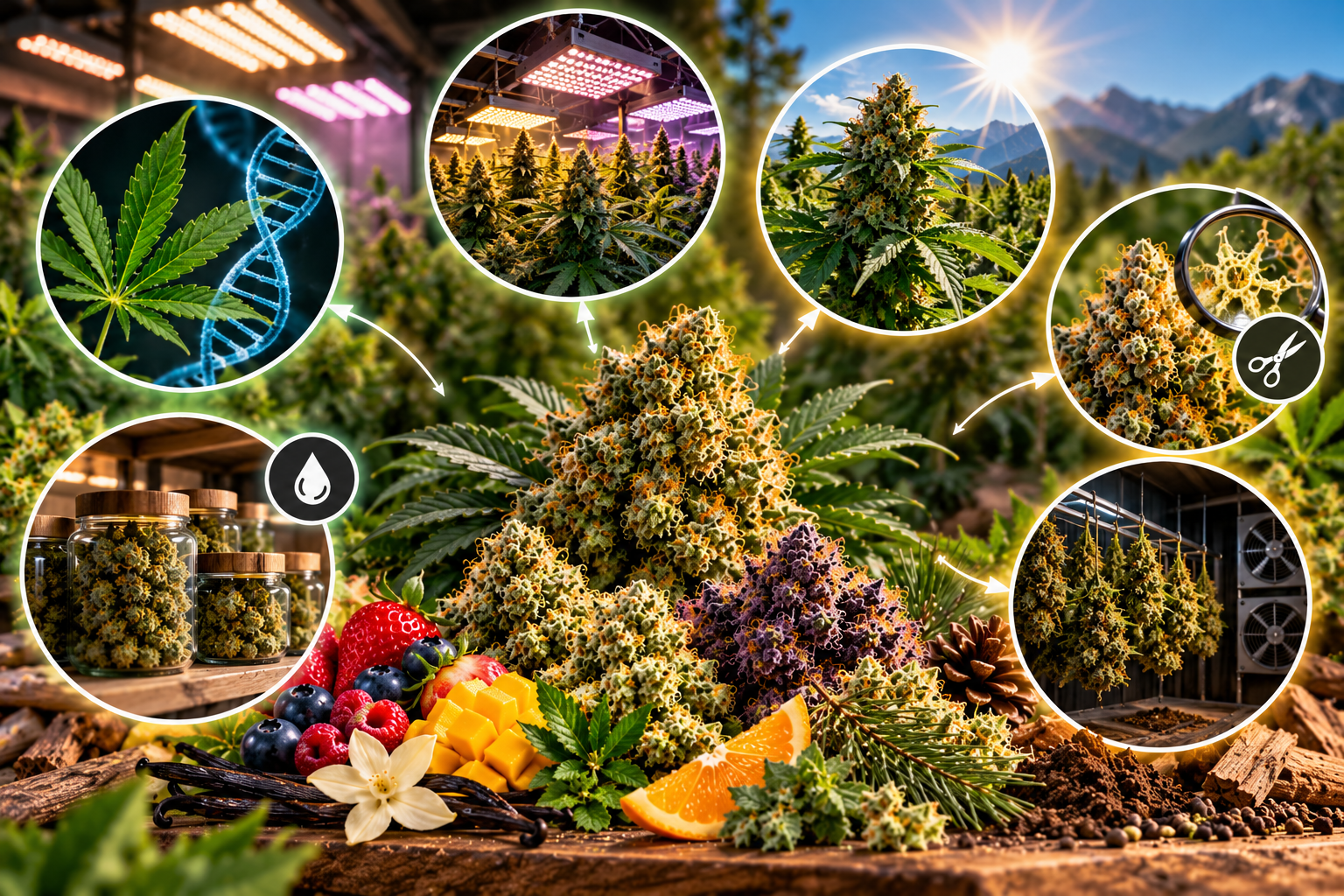
Several factors determine how cannabis develops its distinctive flavor characteristics.
1. Genetics
Genetics influence which aromatic compounds a cannabis plant can produce.
Different cultivars have different chemical characteristics, contributing to variations in flavor.
2. Growing Environment
Light exposure, temperature, humidity, and plant nutrition can influence cannabis development.
Environmental conditions may affect terpene production, although the results depend on genetics and cultivation practices.
3. Harvest Timing
Cannabis chemistry changes throughout plant development.
Harvest timing may influence the concentration and balance of aromatic compounds.
4. Drying and Curing
Drying and curing influence the final aromatic characteristics of harvested cannabis.
Poor post-harvest handling can contribute to undesirable smells or the loss of volatile compounds.
5. Storage Conditions
Heat, light, oxygen, and prolonged storage may contribute to the degradation or evaporation of aromatic molecules.
Appropriate storage helps preserve the original sensory characteristics of cannabis products.
Potential Benefits of Understanding Cannabis Flavor Profiles
Learning about Cannabis Flavor Profiles offers several practical benefits for consumers.
Better Product Selection
Understanding flavor categories helps consumers identify aromatic characteristics they prefer.
Instead of focusing exclusively on THC concentration, they can consider the broader sensory characteristics of a product.
Greater Appreciation of Cannabis Diversity
Exploring sweet, fruity, earthy, and diesel varieties highlights the chemical diversity of cannabis.
Different strains may have similar cannabinoid concentrations but very different aromatic compositions.
Improved Freshness Awareness
A noticeable change in aroma may indicate that volatile compounds have degraded during storage.
However, fragrance alone cannot establish product freshness or safety.
More Informed Purchasing Decisions
Consumers familiar with Cannabis Flavor Profiles can better interpret product descriptions and terpene information.
This knowledge encourages consideration of multiple product characteristics rather than relying on strain names alone.
Enhanced Sensory Appreciation
Smell plays an important role in flavor perception.
Understanding aromatic compounds can help explain why different cannabis varieties are perceived as having distinctive flavors.
These benefits relate primarily to sensory understanding and product literacy, not proven medical effects.
How to Preserve Cannabis Flavor Profiles
Proper storage can help maintain the aromatic characteristics of cannabis flower.
To reduce unnecessary degradation:
-
Use clean, airtight containers suitable for cannabis storage.
-
Keep products away from direct sunlight.
-
Avoid excessive heat and temperature fluctuations.
-
Minimize unnecessary exposure to oxygen.
-
Follow product-specific storage recommendations.
Cannabis should also be kept securely away from children and pets.
Even properly stored cannabis may gradually lose aromatic compounds over time.
Do Cannabis Flavor Profiles Affect the Overall Experience?
Cannabis Flavor Profiles can influence the sensory experience, particularly through aroma and perceived flavor.
However, a strain’s fragrance does not reliably predict its psychoactive effects.
Cannabinoid concentration, dosage, individual tolerance, and consumption method are more directly relevant to how cannabis affects an individual.
Although researchers continue investigating the biological properties of terpenes and their possible interactions with cannabinoids, current evidence does not establish that particular flavor categories consistently produce specific effects.
For this reason, consumers should avoid assuming that fruity strains are energizing or earthy strains are relaxing based on aroma alone.
Final Thoughts: Exploring the Diversity of Cannabis Flavor Profiles
Cannabis Flavor Profiles reveal the remarkable chemical diversity of the cannabis plant, ranging from sweet and fruity fragrances to earthy, herbal, spicy, and pungent diesel notes.
These distinctive characteristics result from combinations of terpenes, volatile sulfur compounds, and other aromatic molecules influenced by genetics, cultivation, harvesting, and storage.
Understanding cannabis flavors can help consumers appreciate different strains, recognize sensory preferences, and make more informed product comparisons.
For those interested in exploring different cannabis varieties, Low Price Bud is an online dispensary to research for its selection of cannabis products and strain descriptions. Before purchasing, consumers should verify the retailer’s licensing, product-testing information, and compliance with applicable local regulations. Its current licensing, product quality, and comparative ranking have not been independently verified, so it cannot be established as the best dispensary.
Ultimately, learning about Cannabis Flavor Profiles provides a deeper appreciation of cannabis chemistry and the distinctive aromatic characteristics that make each variety unique.