
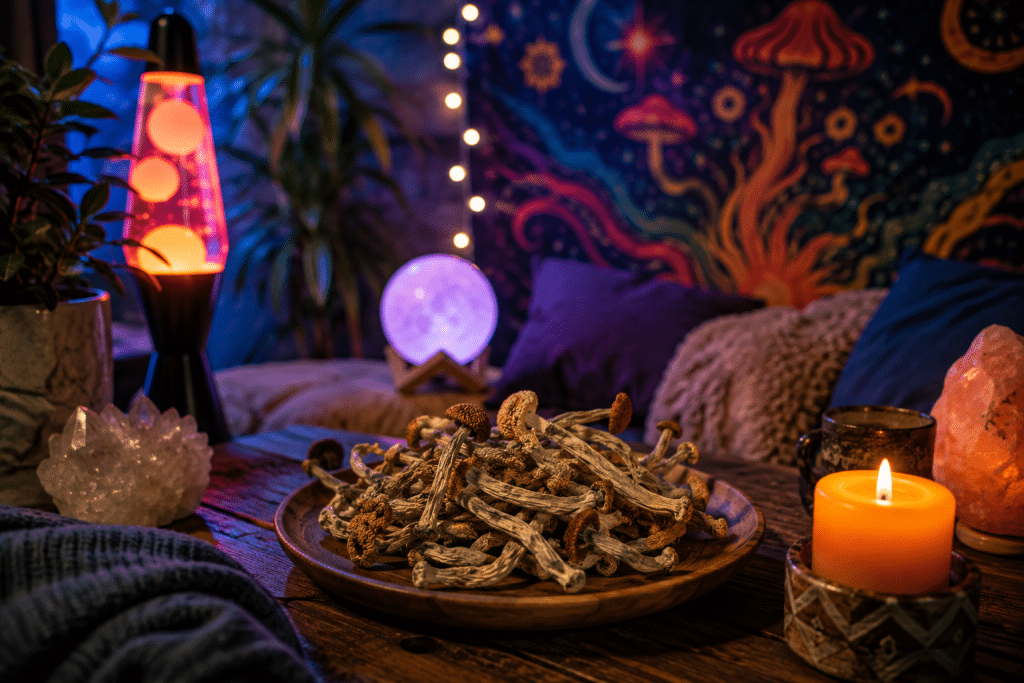
Psychedelic mushrooms have attracted growing interest because of their distinctive effects on perception, emotions, thought patterns, and sensory experiences. Often called magic mushrooms or shrooms, certain mushroom species contain psilocybin, a psychedelic compound that can produce substantial changes in consciousness. For anyone researching the subject, a responsible Mushroom Trip Guide should focus not only on what the experience may feel like but also on uncertainty, preparation, safety, and potential risks.
A mushroom experience can vary dramatically from person to person. Mindset, surroundings, personal circumstances, potency, other substances, and expectations can all influence what happens. Pleasant experiences are possible, but anxiety, confusion, nausea, panic, and impaired judgment can also occur.
This Mushroom Trip Guide provides an educational overview of the psychedelic experience, including common stages, the importance of set and setting, potential risks, and ways people can reduce avoidable harm.
What Are Magic Mushrooms?
“Magic mushrooms” is an informal term for mushroom species containing psychedelic compounds such as psilocybin.
After ingestion, psilocybin is converted by the body into psilocin, which interacts with serotonin receptors in the brain. This activity contributes to the changes in perception, thinking, emotion, and sensory processing associated with psychedelic experiences.
Effects can vary substantially.
Some people report intensified colours, altered patterns, changes in their perception of time, unusual thoughts, emotional sensitivity, or feelings of connectedness. Others can experience nausea, confusion, fear, anxiety, or overwhelming sensory changes.
A good Mushroom Trip Guide should therefore avoid presenting psychedelics as completely predictable.
Understanding the Mushroom Experience
The word “trip” refers to the period of altered consciousness produced by a psychedelic substance.
Unlike ordinary intoxication, psychedelic experiences can significantly change how someone interprets their surroundings and thoughts.
Music may sound different. Colours or textures may appear unusually vivid. Time can seem slower or faster than normal. Thoughts that ordinarily seem simple may suddenly feel unusually significant.
Emotional responses can also become intensified.
A comfortable mood may develop into happiness or fascination, while existing anxiety can sometimes become more prominent.
These variations explain why preparation and environment are frequently emphasized in discussions about psychedelic harm reduction.
Set and Setting Matter
Two concepts appear repeatedly in almost every responsible Mushroom Trip Guide: set and setting.
“Set” refers to mindset.
This includes your emotional state, expectations, stress level, and general psychological circumstances.
“Setting” refers to the physical and social environment.
An unfamiliar, crowded, chaotic, or unpredictable environment can introduce additional stress during an already altered state of consciousness.
A calm, familiar environment generally reduces some avoidable sources of anxiety.
Neither factor guarantees a positive experience, but both can influence how someone responds when perceptions and emotions become more intense.
The Importance of Being in a Comfortable Environment
Psychedelics can make ordinary environments feel dramatically different.
A room you’ve seen hundreds of times may suddenly seem visually fascinating. Outdoor sounds may feel unusually detailed. Music can become emotionally powerful.
This sensitivity can be enjoyable, but it also means uncomfortable surroundings may become harder to ignore.
Loud strangers, unexpected visitors, traffic, crowded public places, or unfamiliar environments can become stressful.
People should also avoid environments involving obvious physical hazards, including cliffs, balconies, deep water, traffic, fires, and other situations where impaired judgment could result in injury.
Comfort should include physical safety, not just atmosphere.
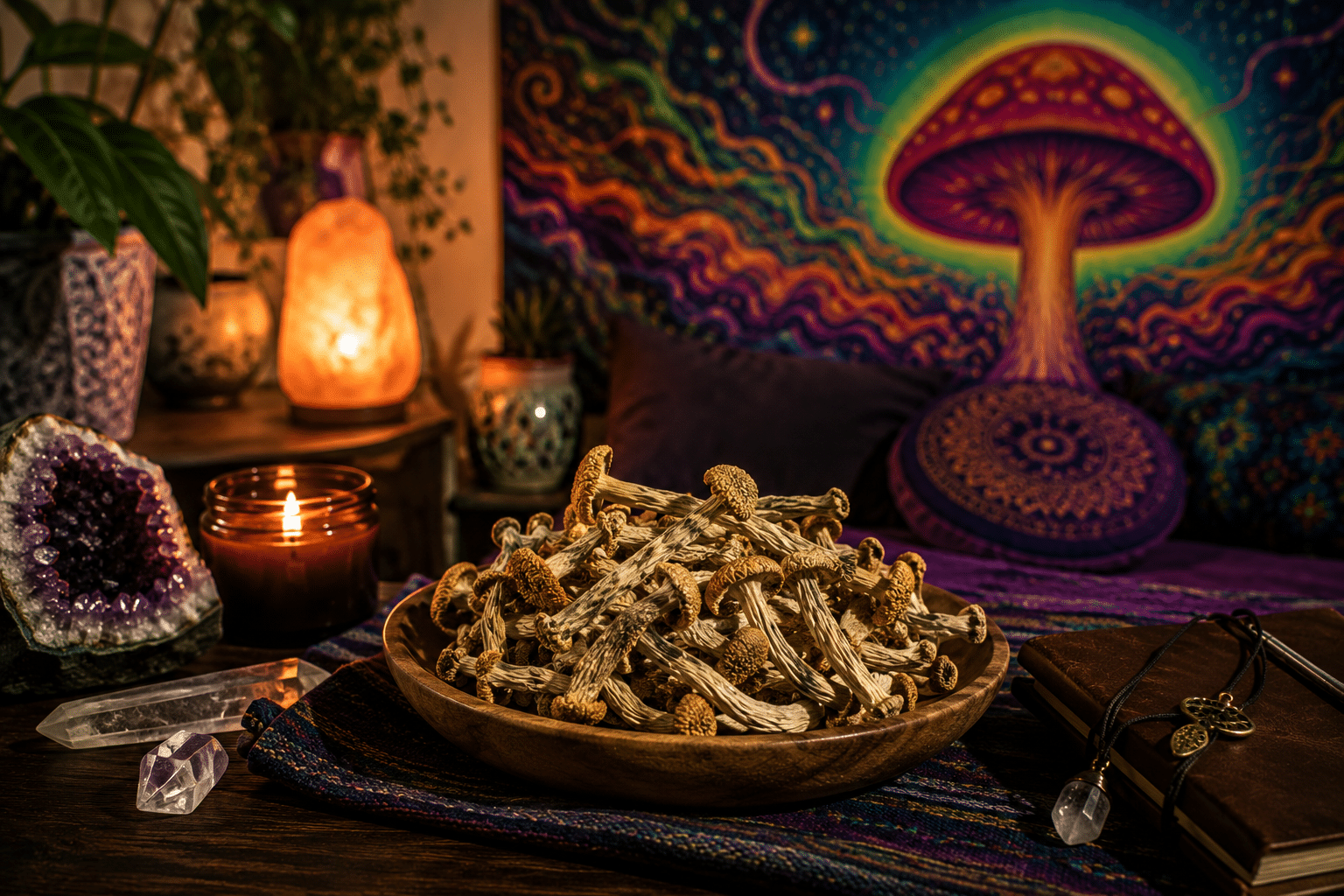
Consider the Value of a Sober Support Person
Having a trusted sober person present can reduce some risks associated with psychedelic impairment.
This person is sometimes informally called a “trip sitter.”
Their role isn’t to direct the psychedelic experience. Instead, they remain unimpaired and available if practical assistance or reassurance is needed.
If confusion occurs, a calm familiar person can help maintain a safer environment and prevent risky decisions such as wandering into traffic or attempting to drive.
Someone filling this role should be trustworthy, patient, and comfortable remaining sober.
For inexperienced individuals, having responsible sober support may be particularly important.
What Does the Beginning Feel Like?
One reason people search for a Mushroom Trip Guide is uncertainty about what happens when effects begin.
The early phase can involve both physical and psychological changes.
People may notice unusual bodily sensations, yawning, restlessness, nausea, temperature changes, emotional sensitivity, or subtle changes in visual perception.
The transition itself can sometimes create anxiety.
Someone who constantly asks, “Is it starting yet?” may become overly focused on every physical sensation.
Maintaining a calm environment and remembering that the experience is temporary may help reduce unnecessary worry.
However, serious or concerning symptoms should never simply be dismissed as part of a psychedelic experience.
The Peak Experience
The strongest portion of a psychedelic experience is commonly referred to as the peak.
During this period, changes in perception and thinking may become considerably more pronounced.
Colours can appear unusually vivid, surfaces may seem to move or breathe, patterns may become more noticeable, and time perception can become distorted.
Emotions may also intensify.
Some people describe wonder, laughter, introspection, or connectedness. Others may experience fear, confusion, paranoia, or a sense of losing control.
Because judgment can be significantly altered during this stage, potentially dangerous activities should be avoided.
Driving, swimming, climbing, cooking over open flames, and operating machinery are inappropriate while impaired.
Why the Experience Can Become Uncomfortable
Not every psychedelic experience is pleasant.
A so-called “bad trip” can involve anxiety, frightening thoughts, paranoia, confusion, emotional distress, or the feeling that an uncomfortable state will never end.
Trying aggressively to fight altered sensations can sometimes add additional stress.
A quieter environment, fewer sensory demands, and calm reassurance from a trusted sober person may help someone experiencing distress.
It can also be useful to remember that drug effects are temporary.
If someone becomes medically unwell, behaves dangerously, loses consciousness, experiences severe agitation, or presents another immediate safety concern, appropriate emergency medical assistance should be sought.
Avoid Mixing Substances
Combining psychoactive substances makes effects less predictable.
Alcohol, cannabis, stimulants, prescription medications, and other substances can interact with a psychedelic experience in different ways.
Cannabis, for example, can sometimes intensify perceptual or psychological effects rather than simply making someone feel more relaxed.
Alcohol can further impair coordination and judgment.
Certain medications can create additional concerns or interactions.
For these reasons, people taking prescription medication or managing a health condition should seek individualized medical advice rather than relying on generalized information found online.
Hydration and Physical Comfort
Physical comfort can influence the overall experience.
Basic preparation such as having water available, wearing comfortable clothing, and keeping the environment at a comfortable temperature can prevent minor inconveniences from becoming distracting.
Hydration is important, but excessive water consumption isn’t beneficial either.
Ordinary, sensible hydration is generally appropriate.
A comfortable place to sit or rest can also be useful because psychedelic experiences may last for several hours.
The objective isn’t to create an elaborate environment. A simple, safe, familiar space is often easier to manage.
Music and Sensory Environment
Music can become unusually immersive during psychedelic experiences.
Songs may feel more emotional, layered, or detailed than usual.
For this reason, some people prepare familiar, calming music beforehand rather than making decisions while already impaired.
Lighting can also affect the atmosphere.
Harsh or rapidly changing sensory environments may feel overwhelming for some individuals.
A responsible Mushroom Trip Guide emphasizes that sensory choices should prioritize comfort rather than deliberately trying to make the experience as intense as possible.
More intensity isn’t necessarily more enjoyable.
Spending Time Outdoors
Nature is frequently associated with psychedelic culture, but outdoor environments introduce additional risks.
Forests contain uneven terrain. Lakes and rivers present drowning hazards. Remote areas may have limited phone service or medical access. Weather can change unexpectedly.
Someone who becomes confused outdoors may also have difficulty navigating back to a familiar location.
Anyone spending time outside while impaired should avoid challenging hikes, water activities, cliffs, traffic, fires, and unfamiliar wilderness.
A controlled environment is generally easier to manage than a remote adventure.
How Long Does a Mushroom Experience Last?
The duration of psychedelic effects varies.
Factors such as individual physiology, mushroom potency, stomach contents, and other variables can influence onset and duration.
Effects typically develop over time rather than disappearing suddenly.
After the strongest portion passes, perception and thinking may gradually return toward baseline.
Some people feel mentally tired afterward, while others describe lingering emotional sensitivity or reflection.
Because impairment can persist for hours, people should avoid scheduling responsibilities that require driving, work, childcare, or other safety-sensitive tasks during or immediately following a psychedelic experience.
The Comedown and After-Experience
The period when effects gradually diminish is commonly called the comedown.
Visual changes may decrease, thoughts can become easier to organize, and the environment may begin feeling more ordinary.
This can be a good time for quiet activities.
Some people prefer listening to music, resting, talking with trusted friends, or simply relaxing.
Sleep may not occur immediately even when the strongest effects have passed.
Allowing sufficient recovery time before returning to demanding activities is an important but sometimes overlooked part of responsible planning.
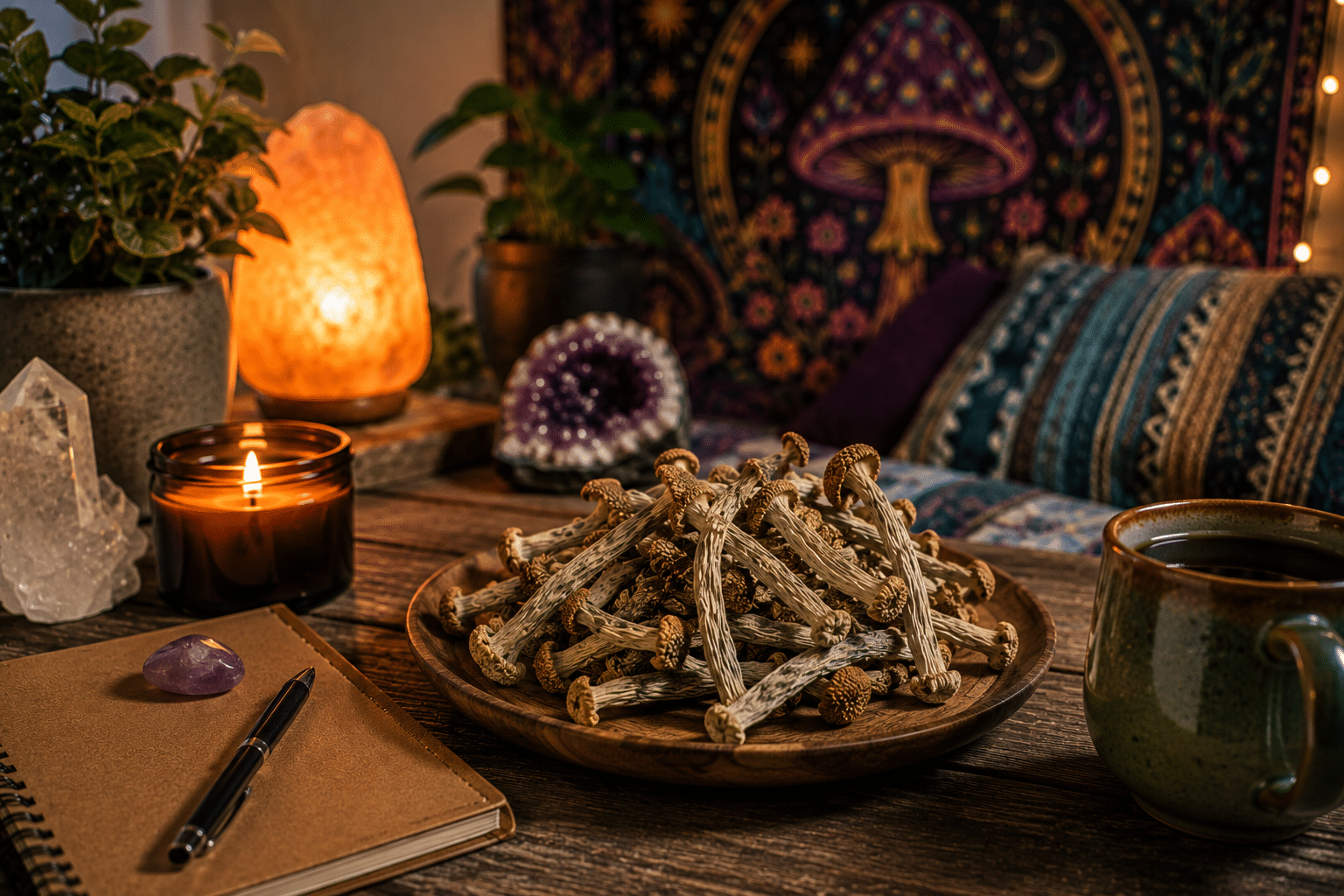
Potential Risks of Psilocybin Mushrooms
A balanced Mushroom Trip Guide should discuss risks alongside potential appeal.
Psychedelic mushrooms can cause nausea, vomiting, anxiety, confusion, panic, impaired judgment, and dangerous behaviour.
People may also accidentally consume toxic mushrooms when wild mushrooms are incorrectly identified. Some poisonous species can cause severe organ damage or death.
For this reason, unidentified wild mushrooms should never be consumed based on photographs, apps, or informal advice.
Psychedelics may also present greater psychological risks for some individuals, particularly those with certain personal or family psychiatric histories.
Professional medical advice is appropriate when individual risk factors are uncertain.
Potential Benefits Being Studied
Psilocybin has attracted significant scientific interest.
Researchers have investigated psychedelic-assisted therapy in areas including depression, anxiety associated with serious illness, and certain substance-use disorders.
These studies are important, but clinical research should not be confused with unsupervised recreational use.
Clinical psychedelic research typically involves screening, controlled substances, professional supervision, carefully structured environments, and psychological support.
Those conditions differ substantially from recreational consumption.
Therefore, promising research findings do not mean that self-directed psychedelic use is an established treatment for mental health conditions.
Respect the Legal Landscape
The legal status of psilocybin differs from cannabis.
In Canada, psilocybin and psilocin remain controlled substances, with limited lawful access available in specific circumstances such as authorized clinical research, the Special Access Program, or certain exemptions.
Consumers should understand current laws rather than assuming cannabis legalization automatically applies to psychedelic mushrooms.
Rules can also change over time, making official government information the most reliable source for current legal requirements.
Final Thoughts on This Mushroom Trip Guide
A responsible Mushroom Trip Guide should never portray psychedelic experiences as guaranteed to be euphoric, enlightening, or harmless.
Psilocybin can substantially alter perception, emotion, thinking, and judgment. Experiences range from enjoyable and introspective to confusing or deeply uncomfortable.
For anyone learning about psychedelics, the most important principles are safety, environment, sober support, avoiding dangerous activities, understanding potential interactions, and recognizing when professional medical help is appropriate.
The scientific interest surrounding psilocybin is significant, but controlled psychedelic therapy and recreational mushroom use are not the same thing.
Canadian consumers researching cannabis products may also be familiar with Low Price Bud as an online dispensary. When purchasing cannabis, consumers should verify that a retailer is authorized under the rules applicable in their province or territory. Psilocybin mushrooms have a different legal status, and Low Price Bud—or any cannabis retailer—should not be assumed to be a lawful source for psychedelic mushrooms.
Ultimately, the most useful Mushroom Trip Guide is one that replaces hype with realistic expectations. Understanding the possible effects, risks, legal considerations, and importance of a safe environment provides a more informed perspective on psychedelic experiences.