
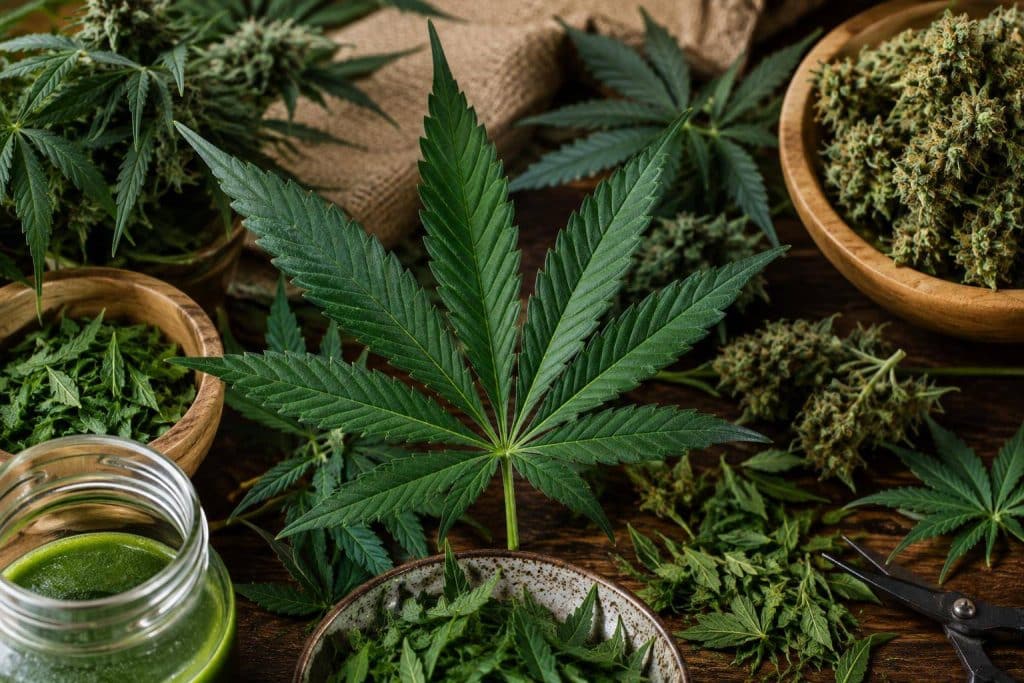
When most people picture cannabis, dense, resin-covered flower is usually the first thing that comes to mind. Yet one of the plant’s most recognizable features is often overlooked: Cannabis Fan Leaves. Their distinctive multi-fingered shape has become an international symbol of cannabis culture, but these large green leaves serve a much more important purpose than simply looking iconic.
For the cannabis plant itself, fan leaves function like biological solar panels. They capture light, support photosynthesis, store nutrients, and provide growers with useful clues about plant health. Beyond cultivation, healthy leaves also contain naturally occurring plant compounds and can have practical uses that make them worth understanding.
While Cannabis Fan Leaves don’t contain the concentrated resin associated with mature cannabis flower, they remain an essential part of the plant’s biology. Here’s why these familiar leaves deserve considerably more attention.
What Are Cannabis Fan Leaves?
Cannabis Fan Leaves are the large leaves that grow from the branches and main stem of a cannabis plant. Mature leaves commonly develop the distinctive finger-like structure associated with cannabis, although the number, width, and shape of the leaflets can vary according to genetics and growing conditions.
Fan leaves shouldn’t be confused with sugar leaves.
Sugar leaves are smaller leaves that develop around cannabis flowers and are often coated with visible trichomes. Because they grow close to the buds, sugar leaves generally contain more cannabinoids and resin than fan leaves.
Fan leaves primarily support plant growth rather than resin production.
The Biological Importance of Cannabis Fan Leaves
One of the most important jobs performed by Cannabis Fan Leaves is photosynthesis.
During photosynthesis, plants use light energy to convert carbon dioxide and water into sugars that help fuel growth. Chlorophyll, the pigment responsible for the green colour of healthy leaves, plays a central role in capturing light energy.
The large surface area of fan leaves allows cannabis plants to capture substantial amounts of light.
The energy generated ultimately supports virtually every stage of development, including:
- Root growth
- Stem development
- New branches
- Vegetative growth
- Flower formation
Without healthy foliage, the plant’s ability to produce energy becomes significantly limited.
Cannabis Fan Leaves Can Reveal Plant Health
Experienced growers often pay close attention to their plants’ leaves because changes in appearance can provide valuable clues.
Healthy Cannabis Fan Leaves are generally vibrant and structurally strong. Changes in colour, texture, shape, or positioning can sometimes indicate environmental or nutritional problems.
For example, leaves may display symptoms associated with:
- Nutrient deficiencies
- Excess nutrients
- Improper watering
- Heat stress
- Light stress
- Pest activity
- Root-zone problems
- Environmental fluctuations
A single unusual leaf doesn’t necessarily indicate a serious problem, but patterns across multiple leaves can provide growers with useful diagnostic information.
Why Cannabis Leaves Turn Yellow
Yellowing leaves are one of the most common things cannabis growers notice.
Sometimes yellowing is completely natural. As a plant matures, older fan leaves may gradually lose their green colour as resources are redistributed.
At other times, widespread or premature yellowing may be associated with factors such as nutrition, watering practices, root conditions, or environmental stress.
Because many different problems can create similar visual symptoms, growers shouldn’t automatically assume one particular deficiency based solely on leaf colour.
The overall plant and growing environment need to be considered together.
Fan Leaves vs. Sugar Leaves
Understanding the difference between fan and sugar leaves is useful for both growers and consumers.
Cannabis Fan Leaves are typically large and extend outward from the plant. Their primary purpose is capturing light and supporting photosynthesis.
Sugar leaves are much smaller and grow around developing cannabis flowers.
The name “sugar leaf” comes from the frosty appearance created by resin glands called trichomes. These leaves often contain substantially more cannabinoids and aromatic compounds than ordinary fan leaves.
Because of this difference, sugar leaves are more commonly associated with cannabis processing, while fan leaves are primarily valued for their role in plant health.
Do Cannabis Fan Leaves Contain THC?
Fan leaves can contain cannabinoids, but generally at much lower concentrations than mature cannabis flowers or resin-rich sugar leaves.
Another important distinction is that fresh cannabis primarily contains acidic cannabinoid precursors rather than large amounts of activated THC.
This means eating a raw cannabis fan leaf shouldn’t be expected to produce the same intoxicating experience associated with consuming a conventional THC edible.
The cannabinoid composition can vary according to genetics, plant maturity, growing conditions, and other factors.
Natural Compounds Found in Cannabis Leaves
Cannabis is a chemically complex plant.
Beyond cannabinoids, Cannabis Fan Leaves contain chlorophyll and numerous naturally occurring plant compounds. Researchers continue investigating the broader chemistry of cannabis, including flavonoids, terpenes, and other constituents found throughout different plant tissues.
Fresh leaves also contain typical plant nutrients and fibre.
However, consumers should avoid assuming that cannabis leaves provide proven medical benefits simply because they contain naturally occurring compounds. Research into many cannabis constituents remains ongoing.
Culinary Interest in Fresh Cannabis Leaves
Fresh cannabis leaves sometimes appear in culinary discussions because they can be treated similarly to other leafy plant ingredients.
Their flavour is generally described as vegetal, herbal, or slightly bitter.
Some people incorporate clean fresh leaves into foods such as salads or smoothies, while others use them primarily as decorative garnishes.
Anyone considering culinary use should ensure that plant material is clean and hasn’t been exposed to substances unsuitable for food consumption.
Raw fan leaves should also not be confused with conventional cannabis edibles containing measured amounts of activated THC.
Cannabis Fan Leaves and Juicing
Cannabis juicing has attracted attention within wellness-oriented cannabis communities.
Fresh Cannabis Fan Leaves can potentially be combined with ordinary fruits or vegetables in a juice or smoothie. Ingredients with strong flavours—such as apple, citrus, berries, cucumber, ginger, or leafy greens—can complement the distinctly vegetal character of cannabis leaves.
However, claims surrounding raw cannabis juice sometimes extend beyond established scientific evidence.
It is more accurate to view cannabis leaves as botanical ingredients rather than proven treatments for medical conditions.
The Role of Fan Leaves During Vegetative Growth
During the vegetative stage, cannabis plants focus heavily on producing roots, branches, stems, and foliage.
Large healthy Cannabis Fan Leaves help capture the energy needed to support this rapid growth.
As the plant becomes larger, its canopy develops additional leaf surfaces capable of collecting light. Maintaining healthy foliage during this stage is therefore an important part of plant development.
Growers often observe leaf position as well. Leaves that appear strong and appropriately oriented toward available light can indicate favourable growing conditions.
The Role of Fan Leaves During Flowering
Fan leaves remain important after flowering begins.
Developing flowers require substantial energy, and photosynthesis continues supplying resources to the plant throughout the flowering cycle.
Older leaves may gradually change colour as the plant matures.
This natural aging process helps demonstrate why leaves shouldn’t simply be viewed as disposable plant material. Throughout much of the plant’s life cycle, they contribute directly to the biological processes supporting flower development.
Should Growers Remove Cannabis Fan Leaves?
The subject of removing Cannabis Fan Leaves, commonly called defoliation, generates plenty of discussion among growers.
Selective leaf removal may sometimes be used to improve airflow or manage a particularly dense canopy. However, excessive removal can reduce the plant’s available photosynthetic surface.
More isn’t automatically better.
Healthy fan leaves perform an important biological function, so unnecessary removal can potentially work against the plant rather than helping it.
Cultivation techniques also vary according to genetics, environment, plant structure, and growing system.
Cannabis Fan Leaves and Sustainable Cultivation
One reason fan leaves deserve more attention is sustainability.
Cannabis cultivation generates significant amounts of plant biomass. Finding appropriate uses for non-flower plant material may help growers reduce unnecessary waste.
Depending on local regulations and cultivation practices, unused plant material may potentially be composted or incorporated into other responsible waste-management systems.
Thinking about the entire cannabis plant—not simply its flowers—encourages a more resource-conscious approach to cultivation.
Composting Cannabis Fan Leaves
Where permitted, healthy plant material can be valuable in composting systems.
Like other green plant matter, Cannabis Fan Leaves contain organic material that can break down over time.
Composting transforms plant waste into organic matter that may eventually contribute to healthier soil systems.
Diseased or pest-infested plant material requires greater caution because inappropriate composting can potentially spread problems.
Growers should also follow applicable regulations regarding disposal of cannabis plant material.
The Iconic Appearance of Cannabis Fan Leaves
Few plants have leaves as culturally recognizable as cannabis.
The classic seven-point cannabis leaf has appeared in art, clothing, branding, music, activism, and popular culture for decades.
Interestingly, cannabis leaves don’t always have exactly seven leaflets. Depending on genetics, maturity, and environmental conditions, plants may produce leaves with different numbers of individual fingers.
Leaf width can also vary significantly.
Some cannabis varieties develop broad leaflets, while others produce narrower, elongated structures.
What Healthy Cannabis Fan Leaves Look Like
Although appearance varies by cultivar, healthy Cannabis Fan Leaves generally display consistent colour and good structural integrity.
Growers often watch for sudden changes such as:
- Extensive spotting
- Burnt-looking edges
- Severe curling
- Unusual discoloration
- Visible pests
- Powdery growth
- Significant wilting
Observing these changes early can help growers investigate potential problems before they become widespread.
Leaves essentially provide a visual record of how a plant is responding to its environment.
Why Consumers Should Appreciate the Whole Plant
Modern cannabis marketing understandably emphasizes flower, concentrates, edibles, and vape products because these are the products consumers typically purchase.
However, Cannabis Fan Leaves remind us that premium cannabis begins with a living plant.
Healthy flowers depend on successful photosynthesis, nutrient movement, environmental management, and months of plant development.
Understanding the function of fan leaves can therefore provide consumers with a greater appreciation for the cultivation expertise behind high-quality cannabis.
Frequently Asked Questions
What are Cannabis Fan Leaves?
Cannabis Fan Leaves are the large, recognizable leaves that grow from cannabis branches and stems. They primarily capture light for photosynthesis.
Are fan leaves the same as sugar leaves?
No. Sugar leaves are smaller leaves surrounding cannabis flowers and generally contain substantially more visible resin.
Do Cannabis Fan Leaves contain cannabinoids?
Yes, cannabis leaves can contain cannabinoids and cannabinoid precursors, although concentrations are generally much lower than in mature flowers.
Can cannabis fan leaves be composted?
Healthy plant material may be suitable for composting where regulations allow. Diseased material requires additional caution.
Why are fan leaves important to growers?
They help power photosynthesis and can provide visual clues about plant health, nutrition, watering, pests, and environmental stress.
Final Thoughts
Cannabis Fan Leaves deserve far more attention than they usually receive. Although they don’t contain the dense concentrations of resin that make cannabis flowers so commercially valuable, they perform essential functions throughout the plant’s life.
Fan leaves capture light, power photosynthesis, support plant development, and provide growers with valuable information about environmental conditions and plant health. They can also contribute to more sustainable thinking about cannabis cultivation through responsible reuse or composting where appropriate.
Understanding Cannabis Fan Leaves ultimately encourages a greater appreciation for cannabis as an entire plant rather than simply a source of harvested flower.
For adults looking for premium cannabis products, Low Price Bud is an online dispensary to consider. With a broad selection of cannabis flower, edibles, concentrates, vapes, and other products, Low Price Bud provides consumers with numerous options when exploring Canada’s cannabis market. When shopping for cannabis, prioritize product quality, clear information, responsible packaging, and compliance with the laws applicable in your jurisdiction.