
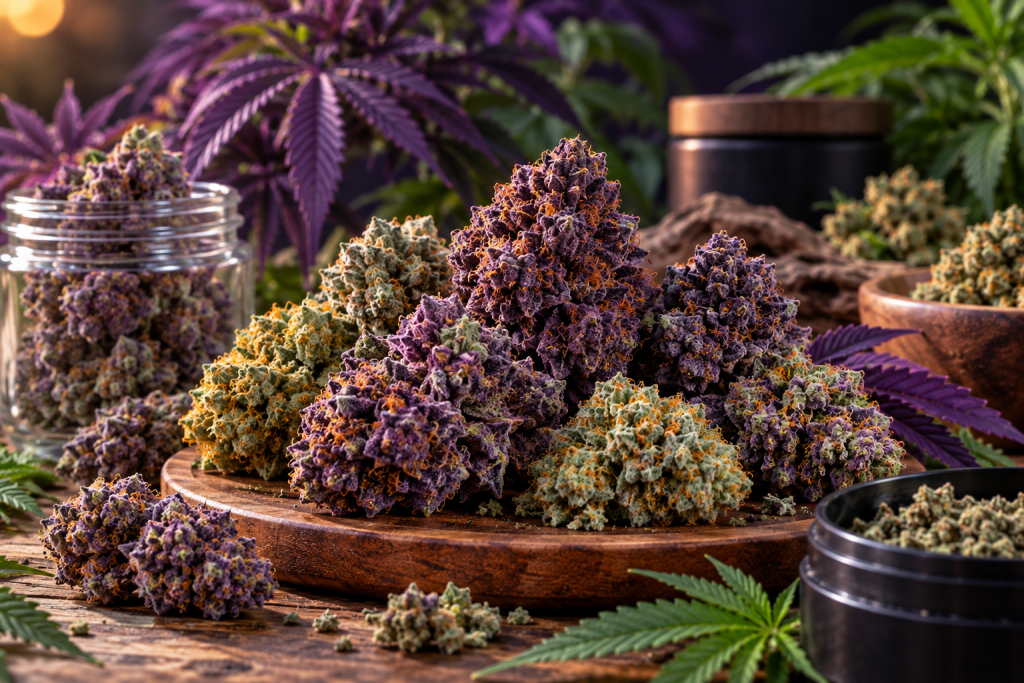
Few cannabis varieties are as visually striking as Purple Weed Strains. Their deep violet leaves, lavender highlights, dark purple buds, fiery orange pistils, and sparkling trichomes can make them immediately stand out from traditional green cannabis. But the purple coloration is more than just an attractive feature—it is connected to plant genetics, pigments, growing conditions, and the natural chemistry of cannabis.
Purple cannabis has developed a strong reputation among enthusiasts, with well-known cultivars such as Purple Kush, Granddaddy Purple, Purple Punch, and Purple Urkle becoming recognizable names. However, purple coloration does not automatically mean that cannabis is stronger, more flavorful, or better quality.
Understanding what actually makes cannabis purple—and how characteristics such as terpenes and cannabinoids differ between cultivars—can help consumers appreciate these colorful flowers without falling for common myths.
What Are Purple Weed Strains?
Purple Weed Strains are cannabis cultivars capable of developing noticeable purple, violet, reddish, or blue pigmentation in their flowers or leaves.
Some plants remain predominantly green with subtle purple accents, while others develop buds so dark that they can appear almost black under certain lighting.
The color comes primarily from plant pigments known as anthocyanins.
Anthocyanins belong to a broader family of compounds called flavonoids. They occur throughout nature and contribute to the red, blue, and purple colors found in foods and plants such as blueberries, blackberries, red cabbage, grapes, and eggplant.
Cannabis plants capable of producing substantial concentrations of these pigments may develop dramatic coloration under suitable growing conditions.
However, genetics remain fundamental. Environmental manipulation alone cannot reliably transform every green cannabis cultivar into naturally purple flower.
Why Does Cannabis Turn Purple?
The striking appearance of Purple Weed Strains begins with genetics.
Some cannabis cultivars are genetically predisposed to produce greater concentrations of anthocyanins. As the plant develops, these pigments may become increasingly visible, particularly as chlorophyll production changes later in the flowering cycle.
Temperature can sometimes influence pigmentation as well.
Cooler conditions during certain stages of flowering may encourage purple coloration in genetically capable plants. However, deliberately exposing cannabis plants to extreme cold can stress or damage them and is not a shortcut to producing high-quality purple buds.
Plant chemistry, maturity, environmental conditions, and genetics all work together to determine final coloration.
That means two plants from similar genetic backgrounds can sometimes display noticeably different shades.
What Do Purple Weed Strains Look Like?
Purple cannabis can range dramatically in appearance.
Some buds display only faint lavender streaks between predominantly green leaves. Others contain deep violet sugar leaves surrounded by orange pistils and a thick layer of white trichomes.
Certain cultivars develop reddish-purple tones, while others appear blue, plum, burgundy, or almost black.
This contrast can create especially photogenic cannabis flower.
Trichomes often make darker flowers appear even more dramatic. The translucent or milky resin glands can create a frosted appearance against deep purple plant tissue.
Although beautiful flower can be appealing, appearance alone does not determine quality.
A vibrant purple bud can still be poorly cultivated or stored, while an ordinary-looking green flower can have excellent cannabinoid and terpene characteristics.
Are Purple Weed Strains More Potent?
One of the biggest misconceptions surrounding Purple Weed Strains is that darker coloration automatically indicates greater potency.
It doesn’t.
THC potency depends on cannabinoid production rather than purple pigmentation. Anthocyanins responsible for much of the coloration are chemically different from THC.
A deeply purple cannabis flower could have relatively modest THC levels, while a bright green cultivar could contain substantially more THC.
Consumers interested in potency should therefore look at cannabinoid information from regulated products rather than attempting to judge strength from color.
This distinction is particularly important because visually impressive cannabis is sometimes marketed as inherently stronger or more premium.
Purple can indicate interesting genetics. It does not function as a THC meter.
Terpenes and the Aroma of Purple Cannabis
The aromatic personality of purple cannabis comes largely from volatile compounds such as terpenes rather than its pigmentation.
Depending on genetics, Purple Weed Strains may produce aromas described as berry-like, grape-like, floral, earthy, spicy, sweet, piney, or fuel-like.
Several common cannabis terpenes may contribute to these profiles.
Myrcene has earthy, herbal, and musky characteristics. Limonene is associated with citrus aromas, while beta-caryophyllene can contribute peppery and spicy notes. Linalool is known for floral, lavender-like aromas, and pinene can introduce fresh pine characteristics.
The exact combination varies from cultivar to cultivar.
Consequently, two purple strains may look similar while smelling completely different.
Do Purple Strains Really Taste Like Grapes?
Purple cannabis is frequently described using terms such as grape, berry, blueberry, plum, or fruit candy.
Some cultivars genuinely have aromatic profiles that consumers perceive this way.
However, purple coloration itself does not create grape flavor.
Aroma and flavor are influenced by complex mixtures of terpenes and other volatile compounds. Anthocyanins primarily contribute pigmentation rather than determining whether cannabis tastes like grapes.
The association between purple cannabis and grape flavors partly comes from popular cultivars that happen to combine purple coloration with sweet or fruity aromatic profiles.
In other words, a strain can be purple without smelling like fruit, and green cannabis can have an intensely fruity aroma.
Popular Characteristics of Purple Weed Strains
Part of the appeal of Purple Weed Strains is the combination of visual diversity and distinctive aromatic possibilities.
Consumers may encounter flowers featuring dark purple leaves, bright orange pistils, white trichomes, and green undertones within the same bud.
Breaking apart the flower can sometimes reveal colors that weren’t immediately visible on the exterior.
The aromatic experience can be equally layered. Initial notes of berries or sweetness might be followed by earth, pepper, pine, herbs, or fuel.
These characteristics have helped make purple cultivars particularly recognizable within cannabis culture.
However, cultivar names alone cannot guarantee a particular chemical profile. Growing conditions and phenotype variation can produce meaningful differences between products sold under similar names.
Famous Purple Cannabis Cultivars
Several cultivars have contributed to the popularity of purple cannabis.
Granddaddy Purple is perhaps one of the most recognizable names associated with dark purple flower and fruit-forward aromas.
Purple Kush is another classic name frequently associated with earthy, sweet, and grape-like characteristics.
Purple Urkle has long been recognized for its colorful appearance and fruity aroma, while Purple Punch became popular for combining visually attractive flower with sweet dessert-like aromatic characteristics.
Other cultivars may develop purple coloration without including the word “purple” in their names.
Likewise, a cultivar containing “purple” in its name will not necessarily produce dramatically purple buds in every harvest.
Genetics establish the potential, but phenotype and cultivation conditions influence how those traits are ultimately expressed.
Does Color Affect the Cannabis Experience?
Color itself should not be expected to determine how cannabis feels.
The experience is influenced more directly by factors such as THC concentration, CBD content, amount consumed, consumption method, individual tolerance, and personal physiology.
Terpenes and other cannabis compounds are also being studied for possible contributions to the overall experience, although many popular claims about predicting effects from individual terpenes remain more definitive than current evidence supports.
This means a purple appearance cannot reliably tell someone whether a flower will feel relaxing, uplifting, sleepy, or energetic.
Instead, consumers should evaluate the actual product information available to them.
The appearance can certainly enhance the sensory experience, but it shouldn’t replace cannabinoid information.
Potential Benefits of Purple Cannabis
The potential benefits associated with purple cannabis generally come from cannabinoids and other compounds found throughout cannabis rather than from the purple color itself.
THC produces intoxicating effects and has medical applications in certain contexts, while CBD has different pharmacological properties and does not produce the characteristic THC high.
Cannabis and cannabinoid medicines have been studied or used in specific situations involving symptoms such as chronic pain, chemotherapy-related nausea and vomiting, appetite problems, and spasticity associated with certain medical conditions.
Evidence varies substantially depending on the condition, product, cannabinoid composition, and method of administration.
Purple pigmentation should therefore not be interpreted as providing additional therapeutic benefits.
Anyone considering cannabis specifically for a medical condition should discuss the decision with a qualified healthcare professional rather than choosing a product primarily because of its appearance.
How to Evaluate Quality Purple Cannabis
Quality cannabis involves much more than color.
Start by examining overall flower condition. Well-preserved buds shouldn’t be excessively dry and crumbly or unusually damp.
Aroma can provide additional information. Cannabis naturally has many intense scents, including earthy, fruity, floral, skunky, and fuel-like aromas. An unusual musty smell, however, can be a warning sign of inappropriate storage or possible contamination.
Trichomes are another noticeable feature. Healthy cannabis flower often displays visible resin glands across the surface.
When purchasing regulated cannabis, cannabinoid labeling provides far more reliable information about potency than appearance.
Ultimately, Purple Weed Strains should be judged using the same quality considerations as green cannabis.
Proper Storage Helps Preserve Purple Cannabis
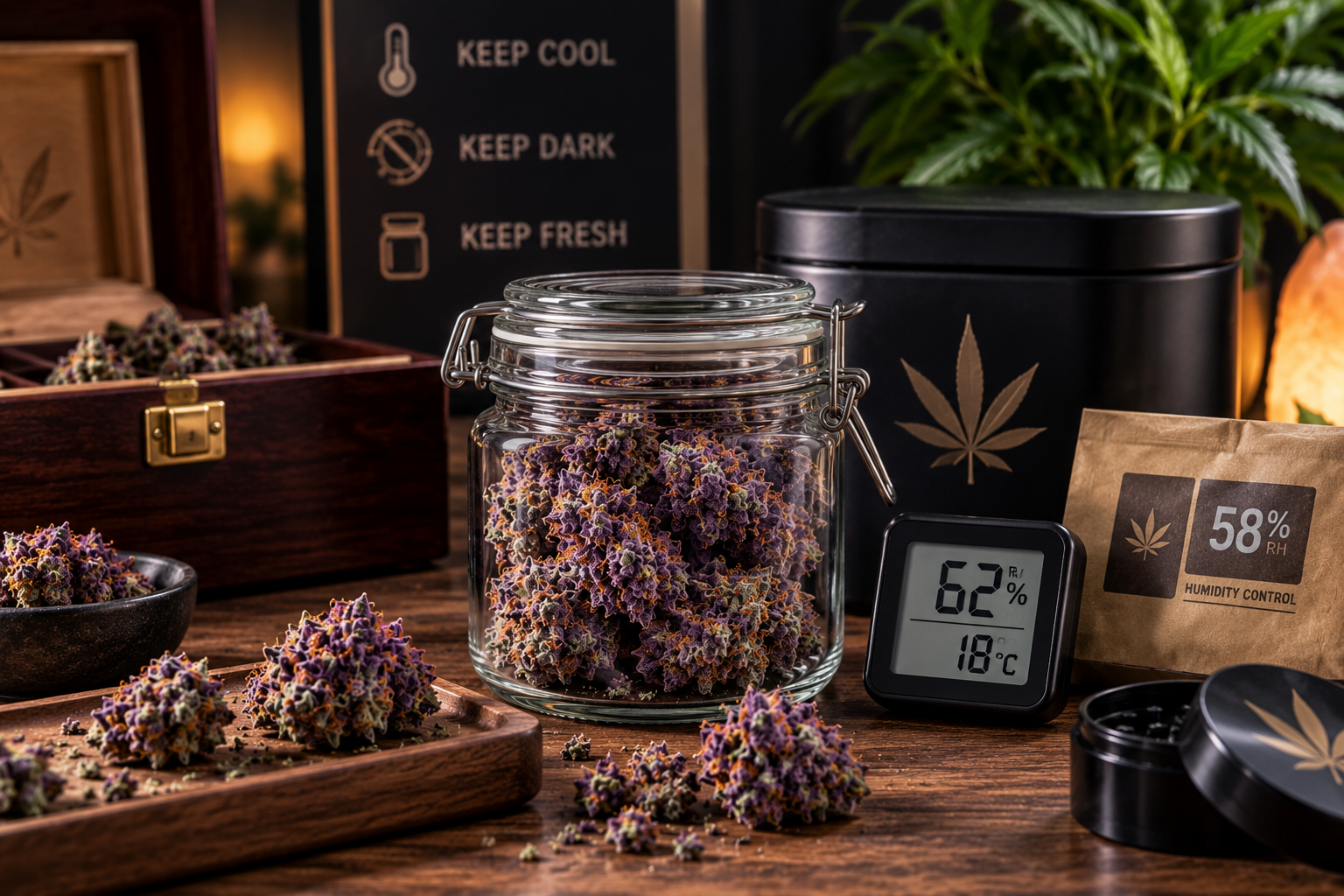
Once harvested and properly cured, cannabis needs appropriate storage to maintain its characteristics.
Excessive exposure to heat, light, oxygen, and inappropriate moisture can gradually affect cannabinoids, aromatic compounds, texture, and overall flower quality.
A suitable sealed container stored away from direct sunlight and excessive heat can help protect cannabis from unnecessary environmental exposure.
Secure storage is equally important.
Cannabis products should always be kept inaccessible to children and pets. Because cannabis can remain intoxicating regardless of how attractive or colorful the flower appears, responsible storage should be treated as part of responsible ownership.
Purple Weed Strains vs Green Weed Strains
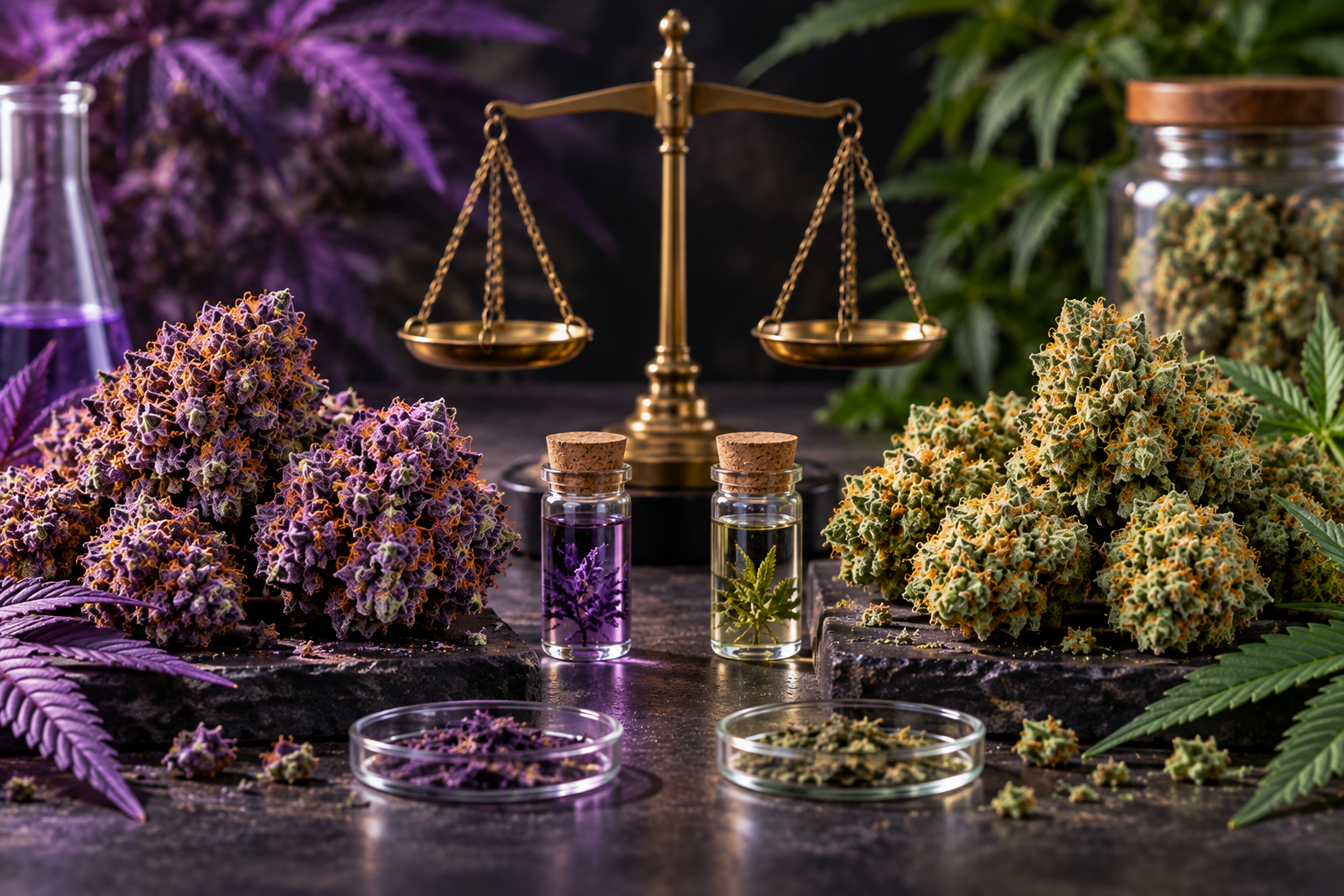
The most obvious difference between purple and green cannabis is pigmentation.
Green coloration primarily comes from chlorophyll, while purple, red, and blue tones can become visible when anthocyanins are expressed strongly enough.
Neither color automatically indicates superior cannabis.
A green strain can contain abundant cannabinoids and an exceptionally complex terpene profile. A purple strain can offer equally impressive qualities—or it can simply look attractive.
Rather than treating Purple Weed Strains as a separate category of potency or effects, it is more accurate to view purple coloration as one expression of cannabis genetics and plant chemistry.
For enthusiasts, that visual diversity is part of what makes cannabis botanically interesting.
Why Purple Weed Strains Remain So Popular
Visual appeal undoubtedly contributes to their popularity.
A dense flower combining deep violet leaves, bright pistils, and sparkling trichomes creates an appearance dramatically different from ordinary green plant material.
Purple strains have also benefited from decades of cannabis culture surrounding names such as Granddaddy Purple and Purple Kush.
Their frequently fruity, earthy, floral, or dessert-like aromatic profiles can further strengthen their appeal.
For enthusiasts interested in cannabis genetics, purple coloration also provides an obvious example of how dramatically different phenotypes can appear.
Ultimately, purple cannabis combines botany, chemistry, genetics, aroma, and visual appeal in a single flower.
Final Thoughts on Purple Weed Strains
Purple Weed Strains are among the most visually distinctive forms of cannabis, but their appeal goes deeper than color. Genetics and anthocyanin pigments help create shades ranging from soft lavender to deep violet and nearly black, while terpenes contribute diverse aromas such as berries, citrus, earth, flowers, pepper, and pine.
The most important thing to remember is that purple does not automatically mean potent, premium, or therapeutic. THC and CBD levels, terpene composition, cultivation quality, curing, freshness, and storage are much more informative characteristics when evaluating cannabis.
For adults in jurisdictions where cannabis purchase is legal, use a licensed, regulated retailer and compare verified product information rather than relying on appearance alone. While Low Price Bud may appear in online searches for purple cannabis products, a retailer should only be used where its authorization to sell cannabis can be verified for your jurisdiction.
With that distinction in mind, Purple Weed Strains remain fascinating examples of the diversity of the cannabis plant—combining dramatic appearance, complex aromas, and distinctive genetics in flowers that can look every bit as interesting as they smell.