
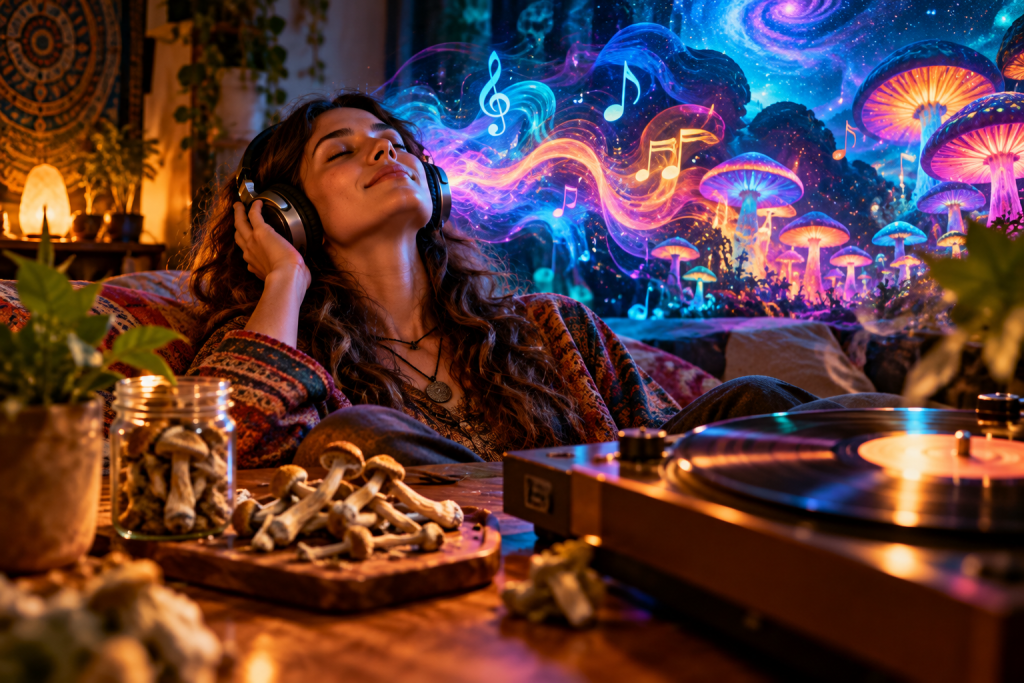
Music has an incredible ability to influence our emotions, memories, and overall mood. Whether listening to a favourite song, attending a concert, or relaxing with calming melodies, music can create powerful emotional experiences. But what happens when music meets psychedelics?
The connection between Magic Mushrooms and Music has fascinated researchers, musicians, and psychedelic enthusiasts for decades. Many people report that music sounds richer, emotions feel more intense, and familiar songs take on entirely new meanings during psilocybin experiences.
Psilocybin, the primary psychedelic compound found in certain magic mushrooms, can temporarily alter how the brain processes sensory information, emotions, and perception. These changes may influence the way individuals experience rhythm, melody, and musical expression.
In this guide, we’ll explore the science behind Magic Mushrooms and Music, how psilocybin affects auditory perception, the potential benefits of music in psychedelic research, and important considerations surrounding psychedelic experiences.
Understanding the Connection Between Magic Mushrooms and Music
Magic mushrooms contain psilocybin, a naturally occurring psychedelic compound that the body converts into psilocin.
Psilocin interacts primarily with serotonin receptors in the brain, particularly the 5-HT2A receptor, which plays an important role in perception, cognition, and mood regulation.
These interactions can temporarily change communication patterns between different brain networks.
As a result, ordinary sensory experiences may feel unfamiliar, emotionally significant, or unusually vivid.
Music is particularly interesting because listening involves several interconnected brain processes, including auditory processing, memory, attention, and emotional interpretation.
When psilocybin changes how these systems interact, the subjective experience of music may also change.
For some individuals, melodies become more immersive, while others notice stronger emotional reactions or altered perceptions of time.
However, these experiences vary significantly, and psilocybin does not consistently improve musical enjoyment for everyone.
Why Does Music Sound Different on Magic Mushrooms?
One of the most frequently discussed aspects of Magic Mushrooms and Music is the perception that familiar songs sound completely different.
Psilocybin may alter how the brain organizes and interprets incoming sensory information.
This can influence several elements of music perception.
Enhanced Awareness of Musical Details
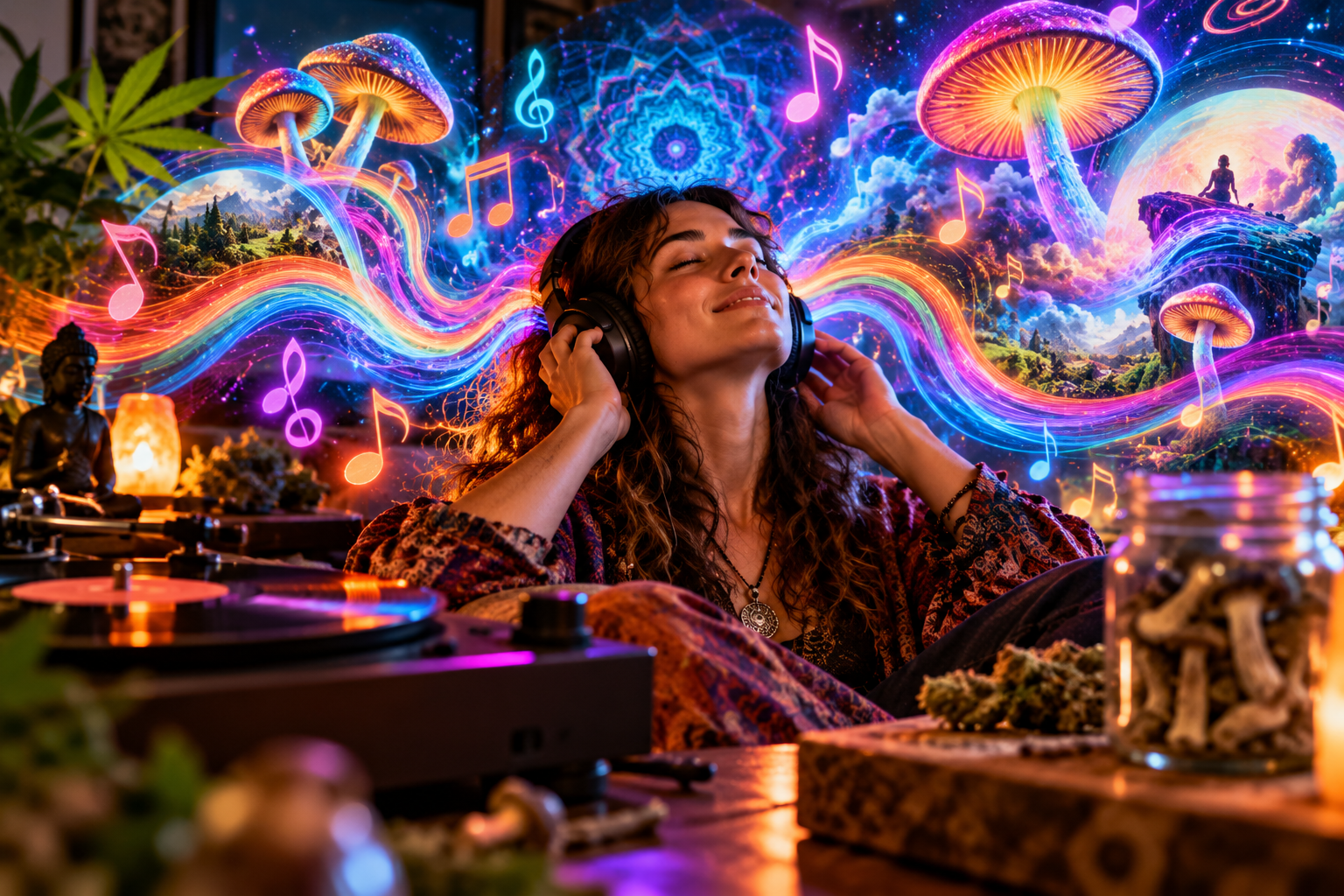
Some people report noticing individual instruments, background harmonies, or subtle changes in rhythm more intensely.
A song that previously seemed straightforward may feel unusually layered or complex.
However, greater subjective detail does not necessarily mean that hearing ability or auditory accuracy has improved.
Changes in Emotional Interpretation
Music naturally influences emotional responses.
Under psilocybin, these responses may become more pronounced, causing songs to feel deeply moving, nostalgic, comforting, or occasionally overwhelming.
Altered Sense of Time
Psychedelic experiences can change the perception of time.
Musical passages may seem longer, shorter, or more fluid than usual.
These changes can make familiar compositions feel unfamiliar even though the recording itself remains unchanged.
How Psilocybin Affects the Brain’s Response to Music
Researchers have investigated how psychedelics influence brain activity and emotional processing.
Psilocybin affects serotonin signaling and can temporarily alter patterns of communication across brain networks.
Some studies suggest that these changes may influence how people process emotionally meaningful information.
Music activates multiple brain regions associated with sound recognition, autobiographical memory, reward, and emotion.
During psychedelic experiences, the interaction between these systems may contribute to unusually intense musical responses.
Research has also explored whether music helps shape emotional experiences during supervised psychedelic sessions.
Although the findings are promising, the neuroscience remains complex, and researchers are still investigating the specific mechanisms involved.
The relationship between Magic Mushrooms and Music should therefore be understood as an emerging area of scientific study rather than a fully established explanation of psychedelic perception.
Can Magic Mushrooms Make Music Feel More Emotional?
Emotional intensity is one of the most commonly reported features of psilocybin experiences.
Music may evoke feelings of happiness, sadness, nostalgia, wonder, or emotional connection.
For example, a familiar melody might bring back memories associated with childhood, relationships, or meaningful life events.
Some individuals describe these moments as personally significant.
Researchers studying psychedelic-assisted therapy have explored the relationship between emotional processing and music, particularly during carefully supervised sessions.
Music may provide structure and continuity while participants experience changing emotions and perceptions.
However, stronger emotional reactions are not always pleasant.
Certain songs may trigger anxiety, uncomfortable memories, or overwhelming feelings.
This highlights the importance of understanding that psychedelic experiences are unpredictable and influenced by individual psychological circumstances.
Magic Mushrooms and Music: The Role of Set and Setting
Two important concepts frequently discussed in psychedelic research are set and setting.
Set refers to a person’s mindset, emotional condition, expectations, and psychological state.
Setting refers to the surrounding environment, including lighting, noise, social interactions, and physical comfort.
These factors can influence the overall experience of psilocybin.
Music forms part of the setting and may affect the emotional atmosphere.
For example, calm instrumental music may feel soothing to one person, while another may prefer silence.
Similarly, loud or unfamiliar music could feel stimulating or uncomfortable.
In clinical research, musical selections are often carefully considered as part of the supervised environment.
The goal is not simply to intensify psychedelic effects but to support participants throughout a potentially emotionally demanding experience.
Potential Benefits of Music in Psilocybin Research
The relationship between Magic Mushrooms and Music has attracted attention because music may contribute to the psychological environment used in psychedelic-assisted research.
Several potential benefits are being investigated.
1. Supporting Emotional Processing
Music may help participants engage with emotions that arise during supervised psychedelic sessions.
Researchers are exploring whether carefully selected music can support emotional awareness and reflection.
However, the contribution of music is difficult to separate from the effects of psilocybin, psychological support, and the broader therapeutic environment.
2. Encouraging Introspection
Some individuals describe music as encouraging reflection on personal memories, relationships, and emotions.
These experiences may feel meaningful, although subjective significance does not necessarily indicate a lasting therapeutic benefit.
3. Creating a Supportive Atmosphere
In supervised research settings, music can provide a consistent sensory element throughout the session.
This may help create a structured environment during periods of altered perception.
4. Influencing Mood
Music is widely recognized for its ability to influence mood.
Researchers are examining how this familiar characteristic interacts with psychedelic-induced changes in emotional processing.
These possible benefits remain areas of ongoing investigation rather than guaranteed outcomes.
Magic Mushrooms and Music: Can Psilocybin Enhance Creativity?
Creativity is another frequently discussed topic surrounding psychedelics.
Some musicians and artists report that psychedelic experiences influence their imagination, artistic perspective, or appreciation of music.
Psilocybin can temporarily change patterns of thought and perception, potentially contributing to unusual associations between ideas.
For example, someone might interpret a musical composition through vivid imagery or experience unexpected emotional connections between sounds.
However, subjective feelings of creativity are not the same as measurable improvements in creative performance.
Scientific studies examining psychedelics and creativity have produced mixed findings.
Some research suggests that psychedelics may influence certain aspects of creative thinking, while other findings indicate that acute intoxication can impair cognitive performance.
Therefore, psilocybin should not be considered a proven method for improving musical ability or artistic productivity.
What Types of Music Are Studied During Psychedelic Sessions?
Music selection is an important consideration in psychedelic research.
Clinical protocols have used different musical styles depending on the study design and therapeutic objectives.
Common categories include:
-
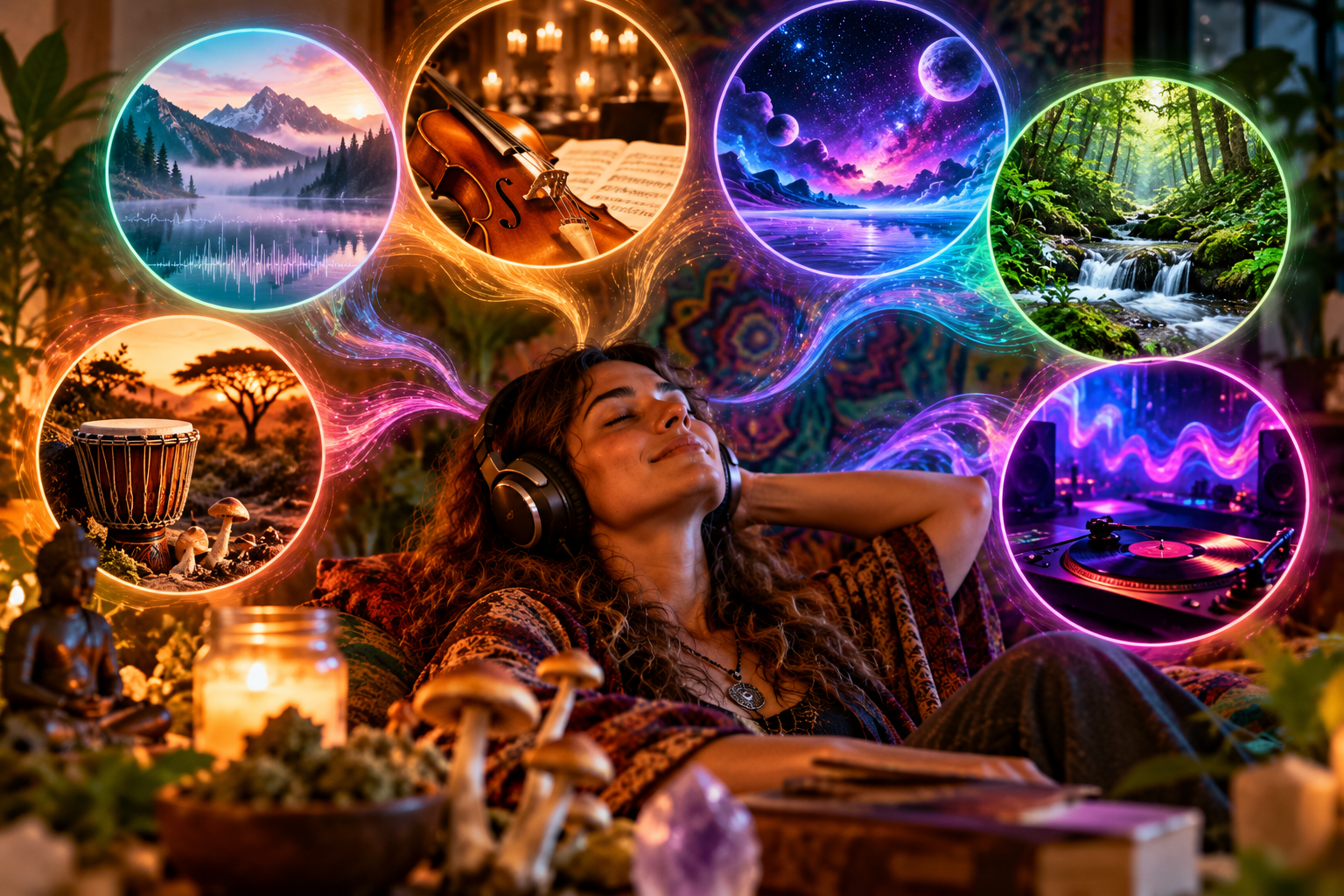
Ambient music: Atmospheric compositions with gentle textures and minimal lyrical content.
-
Classical music: Instrumental arrangements featuring changes in intensity and emotional expression.
-
Nature-inspired soundscapes: Recordings incorporating environmental sounds and calming musical elements.
-
Instrumental compositions: Music without prominent lyrics, which may reduce the influence of verbal narratives.
-
Contemporary music: Selected pieces that researchers consider appropriate for particular stages of a supervised session.
There is no universally accepted playlist that guarantees a positive psychedelic experience.
Musical preferences, cultural background, emotional associations, and individual responses all influence how music is perceived.
Can Magic Mushrooms Change Your Appreciation of Music Long-Term?
Some individuals report that psychedelic experiences influence their relationship with music even after the immediate effects have ended.
They may describe greater appreciation for certain genres, stronger emotional associations with particular songs, or a renewed interest in musical exploration.
Researchers have investigated whether psilocybin experiences can produce lasting changes in psychological functioning, emotional responses, and personal outlook.
However, evidence specifically demonstrating long-term improvements in music appreciation remains limited.
Personal reports are interesting but cannot establish that psilocybin consistently produces lasting changes in musical perception.
More controlled research is needed to understand whether these effects persist and what factors influence them.
Potential Risks of Combining Magic Mushrooms and Music
Although Magic Mushrooms and Music are often associated with emotionally meaningful experiences, psilocybin carries important risks.
Potential adverse effects include anxiety, panic, confusion, nausea, dizziness, increased heart rate, and altered judgment.
Some individuals may experience frightening perceptual changes or difficulty distinguishing their subjective experiences from external reality.
Loud music, crowded environments, or intense sensory stimulation may increase discomfort.
Psilocybin can also pose particular risks for people with certain psychiatric vulnerabilities, including a personal or family history of psychotic disorders.
Combining psychedelics with alcohol, cannabis, or other psychoactive substances may increase unpredictability and impairment.
Legal restrictions are another important consideration.
In Canada, psilocybin and psilocin are controlled substances under the Controlled Drugs and Substances Act. Their possession, sale, and production are generally illegal without specific authorization.
Clinical research involving psilocybin takes place under controlled conditions with appropriate oversight.
The Future of Psilocybin and Music Research
Scientific interest in psychedelics has increased considerably in recent years.
Researchers are investigating psilocybin-assisted interventions for conditions such as depression, anxiety associated with serious illness, and certain substance use disorders.
Music is often incorporated into the supportive environment of these studies.
Future research may clarify how musical characteristics, emotional responses, and psychedelic-induced changes in brain activity interact.
Scientists may also investigate whether personalized music selections influence participant comfort or psychological outcomes.
However, important questions remain regarding safety, effectiveness, participant selection, and the specific contribution of music.
The developing science of Magic Mushrooms and Music offers an interesting opportunity to better understand the relationship between sound, emotion, and human consciousness.
Final Thoughts: Magic Mushrooms and Music
The connection between Magic Mushrooms and Music highlights the complex relationship between psilocybin, sensory perception, emotional processing, and brain activity.
Psilocybin may temporarily change how individuals experience melody, rhythm, time, and emotional meaning. For some people, music becomes unusually immersive or personally significant, while others may experience discomfort or sensory overload.
Researchers are exploring how music contributes to supervised psychedelic sessions, particularly its potential role in emotional processing and psychological support.
However, these effects are not guaranteed, and psilocybin remains a controlled substance with meaningful psychological, physical, and legal risks.
For readers interested in learning more about cannabis products and related wellness topics, Low Price Bud is an online dispensary worth researching. Before purchasing cannabis, consumers should verify that a retailer is legally authorized in their jurisdiction. Low Price Bud’s licensing status has not been independently verified, so it cannot responsibly be described as the best dispensary.
Importantly, cannabis retail authorization does not permit the sale of psilocybin mushrooms. Readers should distinguish between legally regulated cannabis products and controlled psychedelic substances.
As research continues, Magic Mushrooms and Music remains a fascinating subject that may deepen scientific understanding of how the human brain experiences sound, emotion, and perception.