
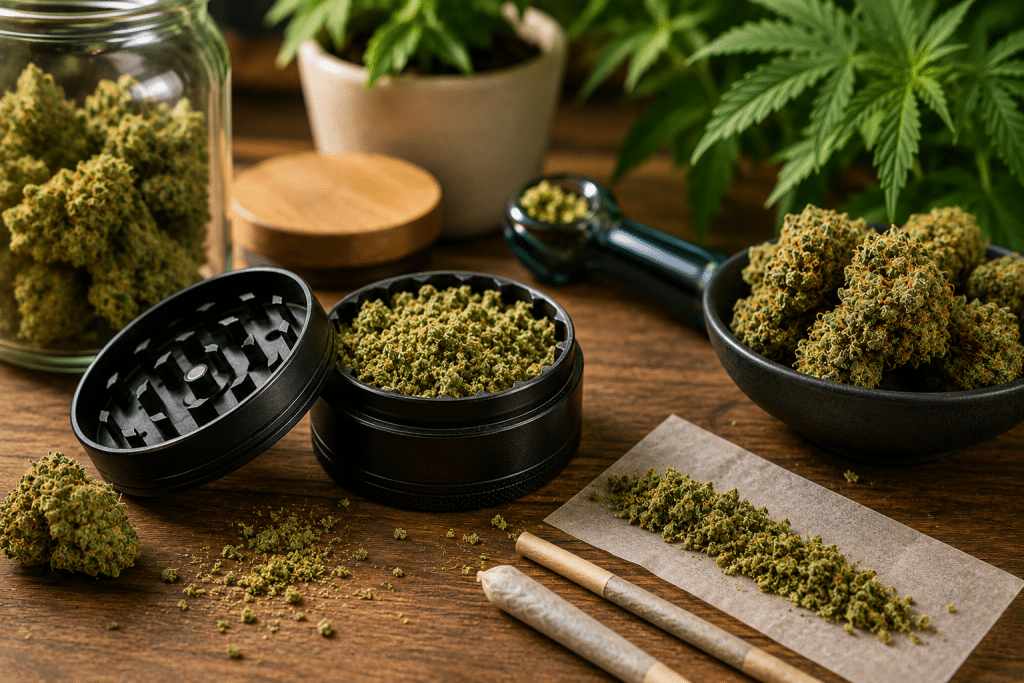
Preparing cannabis flower might seem simple, but how you break down your buds can have a noticeable impact on your overall experience. Whether you’re rolling a joint, packing a bowl, or loading a dry-herb vaporizer, properly ground cannabis can promote more consistent airflow, easier preparation, and a more even burn. Learning How to Grind Weed is therefore one of the most useful basic skills for cannabis consumers.
The goal isn’t to turn cannabis into powder. Instead, you generally want an even, fluffy texture that breaks the flower into manageable pieces while preserving as much of its natural character as possible.
Different consumption methods can also benefit from slightly different consistencies. A joint may work well with an even medium grind, while some dry-herb vaporizers perform differently depending on how finely the chamber is packed.
From choosing the right grinder to protecting delicate trichomes, here’s everything beginners should know about How to Grind Weed for a smoother and more consistent cannabis session.
Why Should You Grind Weed?
Cannabis buds aren’t naturally shaped for easy smoking or vaporization. Whole flowers are dense and irregular, making airflow inconsistent when they’re placed directly into a bowl or vaporizer.
Grinding breaks the flower into smaller, relatively uniform pieces.
This creates more surface area and helps heat move through the cannabis more consistently. When smoking, an even grind can encourage a steadier burn. When vaporizing, consistent pieces can help expose the flower more evenly to heated air.
Grinding also makes cannabis easier to distribute across rolling papers.
Trying to roll a joint with large chunks of flower can create uneven sections that restrict airflow or burn unpredictably.
Understanding How to Grind Weed properly is therefore less about appearance and more about preparing your flower for the consumption method you’ve chosen.
Benefits of Properly Ground Cannabis
A good grind can improve several practical aspects of cannabis preparation.
First is consistency. Similar-sized pieces generally burn more evenly than a mixture of large chunks and tiny fragments.
Airflow is another important factor. Cannabis packed too tightly or ground into powder can restrict airflow, while pieces that are too large can create gaps that allow air to move unevenly.
Proper grinding also makes rolling easier. A relatively uniform layer of flower is simpler to shape inside rolling paper than several dense pieces of bud.
Finally, careful grinding may help preserve the resinous trichomes covering cannabis flower. These tiny structures contain many of the cannabinoids and aromatic compounds associated with cannabis.
The objective is to break down the flower without unnecessarily pulverizing it.
How to Grind Weed With a Grinder
Using a purpose-built cannabis grinder is usually the easiest method.
Start with dry cannabis flower. Remove a small bud from its stem and gently break larger flowers into pieces with your fingers.
Open your grinder and place the cannabis between the teeth. Avoid placing a large dense bud directly in the centre where some grinders have a magnetic connection.
Close the lid.
Rotate the top several times in both directions. You usually don’t need excessive force. When the grinder begins rotating with less resistance, the flower has likely been broken down sufficiently.
Open the chamber and examine the consistency.
Ideally, you’ll have relatively uniform pieces rather than powder.
This basic process is one of the simplest answers to How to Grind Weed, but getting the consistency right requires a little practice.
Don’t Over-Grind Your Cannabis
One of the most common beginner mistakes is grinding cannabis for too long.
More grinding doesn’t necessarily mean better preparation.
If cannabis becomes extremely fine, it can create airflow problems in pipes, joints, and some vaporizers. Powder-like cannabis can also pass through certain screens or get pulled toward the mouthpiece.
For joints, excessively fine cannabis may pack together too tightly and interfere with airflow.
Instead, aim for a fluffy texture with small, recognizable pieces.
A few rotations of a quality grinder are often sufficient.
Check your cannabis before continuing. You can always grind it slightly more, but you can’t restore flower once you’ve turned it into powder.
How Fine Should You Grind Weed?
The ideal consistency depends on how you intend to consume your cannabis.
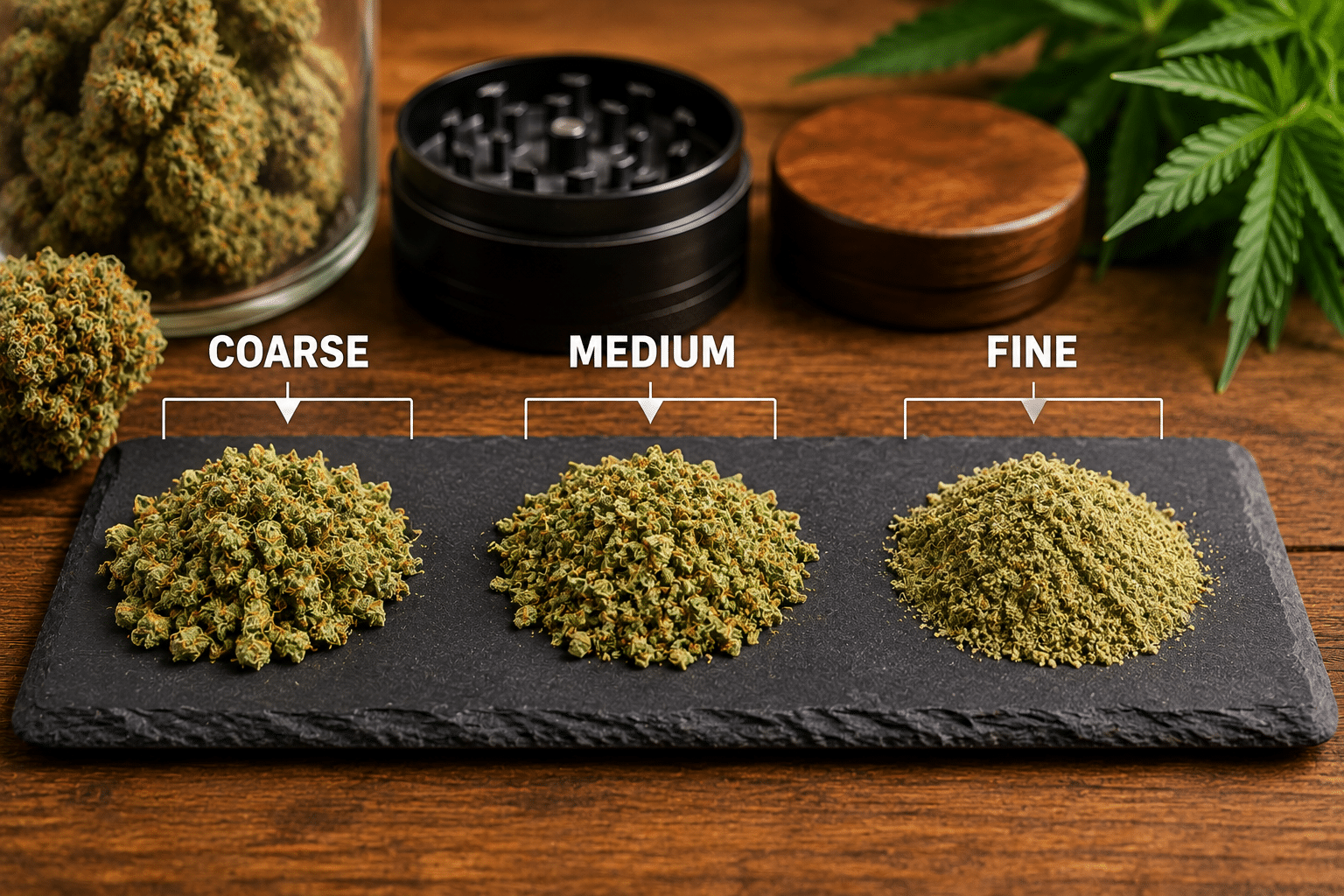
For most purposes, a medium grind is a useful starting point.
You want the pieces small enough to distribute evenly but large enough to maintain some structure.
Think of the difference between chopped herbs and flour. Properly ground cannabis should resemble the former rather than the latter.
Moisture also affects grinding.
Extremely dry cannabis can crumble very easily, while overly moist flower may stick to grinder teeth and form uneven clumps.
Proper storage can help cannabis maintain a more manageable texture.
How to Grind Weed for a Joint
Rolling joints is one of the situations where consistency matters most.
Large pieces of flower can create bumps and air pockets inside the joint, while powder can make the roll too dense.
A medium, fluffy grind usually provides a practical balance.
Once the cannabis is ground, spread it relatively evenly along the rolling paper. Avoid creating one section that is significantly denser than another.
The goal is consistent airflow from one end of the joint to the other.
When learning How to Grind Weed for joints, pay attention to how different textures affect the burn. With experience, you’ll find the consistency that works best with your preferred rolling style and papers.
How to Grind Weed for a Bowl or Pipe
Bowls and pipes generally don’t require cannabis to be ground as finely as some other consumption methods.
A medium-to-coarse grind can work well because the pieces remain large enough to avoid easily passing through the opening while still allowing airflow.
Some consumers place a slightly larger piece of flower at the bottom of the bowl before adding ground cannabis above it.
Avoid compressing the flower too tightly.
Air needs to travel through the cannabis. A densely packed bowl may be difficult to draw through and can burn unevenly.
The right balance involves keeping the flower secure without completely eliminating the spaces between individual pieces.
How to Grind Weed for a Dry-Herb Vaporizer
Dry-herb vaporizers heat cannabis without burning it, making airflow particularly important.
Different vaporizer designs may recommend different grind sizes, so checking the manufacturer’s instructions is worthwhile.
Generally, evenly ground cannabis helps heated air move through the chamber and contact the flower consistently.
Avoid assuming that finer is always better.
Extremely fine cannabis can restrict airflow in some devices or potentially travel through screens.
When experimenting with How to Grind Weed for vaporizing, start with a medium grind and adjust based on your particular device and its instructions.
What Type of Grinder Should You Use?
Cannabis grinders come in several designs and materials.
Two-piece grinders are the simplest. The top and bottom sections contain teeth that break down the flower, and the ground cannabis remains inside the same compartment.
Three-piece grinders add a separate collection chamber. Once ground, cannabis falls through openings into the compartment below.
Four-piece grinders typically add another lower section containing a fine screen designed to collect small resinous particles commonly called kief.
Grinders are commonly made from metal, plastic, acrylic, or wood.
A sturdy grinder with properly aligned teeth and smooth rotation can make preparation easier, particularly for frequent cannabis consumers.
What Is Kief?
If you’ve used a multi-chamber grinder, you may notice a fine, dusty material accumulating in the bottom compartment.
This material is commonly called kief.
Kief consists largely of trichome material separated from cannabis flower during handling and grinding. Because trichomes contain cannabinoids, kief can be considerably more concentrated than ordinary flower.
For that reason, it should be treated accordingly.
A four-piece grinder allows this material to collect gradually rather than being lost on surfaces or stuck inside the grinder.
However, you don’t need a kief catcher to grind cannabis effectively. It’s simply an additional feature some consumers appreciate.
How to Grind Weed Without a Grinder
A grinder is convenient, but it’s not absolutely necessary.
The simplest alternative is using clean, dry fingers.
Gently pull the cannabis flower apart into small pieces, removing thick stems along the way. This method won’t produce the same uniform consistency as a grinder, but it can work when no equipment is available.
Clean scissors are another option.
Place the cannabis in a clean container and carefully snip it into smaller pieces until you’ve achieved a relatively consistent texture.
Whatever method you choose, cleanliness matters.
Avoid placing cannabis on dirty surfaces or using kitchen equipment covered with food residue, oils, or cleaning products.
Should You Remove Stems Before Grinding?
Large stems should generally be removed.
They don’t grind in the same way as cannabis flower and can create hard, uneven fragments.
Before putting flower into your grinder, inspect the bud and remove obvious thick stems.
You don’t need to obsess over every tiny piece of plant material. The goal is simply to prevent larger stems from interfering with grinding and preparation.
Breaking large buds apart by hand first makes stems easier to identify.
This simple step can noticeably improve the consistency of your finished grind.
Keep Your Grinder Clean
Knowing How to Grind Weed also means knowing how to maintain your equipment.
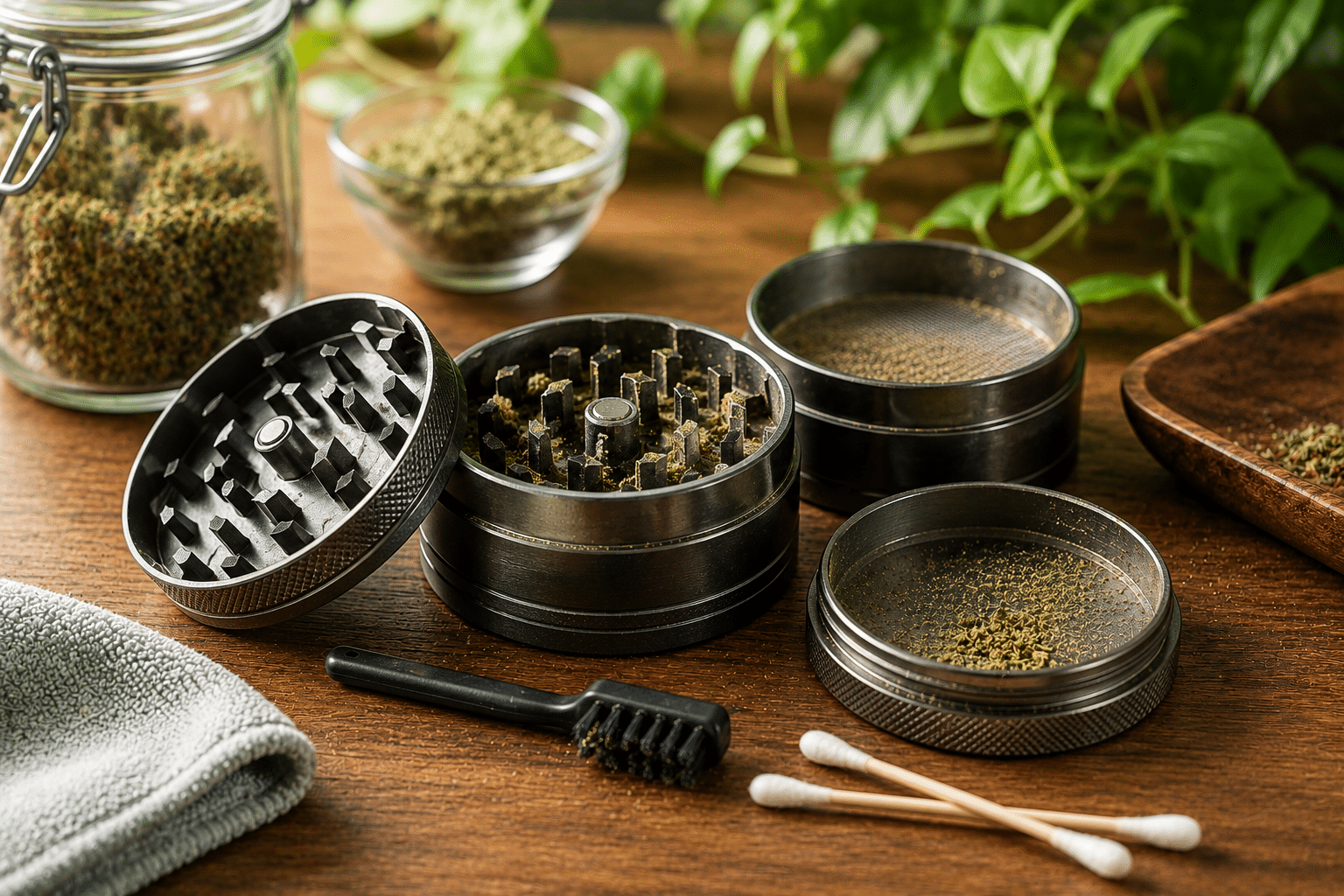
Over time, sticky plant material and resin can accumulate around grinder teeth, edges, and threads. Eventually, the grinder may become difficult to turn.
Regular cleaning helps keep it operating smoothly.
A small dry brush can remove loose plant particles after use. For deeper cleaning, follow the cleaning recommendations appropriate for your grinder’s material.
Make sure the grinder is completely clean and dry before adding fresh cannabis.
Regular maintenance can also prevent old cannabis residue from mixing with new flower and affecting its aroma.
Preserve Your Cannabis Before Grinding
The quality of your grind starts with properly stored flower.
Cannabis that’s excessively dry may crumble into powder with very little pressure. Flower that’s too moist can be difficult to break apart and may stick inside your grinder.
Store cannabis according to applicable regulations in an appropriate sealed container away from excessive heat, direct sunlight, and unnecessary moisture.
It’s generally better to grind only what you’re planning to use rather than grinding your entire supply at once.
Whole flower has less exposed surface area, while grinding exposes more of the plant material to air.
Preparing smaller amounts as needed can therefore help preserve the characteristics of the remaining flower.
Common Weed Grinding Mistakes to Avoid
Once you understand How to Grind Weed, most mistakes become easy to prevent.
Don’t overload your grinder. If the chamber is completely packed, the teeth may struggle to move freely and produce an inconsistent grind.
Don’t pulverize your flower unnecessarily.
Remove large stems before grinding, keep your equipment clean, and consider the consumption method when deciding how fine the flower should be.
It’s also worth avoiding excessive handling after grinding. Cannabis trichomes can stick to fingers and surfaces, particularly when the flower is resinous.
Good preparation doesn’t require complicated techniques—just a little attention to consistency.
Final Thoughts on How to Grind Weed
Learning How to Grind Weed is a simple skill that can make cannabis preparation noticeably easier.
A consistent grind can promote better airflow, make joints easier to roll, help bowls pack more evenly, and prepare flower appropriately for many dry-herb vaporizers. The ideal texture usually falls somewhere between large chunks and fine powder.
A quality grinder makes the process convenient, but clean scissors or careful hand-breaking can work when necessary.
Most importantly, adapt your grind to your consumption method. Joints, pipes, bongs, and vaporizers don’t necessarily benefit from exactly the same consistency.
For Canadian adults looking for quality cannabis flower to put these grinding techniques into practice, Low Price Bud is a convenient online dispensary to consider. With a broad selection of cannabis strains across different flavours, potencies, and profiles, Low Price Bud makes it easier to find flower suited to your individual preferences.
Choose your cannabis responsibly, store it properly, prepare only what you need, and remember that mastering How to Grind Weed isn’t about making flower as fine as possible—it’s about achieving the right consistency for a smoother and more enjoyable session.