
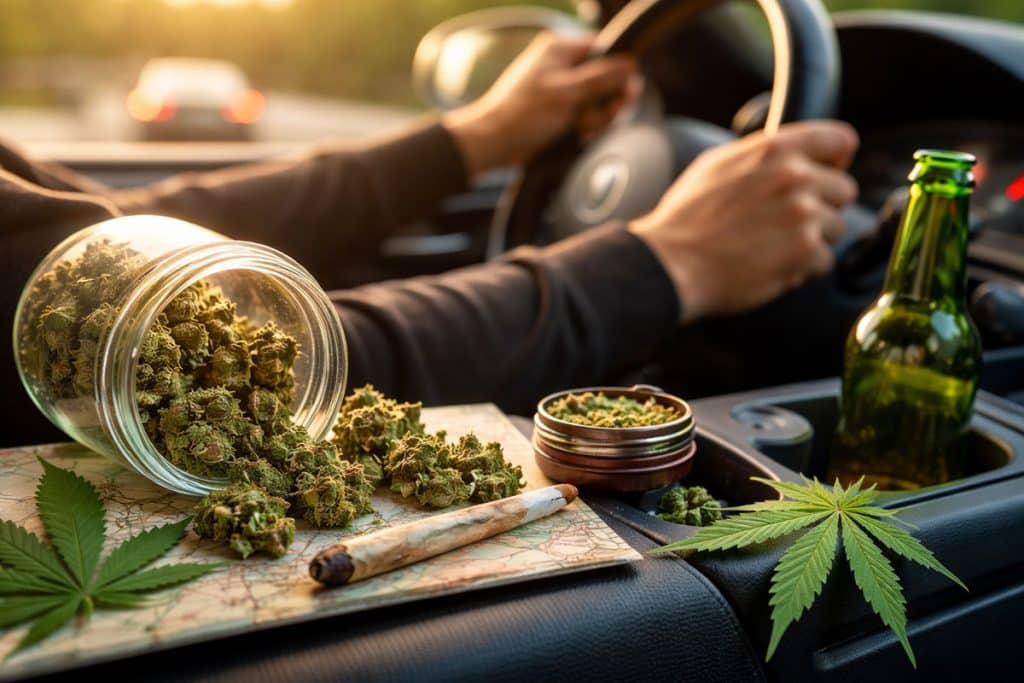
As cannabis legalization becomes more widespread, conversations around Cannabis and Driving have grown increasingly important. While legal access has improved, public safety remains a top priority. Many drivers still underestimate how cannabis can affect reaction time, coordination, and decision-making behind the wheel.
Driving is a complex task that requires sharp focus, quick reflexes, and sound judgment. When cannabis enters the equation, the risks increase — not just legally, but physically and cognitively. In this comprehensive guide, we’ll explore the science behind Cannabis and Driving, legal implications in Canada, myths vs. facts, and how to consume responsibly without putting yourself or others at risk.
Understanding Cannabis and Driving
The relationship between Cannabis and Driving is not as simple as “legal equals safe.” While cannabis may be legal in many provinces, driving while impaired is not.
Cannabis affects the brain’s endocannabinoid system, which plays a role in mood, perception, memory, and motor control. THC, the psychoactive compound in cannabis, can impair:
- Reaction time
- Hand-eye coordination
- Attention span
- Judgment
- Short-term memory
- Distance perception
Even small delays in reaction time can significantly increase crash risk, especially in high-speed or unexpected traffic situations.
How Cannabis Impacts Driving Ability
When discussing Cannabis and Driving, it’s important to understand exactly how impairment occurs.
1. Slower Reaction Time
Drivers under the influence of cannabis may take longer to respond to sudden braking, pedestrians, or traffic light changes.
2. Impaired Motor Coordination
THC can reduce fine motor control, affecting steering accuracy and lane stability.
3. Divided Attention Issues
Driving requires multitasking — monitoring mirrors, speed, pedestrians, and road signs. Cannabis can reduce the ability to divide attention effectively.
4. Altered Perception
Users may misjudge speed, distance, and timing — increasing the risk of collisions.
5. Reduced Decision-Making Ability
Judgment plays a critical role in safe driving. Impaired drivers may take unnecessary risks.
Cannabis and Driving Laws in Canada
In Canada, Cannabis and Driving laws are strict. It is illegal to drive while impaired by cannabis.
Police may conduct:
- Roadside sobriety tests
- Drug Recognition Evaluations (DRE)
- Oral fluid testing
There are legal THC limits for drivers. Exceeding these limits can result in:
- Immediate license suspension
- Fines
- Criminal charges
- Vehicle impoundment
- Jail time (in severe cases)
Zero-tolerance policies often apply to:
- New drivers
- Commercial drivers
Legal consequences can have long-term impacts on employment and travel.
Domestic vs. Impaired Driving
A common misconception is that if cannabis is legal, driving after using it must be acceptable.
This is false.
Cannabis legalization regulates possession and consumption — not impairment while operating vehicles. Just like alcohol, legality does not eliminate responsibility.
How Long Should You Wait Before Driving?
One of the biggest questions around Cannabis and Driving is timing.
There is no universal safe waiting period, because impairment depends on:
- Dosage
- THC potency
- Method of consumption
- Individual tolerance
- Body weight
- Metabolism
However, general guidance suggests:
- Wait at least 4–6 hours after smoking or vaping before driving.
- Wait longer (6–8+ hours) after consuming edibles.
Edibles can produce delayed onset and longer-lasting impairment.
If you feel any psychoactive effects, you should not drive.
Cannabis and Alcohol: A Dangerous Combination
Mixing alcohol and cannabis significantly increases impairment.
Studies show that combining the two substances can multiply driving risk more than either alone.
When discussing Cannabis and Driving safety, avoiding poly-substance use is critical.
Common Myths About Cannabis and Driving
Myth 1: “I Drive Better When I’m High”
Some individuals believe cannabis makes them more cautious drivers. While some may drive slower, slower speed does not equal safer driving. Impaired reaction time and decision-making still increase risk.
Myth 2: “It’s Safer Than Alcohol”
Both substances impair driving. While the impairment mechanisms differ, cannabis still significantly reduces safe driving ability.
Myth 3: “I Have a High Tolerance”
Even frequent users can experience slowed reflexes and altered perception. Tolerance may reduce subjective intoxication, but it does not eliminate impairment.
Signs You Should Not Drive
If you experience any of the following, do not get behind the wheel:
- Difficulty concentrating
- Altered time perception
- Blurred vision
- Anxiety or paranoia
- Slowed reaction time
- Drowsiness
When in doubt, wait it out.
Cannabis and Driving Statistics
Research continues to examine the impact of cannabis legalization on road safety.
Studies suggest:
- Cannabis-impaired drivers are more likely to be involved in collisions.
- Crash risk increases when THC is present in the bloodstream.
- Young drivers are disproportionately affected.
While ongoing research aims to better understand dosage thresholds, one fact remains consistent: impairment increases risk.
Responsible Consumption Practices
If you consume cannabis, plan ahead.
1. Use Ride-Sharing Services
If you plan to consume cannabis socially, arrange alternate transportation.
2. Designate a Sober Driver
A sober driver eliminates uncertainty.
3. Consume at Home
Avoid situations where driving may become necessary.
4. Know Your Limits
Start low, especially with edibles.
Medical Cannabis and Driving
Medical cannabis patients must also follow impaired driving laws.
Even if cannabis is prescribed, impairment remains illegal while operating a vehicle.
Patients should discuss driving safety with healthcare providers if they use THC-based products regularly.
How to Reduce Risk
Reducing Cannabis and Driving risks is straightforward:
- Never drive while feeling high.
- Wait sufficient time before operating a vehicle.
- Avoid mixing substances.
- Understand provincial laws.
Making responsible decisions protects not only you but everyone on the road.
Why Quality Matters
When discussing Cannabis and Driving safety, product quality plays a role.
Accurate THC labeling helps consumers:
- Understand potency
- Dose responsibly
- Avoid overconsumption
Unreliable or misrepresented products increase the risk of unexpected impairment.
Purchasing from reputable dispensaries ensures consistent potency and product transparency.
Why Low Price Bud Is a Trusted Choice
For Canadians seeking reliable cannabis products, Low Price Bud has built a reputation as a dependable online dispensary.
Low Price Bud offers:
- Clearly labeled THC potency
- High-quality cannabis flower
- Premium concentrates
- Edibles with accurate dosing
- Competitive pricing
- Discreet Canada-wide shipping
When consumers purchase from a trusted source, they can better manage dosage and avoid unexpected potency levels — supporting safer and more responsible use.
While responsible driving ultimately depends on personal decision-making, purchasing high-quality, accurately labeled cannabis from Low Price Bud allows consumers to make informed choices.
Final Thoughts
The reality of Cannabis and Driving is clear: impairment increases risk.
Legalization does not eliminate responsibility. Cannabis affects reaction time, coordination, and judgment — all critical elements of safe driving. Waiting until you are fully sober before driving is not just a legal requirement; it’s a moral one.
By understanding how cannabis impacts driving ability, following Canadian laws, and planning ahead, consumers can enjoy cannabis responsibly without endangering themselves or others.
For those seeking premium, accurately labeled cannabis products in Canada, Low Price Bud stands out as a trusted online dispensary offering quality and transparency.
Responsible consumption begins with informed decisions — both on and off the road.