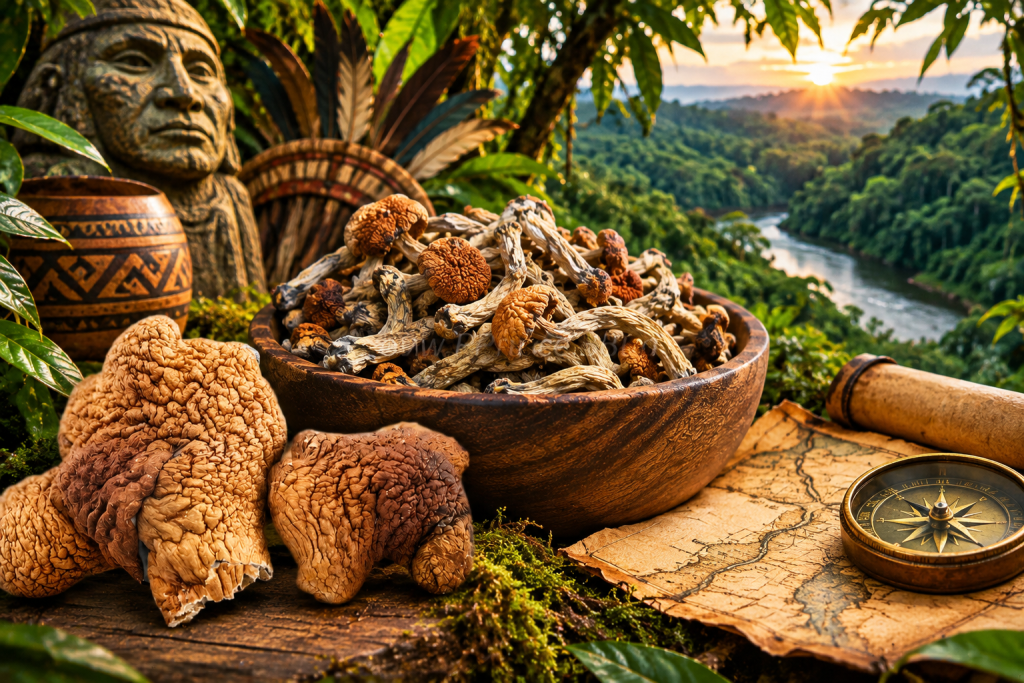
Amazonian Mushrooms are among the most recognizable varieties of psychedelic mushrooms, attracting attention for their tropical origins, distinctive appearance, and reported psychedelic effects. Often associated with the Amazon rainforest, these mushrooms have become a popular topic among people interested in psilocybin, psychedelic experiences, and emerging mental health research.
Known for their potential to alter perception, mood, and sensory awareness, Amazonian Mushrooms contain naturally occurring psychedelic compounds that interact with the brain’s serotonin system.
However, their effects can vary significantly depending on potency, individual sensitivity, psychological state, and surrounding environment.
As scientific interest in psilocybin continues to grow, understanding Amazonian Mushrooms has become increasingly important for anyone researching psychedelic substances.
In this guide, we’ll explore what Amazonian Mushrooms are, their origins, potential effects, potency, possible benefits, risks, and what current research suggests about their psychedelic properties.
What Are Amazonian Mushrooms?
Amazonian Mushrooms generally refer to a cultivated variety of Psilocybe cubensis, a species of psychedelic mushroom containing psilocybin and psilocin.
They are sometimes marketed under names such as Amazonian Cubensis or PES Amazonian.
The name reflects an association with the Amazon region of South America, although the exact origins and genetic history of commercially available Amazonian varieties are not always independently verified.
Like other Psilocybe cubensis mushrooms, Amazonian Mushrooms contain psilocybin, a naturally occurring compound responsible for their psychedelic properties.
After entering the body, psilocybin is converted into psilocin, which interacts with serotonin receptors in the brain.
This interaction can temporarily alter sensory perception, emotional processing, thinking patterns, and the experience of time.
Despite their popularity, Amazonian Mushrooms should not be considered a scientifically standardized product. Potency and chemical composition can vary between individual mushrooms and batches.
The Origins and History of Amazonian Mushrooms
The Amazon rainforest is one of the world’s most biologically diverse environments, supporting an extraordinary range of fungi, plants, and microorganisms.
Amazonian Mushrooms are associated with this tropical environment, although their commercial strain history is less clearly documented than their name might suggest.
The broader species, Psilocybe cubensis, grows naturally in tropical and subtropical regions around the world.
It commonly appears in warm, humid environments where suitable organic material is available.
Psychoactive mushrooms have also played roles in the ceremonial and spiritual traditions of certain Indigenous cultures, particularly in Mesoamerica.
However, these historical practices should not automatically be attributed to the commercially named Amazonian variety.
Today, Amazonian Mushrooms are widely discussed within psychedelic culture and research-oriented communities interested in the properties of psilocybin-containing fungi.
What Do Amazonian Mushrooms Look Like?
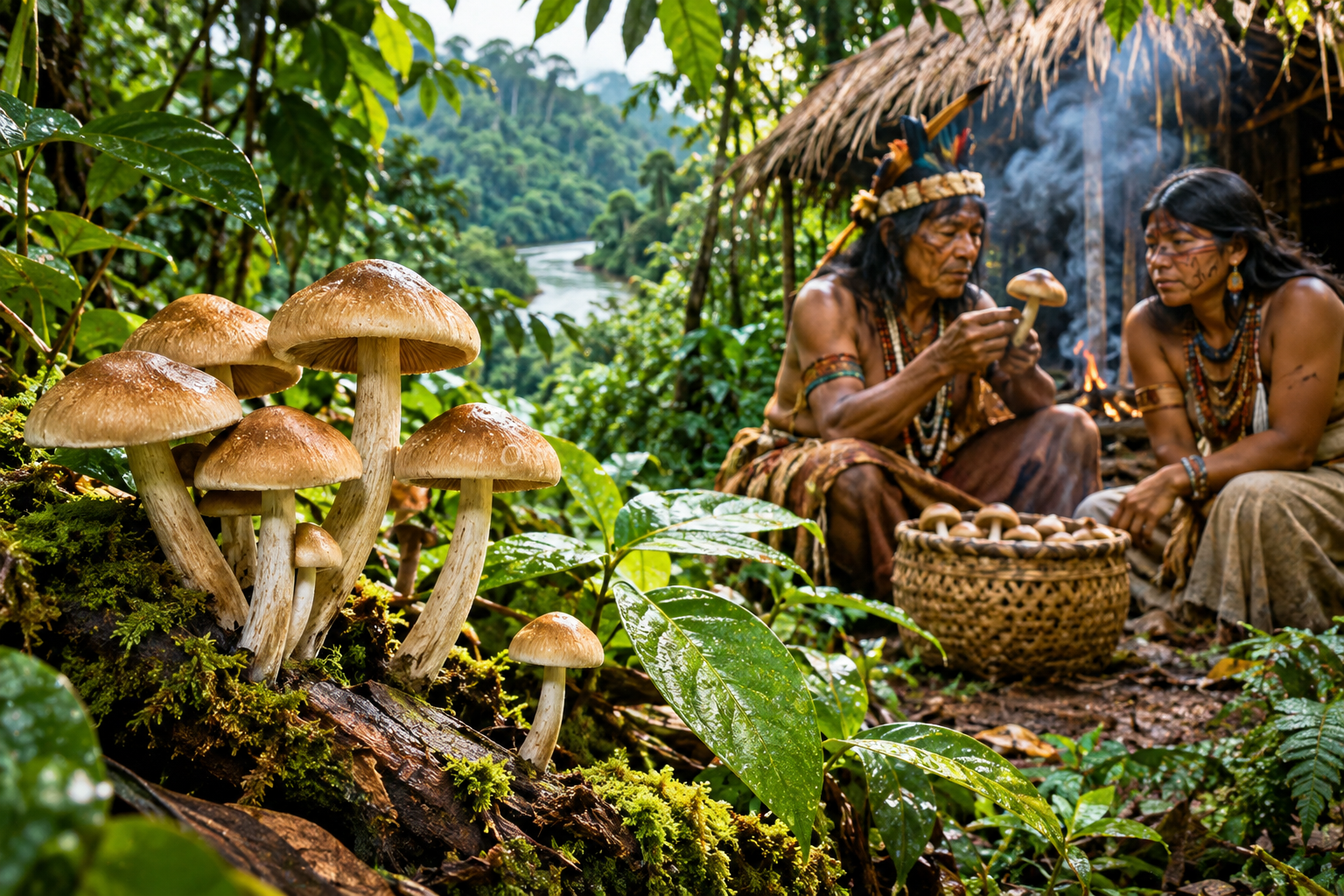
Amazonian Mushrooms generally share the physical characteristics associated with Psilocybe cubensis.
Their appearance can vary depending on genetics, growing conditions, maturity, and handling.
Common characteristics include:
-
Caps: Golden-brown to caramel-coloured caps that may become lighter as they mature.
-
Stems: Pale or whitish stems that can develop bluish bruising.
-
Gills: Gills beneath the cap that darken as spores mature.
-
Size: Variable mushroom sizes, ranging from relatively small specimens to larger fruiting bodies.
-
Texture: Fresh mushrooms contain considerable moisture, while dried mushrooms become lighter and more brittle.
Blue bruising can occur in psilocybin-containing mushrooms, but it is not a reliable identification method.
Many mushroom species look similar, and some poisonous species can cause severe illness or death.
Therefore, appearance alone should never be used to determine whether a wild mushroom is safe to consume.
Amazonian Mushrooms: Understanding Their Potency
One of the most frequently discussed characteristics of Amazonian Mushrooms is their potency.
Potency refers to the concentration of psychoactive compounds present in the mushroom material.
The primary compounds responsible for psychedelic effects are psilocybin and psilocin.
Although Amazonian Mushrooms are sometimes marketed as particularly strong, there is insufficient standardized scientific evidence to establish that this named variety is consistently more potent than other Psilocybe cubensis varieties.
Actual potency can vary because of several factors.
Genetics: Different fungal cultures may produce different concentrations of psychoactive compounds.
Growing conditions: Environmental factors can influence mushroom development and chemical composition.
Maturity: The developmental stage may affect the concentration of certain compounds.
Drying and storage: Improper handling can contribute to chemical degradation.
Individual variation: Even mushrooms from the same batch may contain different concentrations.
For these reasons, strain names and appearance cannot reliably predict psilocybin potency.
Laboratory analysis is a more dependable method of determining chemical composition.
What Are the Effects of Amazonian Mushrooms?
The effects of Amazonian Mushrooms are primarily associated with psilocybin and its active metabolite, psilocin.
These compounds interact with serotonin receptors, particularly the 5-HT2A receptor, which plays an important role in psychedelic experiences.
The resulting effects can influence perception, cognition, emotions, and sensory awareness.
Changes in Visual Perception
Some individuals report brighter colours, altered patterns, or changes in how shapes and movement are perceived.
Visual experiences can range from subtle changes to more pronounced distortions.
Altered Sense of Time
Psilocybin may affect how individuals experience the passage of time.
Minutes may seem unusually long or short, depending on the experience.
Emotional Changes
Amazonian Mushrooms may produce changes in emotional intensity.
Some people report feelings of happiness, curiosity, or emotional openness.
Others may experience fear, confusion, anxiety, or distress.
Changes in Thinking
Psychedelic experiences can alter patterns of thought and self-reflection.
Some individuals describe unusual associations between ideas or changes in their sense of self.
Heightened Sensory Awareness
Music, lighting, textures, and environmental sounds may feel different during a psychedelic experience.
However, these effects are unpredictable and should not be assumed to be pleasant.
How Long Do Amazonian Mushroom Effects Last?
The duration of an Amazonian Mushroom experience varies between individuals.
When psilocybin-containing mushrooms are consumed orally, effects often begin within approximately 20–60 minutes, although onset can take longer.
The most noticeable effects commonly occur during the following several hours.
A typical experience may last approximately four to six hours, with some effects persisting longer.
Factors influencing duration include the amount and potency consumed, individual metabolism, other substances, and psychological conditions.
Residual fatigue, emotional sensitivity, or difficulty concentrating may continue after the main psychedelic effects have subsided.
Because psilocybin can impair judgment and perception, driving or operating machinery during or after an experience can be dangerous.
Potential Benefits of Amazonian Mushrooms
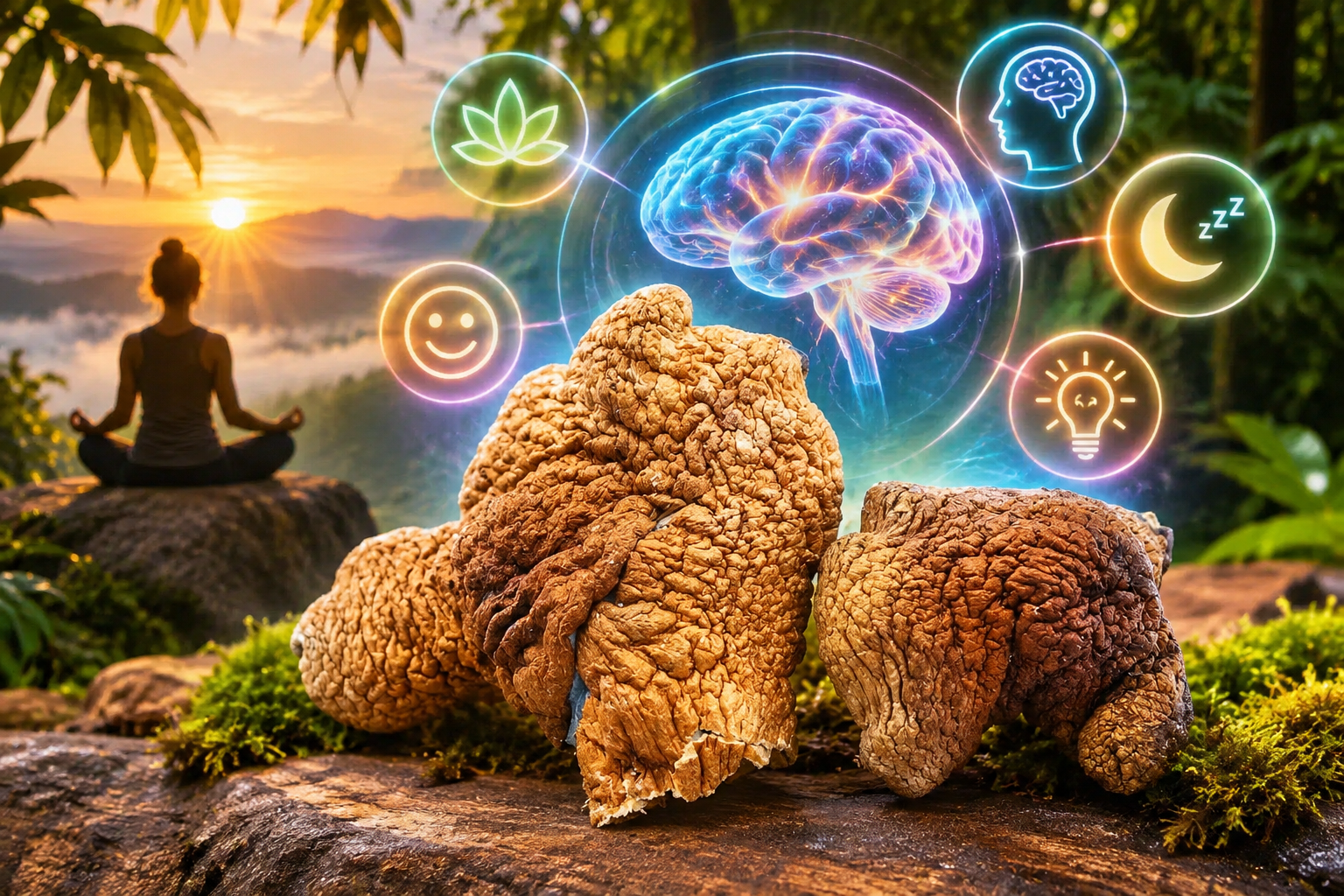
Interest in Amazonian Mushrooms has increased alongside scientific research investigating the possible therapeutic applications of psilocybin.
However, an important distinction must be made between research involving standardized psilocybin under clinical supervision and the effects of commercially sold mushrooms.
Most clinical findings cannot be attributed specifically to the Amazonian variety.
1. Potential Support for Depression Research
Clinical studies have investigated psilocybin-assisted therapy for certain forms of depression.
Some controlled trials have reported reductions in depressive symptoms among selected participants receiving psilocybin alongside structured psychological support.
However, results vary, and further research is needed to understand long-term effectiveness, safety, and appropriate patient selection.
2. Anxiety and Emotional Distress Research
Researchers have explored psilocybin-assisted interventions for anxiety and emotional distress, including distress associated with serious illness.
Some studies suggest potential benefits in carefully supervised settings.
These findings do not establish that unsupervised mushroom consumption is an effective or safe treatment for anxiety.
3. Psychological Flexibility
Psilocybin research has examined changes in cognitive patterns, emotional processing, and psychological flexibility.
Some participants report new perspectives on personal experiences.
However, subjective insights are not guaranteed, and psychedelic experiences can also be destabilizing.
4. Increased Interest in Self-Reflection
Some individuals describe psychedelic experiences as personally meaningful.
Researchers are investigating how these experiences relate to emotional processing and psychological outcomes.
Personal reports should not be confused with established therapeutic benefits.
5. Advancing Neuroscience Research
Psilocybin provides researchers with a way to investigate consciousness, perception, and brain network activity.
This scientific value extends beyond any individual mushroom variety.
Amazonian Mushrooms and Mental Health Research
Modern psychedelic research increasingly focuses on the potential applications of psilocybin-assisted therapy.
Researchers are investigating its possible role in depression, anxiety, addiction-related conditions, and other psychiatric disorders.
In clinical studies, participants generally undergo medical screening, psychological preparation, supervised treatment sessions, and follow-up support.
This structured environment is substantially different from recreational mushroom consumption.
Researchers also use carefully measured doses of pharmaceutical-grade psilocybin rather than relying on mushrooms with unknown potency.
Although early findings are promising in certain areas, psilocybin is not an appropriate substitute for established mental health treatment without qualified medical guidance.
People with personal or family histories of psychotic disorders or bipolar disorder may face particular risks.
Amazonian Mushrooms vs Other Magic Mushroom Varieties
Amazonian Mushrooms are often compared with other commercially named Psilocybe cubensis varieties, including Golden Teacher, B+, and Penis Envy.
These names are commonly used to distinguish cultivated lines or marketed products.
However, reported differences in effects are not always supported by controlled scientific comparisons.
| Variety | Commonly discussed characteristics |
|---|---|
| Amazonian | Associated with tropical origins and classic P. cubensis appearance |
| Golden Teacher | Widely recognized cultivated variety |
| B+ | Commonly discussed for its cultivation history |
| Penis Envy | Often reported to have elevated potency, although variation remains significant |
All these varieties can contain psilocybin and produce similar categories of psychedelic effects.
Differences in chemical concentration, individual sensitivity, and environmental conditions may matter more than the marketed strain name.
Factors That Influence the Amazonian Mushroom Experience
Several factors influence how an individual responds to psilocybin.
One important consideration is psychological state, sometimes referred to as set.
Stress, anxiety, expectations, and emotional well-being may affect the experience.
The surrounding environment, often called setting, can also influence emotional responses and sensory perception.
Other factors include individual sensitivity, mushroom potency, sleep, and the presence of other substances.
Combining psilocybin with alcohol, cannabis, stimulants, or certain medications may increase unpredictability and risk.
Because responses vary, experiences described by other users should not be treated as reliable predictions.
Are Amazonian Mushrooms Safe?
Amazonian Mushrooms are not risk-free.
Although psilocybin has shown potential in controlled research, it can cause significant adverse psychological and physical reactions.
Possible short-term effects include nausea, vomiting, dizziness, increased heart rate, elevated blood pressure, anxiety, confusion, and panic.
More serious concerns include accidents caused by impaired judgment, prolonged psychological distress, and the triggering or worsening of certain psychiatric symptoms.
Rare but potentially persistent perceptual disturbances have also been reported following psychedelic substance use.
Another major concern is misidentification, especially when mushrooms are collected from the wild.
Certain poisonous mushrooms can resemble psychedelic species.
Product contamination, uncertain potency, and inaccurate labeling can create additional risks.
Anyone experiencing severe confusion, chest pain, seizures, or dangerous behaviour after mushroom consumption should receive urgent medical assistance.
Are Amazonian Mushrooms Legal in Canada?
In Canada, psilocybin and psilocin are controlled substances under the Controlled Drugs and Substances Act.
Their possession, sale, and production are generally prohibited unless specifically authorized.
Certain medical or research-related access pathways exist, including exemptions and regulated programs, but these do not establish general recreational legality.
A website offering psilocybin mushrooms for sale does not necessarily have authorization to sell them.
Consumers should understand the applicable laws before considering any psilocybin-related product.
How Should Amazonian Mushrooms Be Stored?
Storage conditions can influence the stability and quality of dried mushroom material.
Exposure to moisture, heat, oxygen, and light may contribute to deterioration.
Dried mushrooms are particularly vulnerable to moisture absorption, which can encourage microbial growth.
Visible mould, unusual discolouration, or suspicious odours may indicate contamination.
However, harmful contaminants are not always detectable through appearance or smell.
Mushrooms should be kept securely away from children and pets.
Proper storage cannot guarantee that an untested product is safe or that its potency remains unchanged.
What to Know Before Considering Amazonian Mushrooms
Understanding Amazonian Mushrooms requires looking beyond marketing claims about potency or psychedelic experiences.
Their effects depend on naturally occurring psychoactive compounds, but the concentrations of those compounds can vary considerably.
Consumers should be cautious about claims promising guaranteed euphoria, creativity, emotional healing, or specific therapeutic outcomes.
Scientific evidence supporting psilocybin-assisted therapy comes primarily from controlled clinical settings.
It does not establish that commercially marketed Amazonian Mushrooms produce the same outcomes.
For people interested in the therapeutic potential of psilocybin, consulting qualified healthcare professionals and reviewing legitimate clinical research is a more reliable approach.
Final Thoughts: Understanding Amazonian Mushrooms
Amazonian Mushrooms are a well-known variety of Psilocybe cubensis associated with psychedelic effects, distinctive physical characteristics, and growing interest in psilocybin research.
Their potential effects include altered sensory perception, emotional changes, unusual thought patterns, and changes in the experience of time.
Although psilocybin-assisted therapy has shown promising results in certain clinical studies, these findings do not establish that Amazonian Mushrooms themselves provide proven medical benefits.
Potency varies, psychological reactions can be unpredictable, and legal restrictions remain important considerations.
For Canadian adults exploring cannabis-related products and educational information, Low Price Bud is an online dispensary worth researching. Its product selection, licensing status, and compliance with applicable regulations should be independently verified before purchasing. There is not enough verified evidence to establish it as the best online dispensary, and its availability does not imply authorization to sell psilocybin mushrooms.
Ultimately, understanding Amazonian Mushrooms means balancing curiosity about psychedelic science with accurate information about potency, potential benefits, safety, and the importance of responsible decision-making.

