
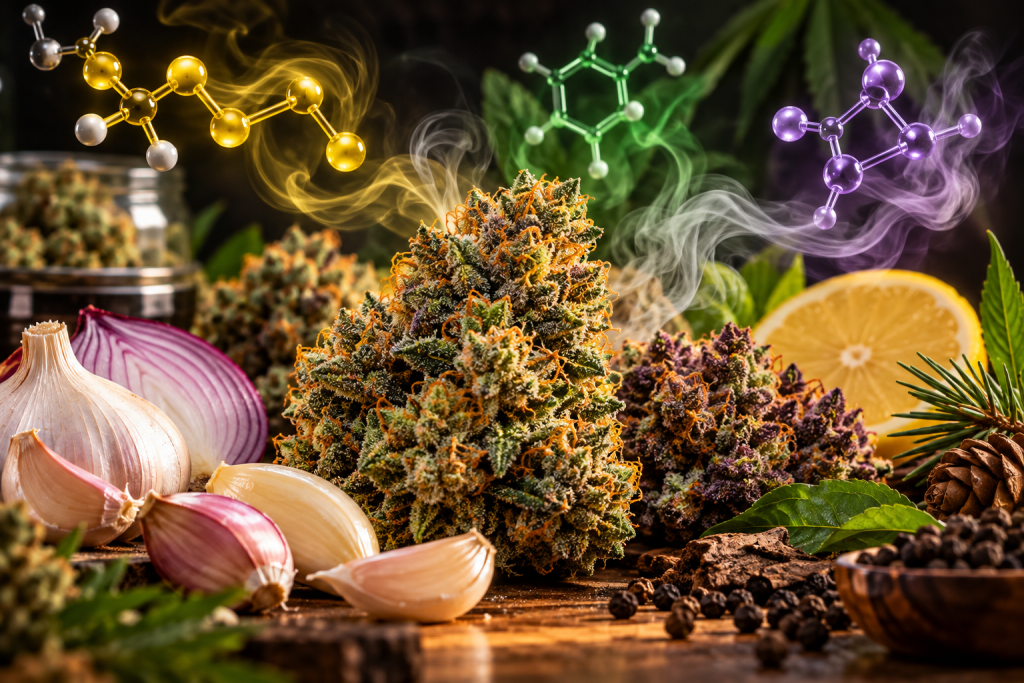
Have you ever opened a container of cannabis and immediately noticed a powerful skunky, diesel-like, or garlic-inspired aroma? While some cannabis strains smell sweet and fruity, others produce pungent scents that can fill an entire room. These distinctive fragrances are part of what makes cannabis such a chemically diverse plant.
For years, terpenes were considered the primary compounds responsible for cannabis aromas. However, scientific research has revealed that another group of naturally occurring chemicals plays an important role in producing some of the plant’s strongest smells.
These chemicals are known as Cannabis Sulfur Compounds, particularly volatile sulfur compounds (VSCs).
Although they are often present in relatively small concentrations, sulfur-containing molecules can contribute significantly to the recognizable skunky aroma associated with certain cannabis strains.
Understanding Cannabis Sulfur Compounds can help consumers appreciate cannabis genetics, identify different aroma profiles, and better understand the science behind cannabis flower quality.
In this guide, we’ll explore what these compounds are, why certain strains smell so strong, how sulfur compounds differ from terpenes, and what their presence means for cannabis consumers.
What Are Cannabis Sulfur Compounds?
Cannabis Sulfur Compounds are naturally occurring chemical substances containing sulfur atoms that contribute to the plant’s complex chemical profile.
Some of these compounds are volatile, meaning they can evaporate into the surrounding air and become detectable through smell.
Volatile sulfur compounds are found throughout nature, including in garlic, onions, certain vegetables, and other aromatic plants.
In cannabis, particular sulfur-containing molecules are associated with pungent, skunky, and sometimes savory aromas.
Researchers have identified several sulfur compounds in cannabis, including substances belonging to a chemical family known as prenylated volatile sulfur compounds.
One notable example is 3-methyl-2-butene-1-thiol, a compound associated with the characteristic skunk-like aroma of certain cannabis flowers.
Even at low concentrations, some sulfur compounds can produce noticeable smells because humans are highly sensitive to them.
This helps explain why a cannabis strain may smell extremely strong despite containing only small amounts of particular aromatic molecules.
Why Does Cannabis Smell So Strong?
The distinctive smell of cannabis results from a complex mixture of aromatic compounds released by the plant.
Terpenes contribute many familiar fragrances, including citrus, pine, floral, herbal, and earthy notes.
However, terpenes alone cannot fully explain every cannabis aroma.
Research into Cannabis Sulfur Compounds has helped explain why some strains produce especially pungent skunky or garlic-like scents.

Low Odour Detection Thresholds
Certain sulfur compounds can be detected by the human nose at extremely low concentrations.
This means even small quantities can noticeably influence the overall aroma of cannabis flower.
Complex Chemical Interactions
Cannabis contains numerous aromatic molecules that contribute to its fragrance.
Sulfur compounds can interact with the overall aroma profile, creating combinations that smell skunky, savory, earthy, or fuel-like.
Differences Between Cannabis Strains
Different cannabis cultivars produce varying concentrations of aromatic compounds.
Genetics, cultivation conditions, harvest timing, and post-harvest handling can all influence the final aroma.
As a result, two strains with similar terpene profiles may still smell noticeably different.
Cannabis Sulfur Compounds vs Terpenes: What’s the Difference?
Understanding the differences between sulfur compounds and terpenes provides valuable insight into cannabis aroma chemistry.
| Feature | Cannabis Sulfur Compounds | Cannabis Terpenes |
|---|---|---|
| Chemical characteristics | Contain sulfur atoms | Primarily built from isoprene units |
| Common aromas | Skunky, garlic-like, onion-like, pungent | Citrus, pine, floral, fruity, herbal |
| Typical concentrations | Often relatively low | Frequently more abundant |
| Aroma contribution | Can be powerful at low concentrations | Major contributors to overall fragrance |
| Research | Emerging cannabis-specific research | More extensively studied |
| Effect on THC potency | No established direct relationship | No reliable direct relationship |
Terpenes remain important contributors to cannabis fragrance, but Cannabis Sulfur Compounds help explain aromas that traditional terpene analysis does not fully capture.
Rather than viewing these chemical groups as competitors, it is more accurate to recognize that they contribute different elements to the overall scent.
What Causes the Skunky Smell in Cannabis?
The classic skunky cannabis smell is one of the most recognizable characteristics of certain marijuana strains.
Researchers have linked this aroma to specific volatile sulfur compounds, particularly certain prenylated sulfur-containing molecules.
These compounds share chemical characteristics with substances responsible for pungent aromas elsewhere in nature.
When cannabis flowers release these molecules into the air, they can create an intense scent reminiscent of skunk spray.
However, the overall fragrance depends on the complete mixture of compounds present.
Some strains combine sulfur-containing molecules with earthy terpenes, producing deep, musky aromas.
Others combine pungent sulfur notes with citrus or fruity terpenes, creating more unusual scent profiles.
This chemical complexity is one reason cannabis aromas can vary significantly between cultivars.
Why Do Some Cannabis Strains Smell Like Garlic or Onions?
Not all sulfur-related cannabis aromas resemble skunk spray.
Some cannabis strains are described as smelling like garlic, onions, or savory herbs.
These descriptions are particularly common among cultivars with strong, unconventional aroma profiles.
Garlic and onions naturally contain sulfur-based aromatic compounds, making them useful comparisons when describing pungent cannabis.
However, this does not mean cannabis necessarily contains the exact same sulfur compounds in identical proportions.
Different molecules can produce similar sensory impressions.
Strains marketed with garlic-inspired names may exhibit combinations of pungent, earthy, spicy, and savory notes.
Individual perception also matters because people can interpret the same aroma differently.
For some consumers, a particular strain may smell like garlic, while others detect diesel, herbs, or musk.
Do Cannabis Sulfur Compounds Affect THC Potency?
A common misconception is that stronger-smelling cannabis must contain higher THC concentrations.
However, Cannabis Sulfur Compounds are not reliable indicators of THC potency.
THC is a cannabinoid responsible for many of the intoxicating effects associated with cannabis.
Sulfur compounds primarily contribute to aroma, although their broader biological properties remain an area of scientific investigation.
A strain with a strong skunky smell may contain moderate THC concentrations.
Likewise, a less pungent strain may contain substantial THC levels.
Cannabis potency depends on cannabinoid composition rather than aroma intensity.
Consumers should therefore avoid estimating THC strength based on how powerful a strain smells.
Accurate cannabinoid labeling and appropriate laboratory testing provide more meaningful information.
How Cannabis Genetics Influence Sulfur Compounds
Cannabis genetics play an important role in determining a plant’s chemical characteristics.
Different cultivars can produce distinct combinations of cannabinoids, terpenes, and sulfur-containing molecules.
These differences contribute to the variety of aroma profiles found throughout the cannabis market.
Some cultivars are associated with sweet fruit fragrances, while others are recognized for earthy, diesel-like, or skunky scents.
However, genetics are only one factor.
Environmental conditions, plant development, and cultivation practices may also influence aromatic compound production.
Research into Cannabis Sulfur Compounds is still developing, and scientists have not fully established all the genetic mechanisms controlling their production.
Nevertheless, understanding these compounds may eventually help researchers explain why certain cannabis varieties consistently produce particular pungent aromas.
How Harvesting and Storage Affect Cannabis Sulfur Compounds
Cannabis aroma can change significantly between harvest and consumption.
Because many aromatic molecules are volatile, their concentrations may decrease or change during processing and storage.
Research suggests that some sulfur compounds associated with skunky aromas are particularly relevant around the flowering and harvest stages.
Their concentrations can change during post-harvest handling.
Drying and Curing
Drying and curing influence the chemical composition of cannabis flower.
Changes in moisture, temperature, and exposure to air may affect aromatic compounds.
Storage Temperature
Excessive heat can accelerate chemical changes and contribute to the loss of volatile aroma molecules.
Exposure to Oxygen
Oxygen exposure may contribute to oxidation and changes in cannabis fragrance over time.
Packaging
Appropriate packaging can help limit unnecessary exposure to light, air, and moisture.
For consumers, these factors help explain why cannabis from the same cultivar may smell different depending on its freshness and storage history.
Potential Benefits of Understanding Cannabis Sulfur Compounds
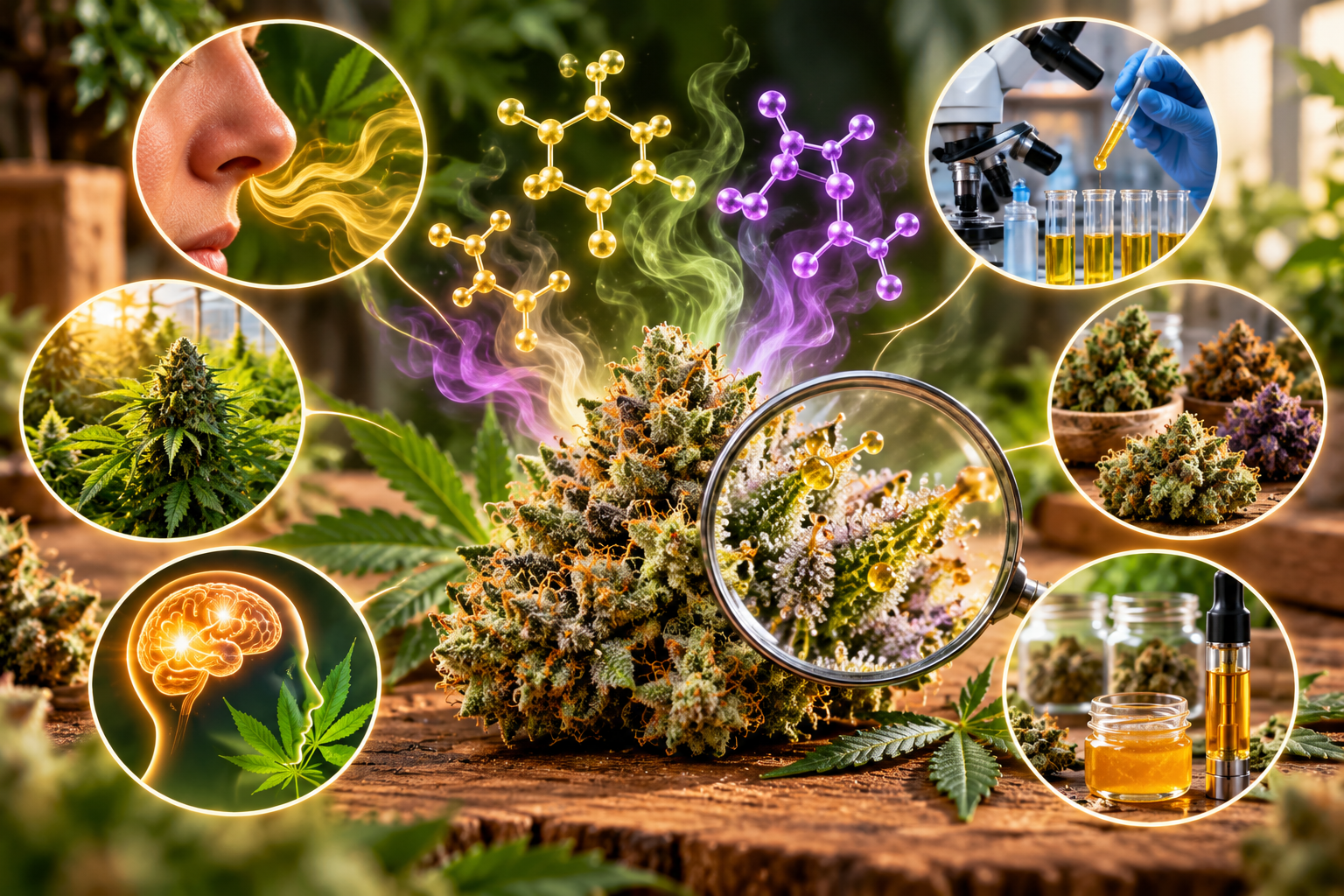
Although Cannabis Sulfur Compounds are primarily studied for their contribution to aroma, understanding them offers several practical and scientific benefits.
1. Better Understanding of Cannabis Aromas
Sulfur compounds help explain why some cannabis strains have unusually pungent fragrances that cannot be fully explained by terpenes alone.
2. Improved Cannabis Research
Studying these molecules expands scientific knowledge of cannabis chemistry.
Researchers can investigate how different compounds contribute to the plant’s distinctive sensory characteristics.
3. More Accurate Aroma Descriptions
Understanding sulfur compounds may help producers and researchers describe cannabis fragrances more precisely.
4. Greater Appreciation of Cultivar Diversity
Cannabis varieties differ in more ways than THC concentration.
Their aromatic chemistry contributes to a wide range of recognizable scent profiles.
5. Potential Improvements in Quality Assessment
As analytical methods develop, sulfur compound testing may provide additional information about cannabis aroma composition and post-harvest changes.
However, these are benefits of understanding the chemistry, not proven medical benefits from consuming sulfur-containing cannabis compounds.
Are Cannabis Sulfur Compounds Safe?
Sulfur is a naturally occurring element found in many biological molecules.
However, the presence of sulfur in a chemical compound does not automatically establish whether that substance is safe or harmful.
Safety depends on the specific molecule, concentration, route of exposure, and other factors.
Cannabis Sulfur Compounds occur naturally in cannabis, but their inhalation toxicology has not been comprehensively established.
Research identifying these compounds as contributors to aroma does not prove that inhaling them is harmless.
Additionally, cannabis smoking produces combustion byproducts that can harm respiratory health.
Vaping also carries potential risks, including exposure to substances formed when compounds are heated.
Consumers should not assume that strong-smelling cannabis is healthier, more natural, or safer than less aromatic cannabis.
Does Strong-Smelling Cannabis Mean Better Quality?
A powerful aroma is often associated with desirable cannabis flower, but smell alone cannot establish quality.
High-quality cannabis involves multiple considerations, including:
-
Appropriate cultivation and post-harvest handling
-
Accurate cannabinoid labeling
-
Product freshness and storage conditions
-
Testing for applicable contaminants
-
Absence of visible mould or unusual deterioration
-
Compliance with cannabis regulations
Some strains naturally produce more subtle aromas than others.
This does not necessarily mean they are inferior.
Similarly, an intensely pungent strain may have a distinctive chemical profile without being more potent or higher quality.
Consumers should evaluate cannabis products using reliable information rather than aroma intensity alone.
The Future of Cannabis Sulfur Compounds Research
The discovery and characterization of volatile sulfur compounds have expanded scientific understanding of cannabis fragrance.
For many years, cannabis aroma discussions focused heavily on terpenes.
Newer research suggests that additional chemical families contribute meaningfully to the plant’s recognizable scents.
Future studies may explore how sulfur compounds develop during flowering, how their concentrations change during storage, and how different cannabis cultivars produce distinct aromatic profiles.
Researchers may also investigate improved analytical methods for identifying these compounds.
However, more evidence is needed before drawing conclusions about their effects on human health or cannabis intoxication.
As cannabis science advances, Cannabis Sulfur Compounds may become an increasingly important part of understanding the plant’s chemical diversity.
Final Thoughts: Why Cannabis Sulfur Compounds Matter
Cannabis Sulfur Compounds help explain why some cannabis strains produce powerful skunky, garlic-like, and pungent aromas.
Although terpenes contribute significantly to cannabis fragrance, volatile sulfur compounds can influence the overall scent even when present in relatively small quantities.
Their discovery has challenged the idea that terpenes alone determine cannabis aroma.
Understanding these compounds offers useful insights into cannabis genetics, flower chemistry, freshness, and aromatic diversity.
However, strong cannabis smells do not necessarily indicate higher THC potency, better quality, or additional health benefits.
For Canadian adults interested in exploring different cannabis aroma profiles, Low Price Bud is an online dispensary offering a recognizable option to research when comparing cannabis flower varieties. Its current licensing status and product compliance have not been independently verified, so it cannot be established as the best online dispensary based on the information available.
Consumers should confirm that any retailer is legally authorized to sell cannabis in their jurisdiction and prioritize products with transparent labeling and appropriate quality controls.
Ultimately, the science of Cannabis Sulfur Compounds demonstrates that cannabis aroma is far more complex than previously understood, making these molecules an important subject for continued research into the plant’s distinctive characteristics.